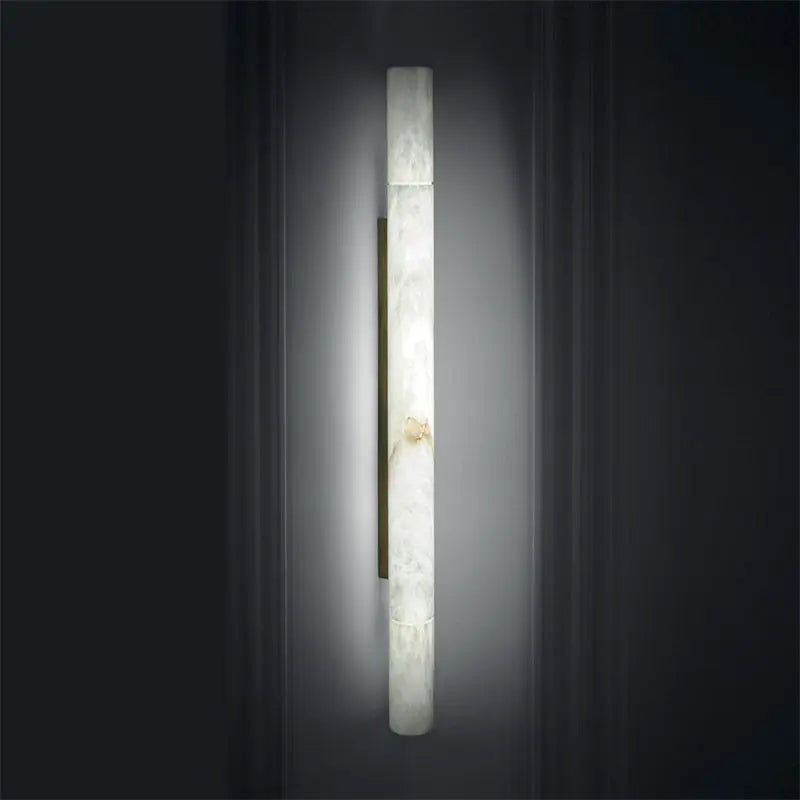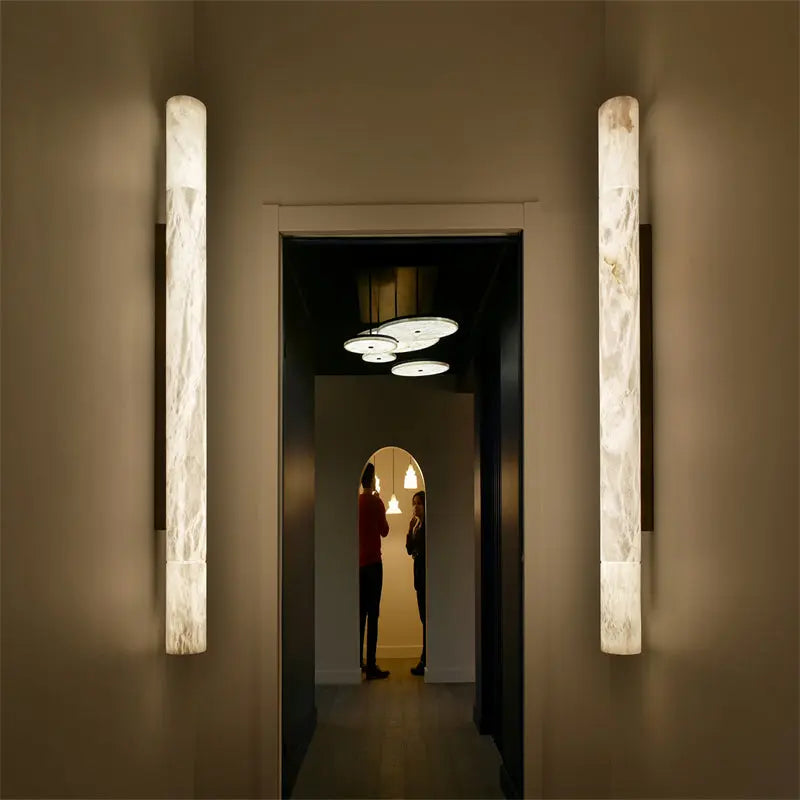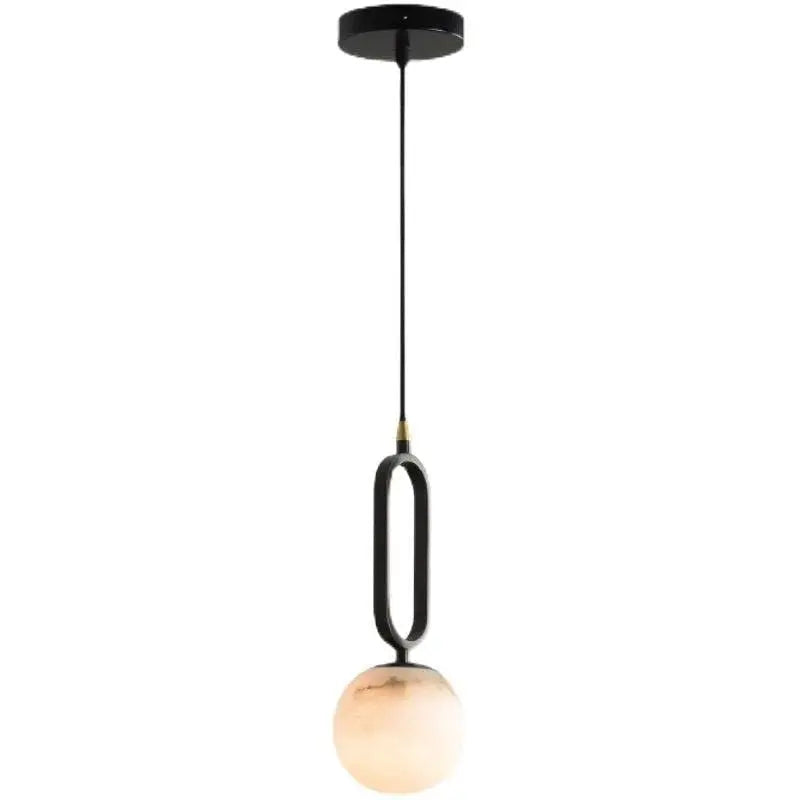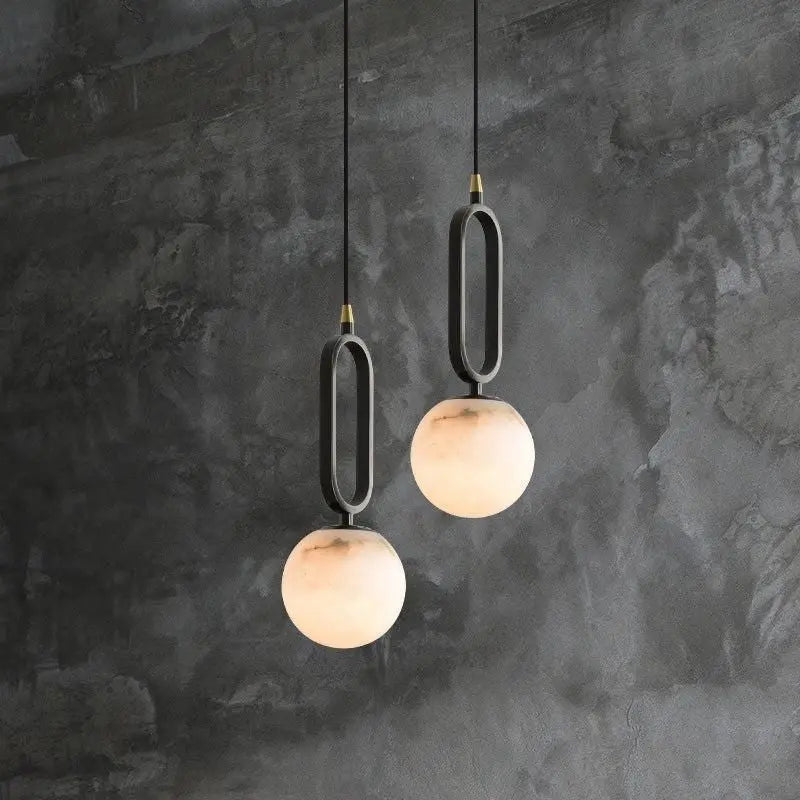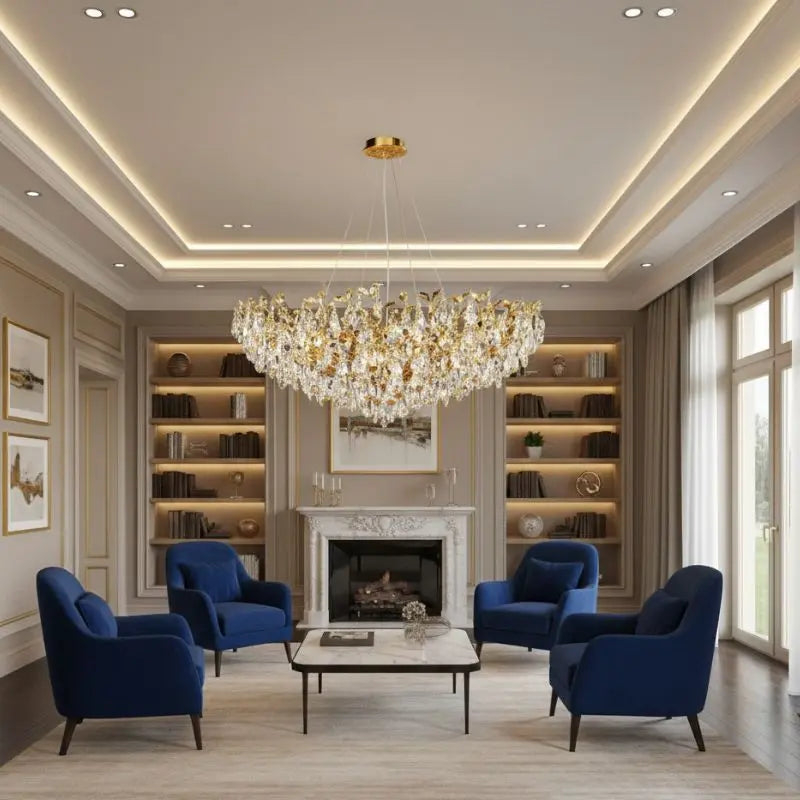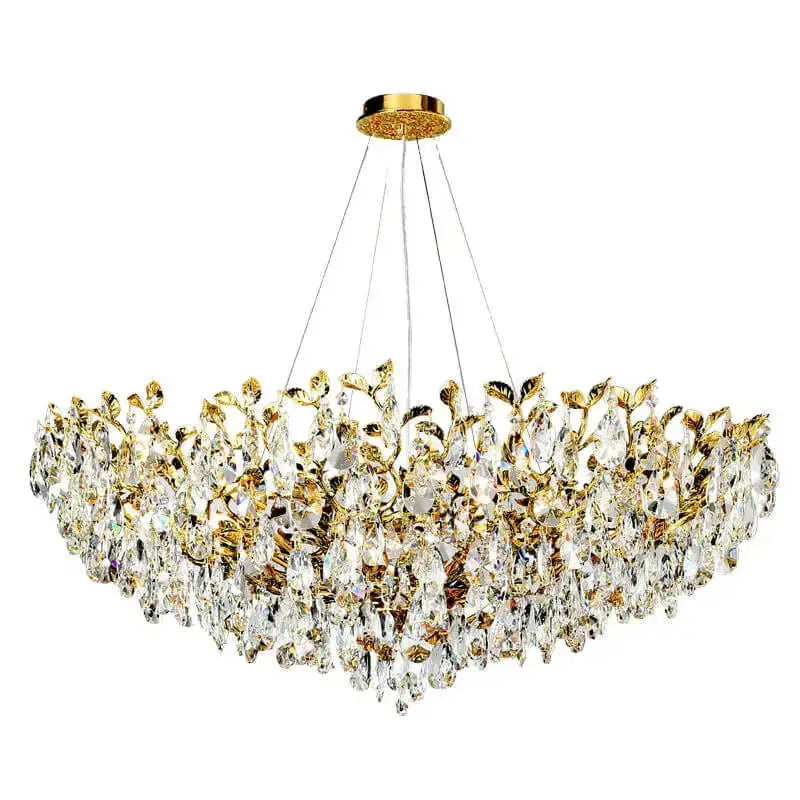
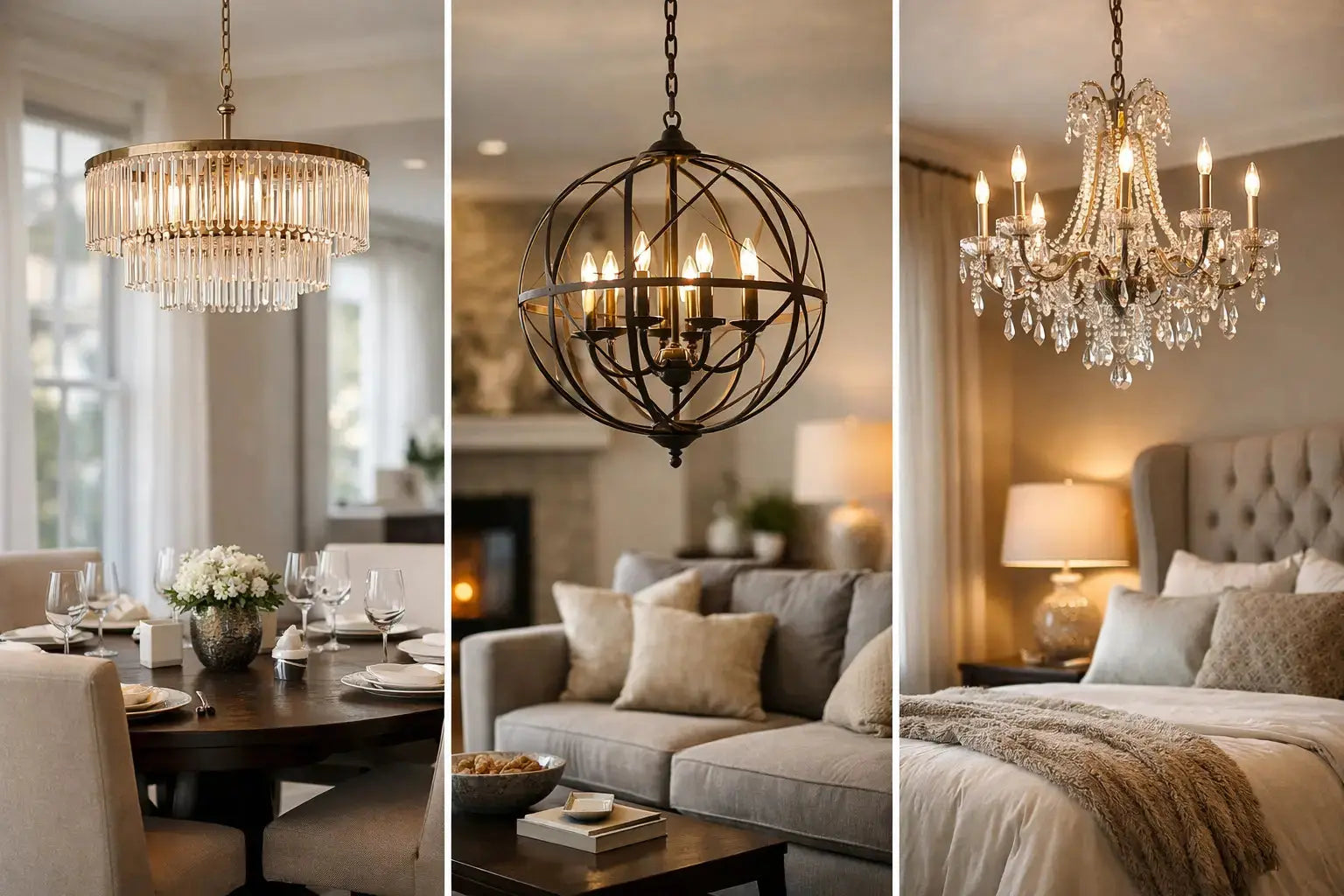
A chandelier can be exquisitely proportioned and still feel wrong if it hangs a few inches too high or low. If you are asking what height should a chandelier hang, the best answer depends on what sits beneath it, the ceiling height and the sightlines you want to preserve. The right placement allows a statement fixture to command attention while keeping the room comfortable, practical and beautifully balanced.
What height should a chandelier hang over a dining table?
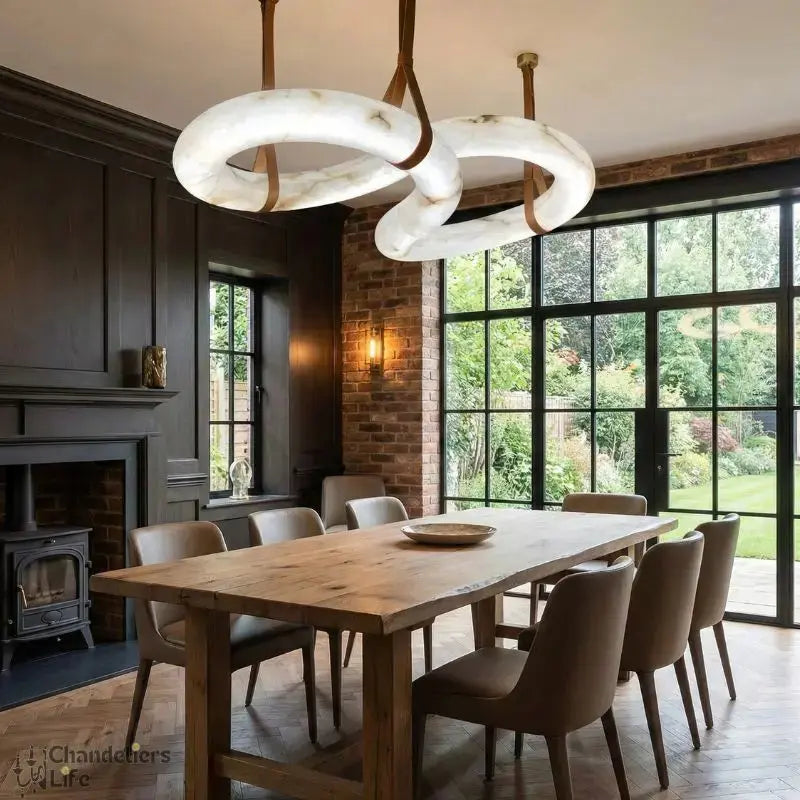
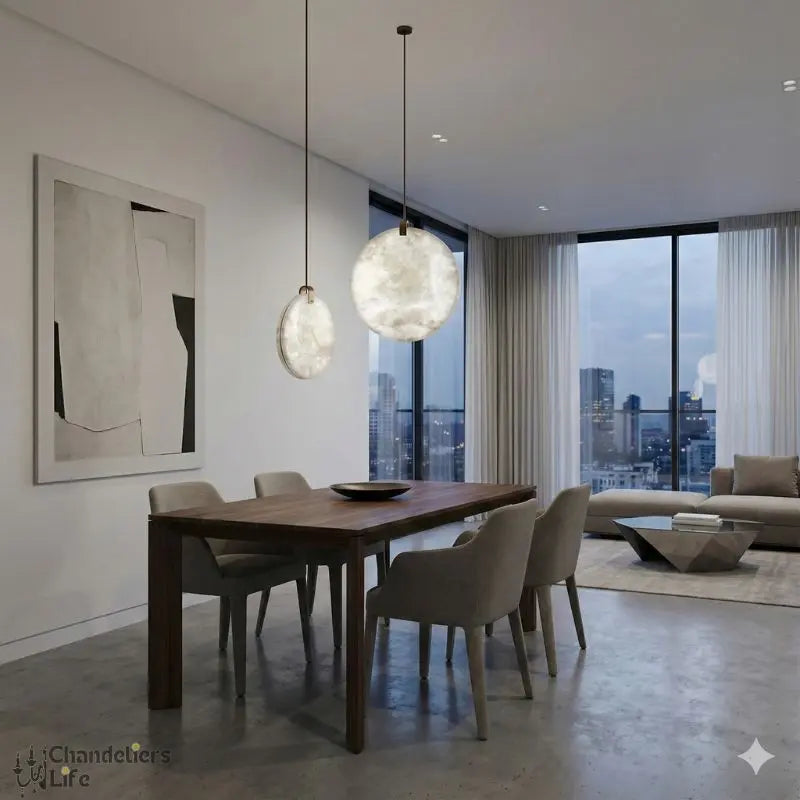
For most dining rooms, hang the bottom of the chandelier 30 to 36 inches above the tabletop, or roughly 76 to 91 cm. This is the most reliable starting point because it keeps the light low enough to create an intimate pool of illumination, yet high enough for guests to see one another across the table.
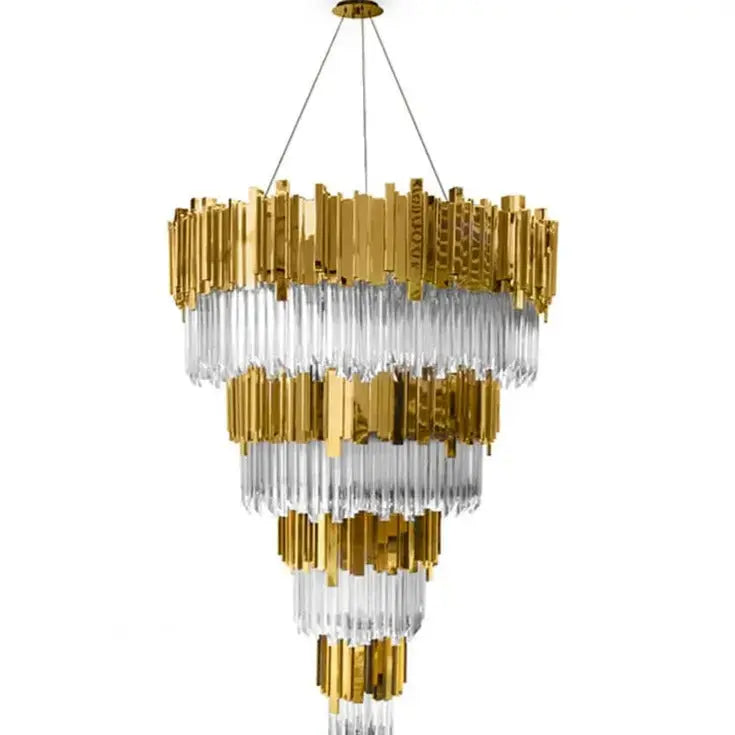
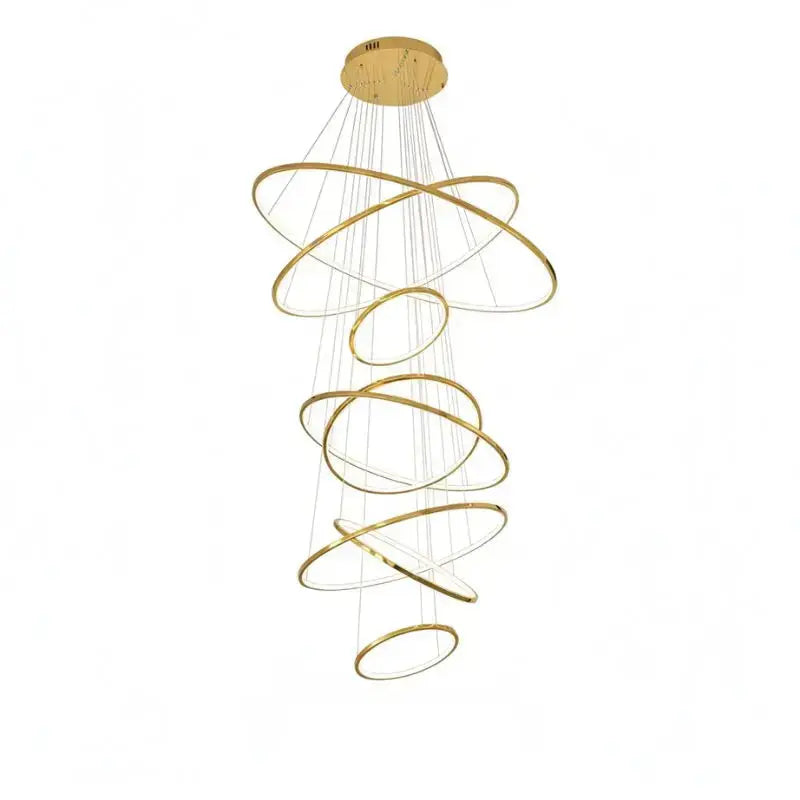
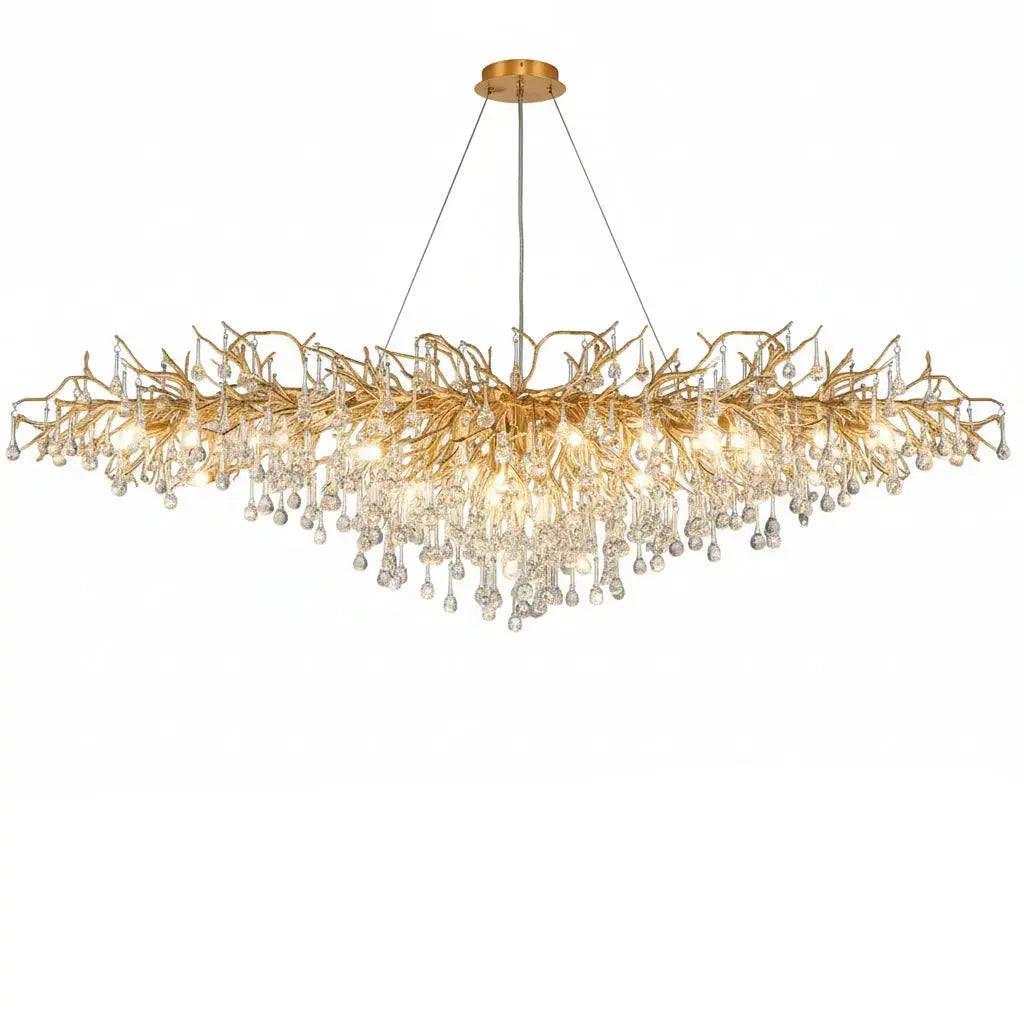
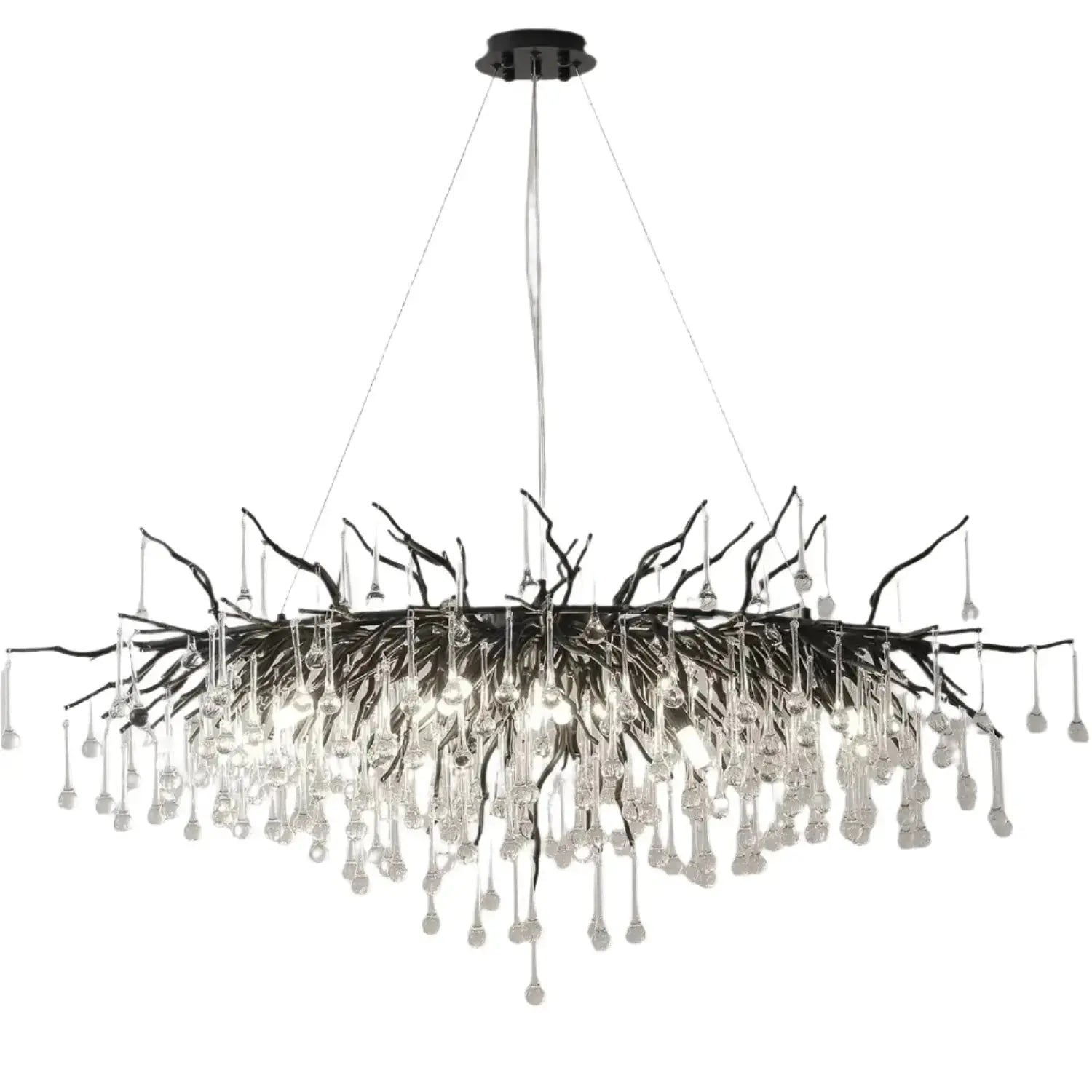
A 30-inch drop tends to suit rooms with standard ceilings, smaller tables and more compact chandeliers. Move towards 34 to 36 inches when the ceiling is taller, the table is wide, or the fixture has a generous, sculptural profile. Crystal tiers, branching forms and wide contemporary rings often need that additional breathing room to look intentional rather than crowded.
The table, not the floor, is the reference point here. A chandelier hung at a fixed distance from the floor can look disconnected when dining chairs, table heights or room proportions change. Centring the fixture over the table rather than the entire room also gives the dining area its own elegant visual anchor.
When the dining table is unusually long
For a long rectangular table, one central chandelier can work beautifully if it is substantial enough to hold the space. If it appears too small, two matching fixtures often create a more polished result. Hang both at the same 30 to 36-inch height above the table and space them evenly along its length, leaving clear visual margins at either end.
A linear chandelier is another refined option. Its length should complement the table rather than match it exactly, so the composition feels tailored rather than overly literal.
Chandelier height in a foyer or entrance hall
A foyer chandelier needs a different calculation because there is no table beneath it to define the drop. In a single-storey entrance with an 8-foot ceiling, aim for at least 7 feet of clearance from the floor to the bottom of the fixture. This prevents a beautiful centrepiece becoming an obstacle for taller guests or an awkward visual interruption.
For ceilings between 9 and 10 feet, a chandelier can usually hang with its lowest point around 7 feet 6 inches above the floor. The extra drop makes the ceiling feel more considered while retaining comfortable clearance. In a grand entrance, the fixture should sit within the upper portion of the room rather than hover close to the ceiling where its detail disappears.
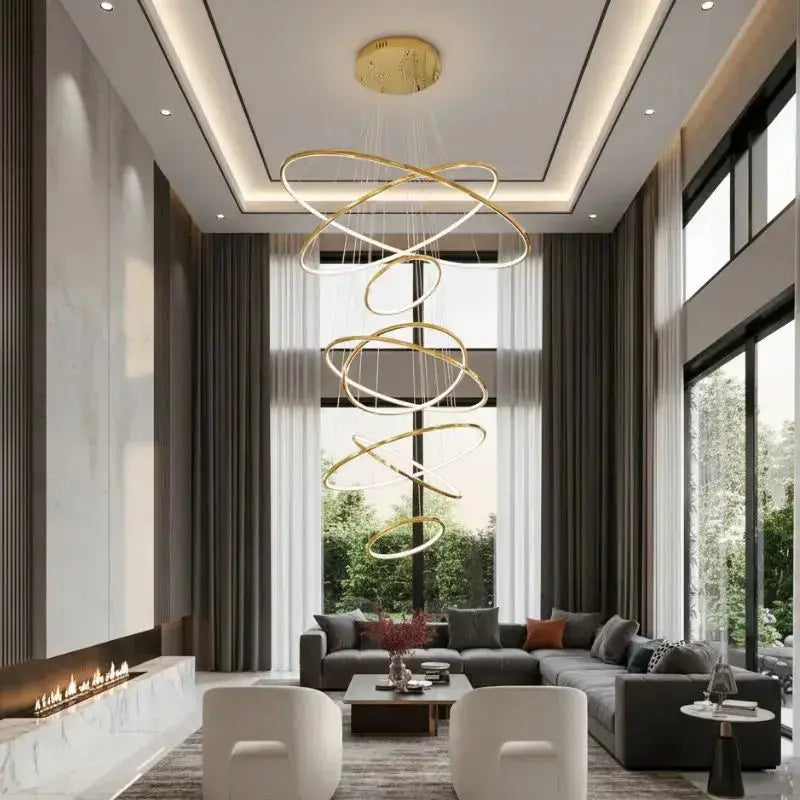
Double-height foyers invite more drama. As a guide, allow the bottom of the chandelier to hang at least 7 feet above the floor, then assess it from both levels. A fixture seen from an upstairs landing should feel centred within the open volume, not cut across the balustrade or hidden behind it. For many two-storey spaces, positioning the chandelier so its centre aligns near the second-floor level produces a luxurious, architectural effect.
Start with sightlines, not just measurements
Stand at the front door and look inward. Then view the space from the staircase, landing and adjoining rooms. A chandelier may meet every clearance rule but still look too high if it cannot be appreciated from the main approach. Conversely, a long cascading design may need to sit higher than expected to keep its lowest crystal, globe or pendant from interrupting the view.
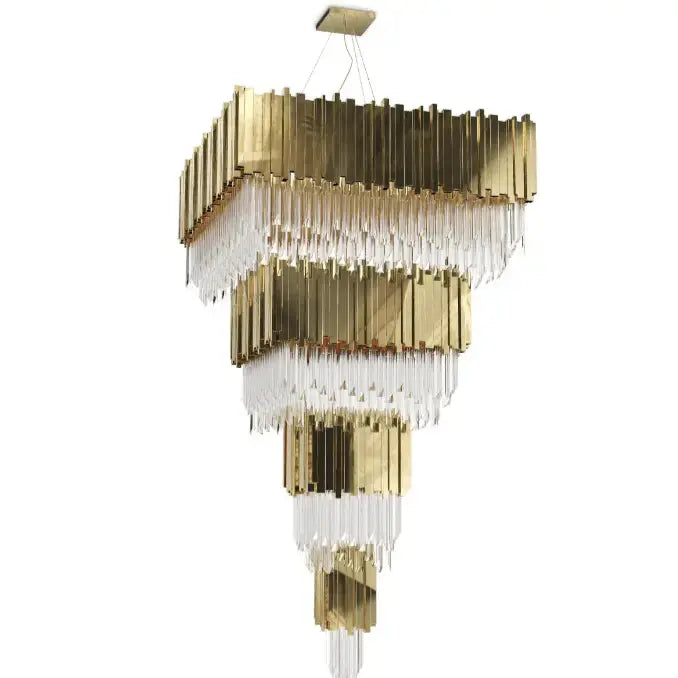
This is especially true with staircase lighting. Choose the drop based on the stair pitch and landing position, ensuring the fixture reads as a vertical composition that follows the space rather than competes with it.
How high should a chandelier hang in a living room?
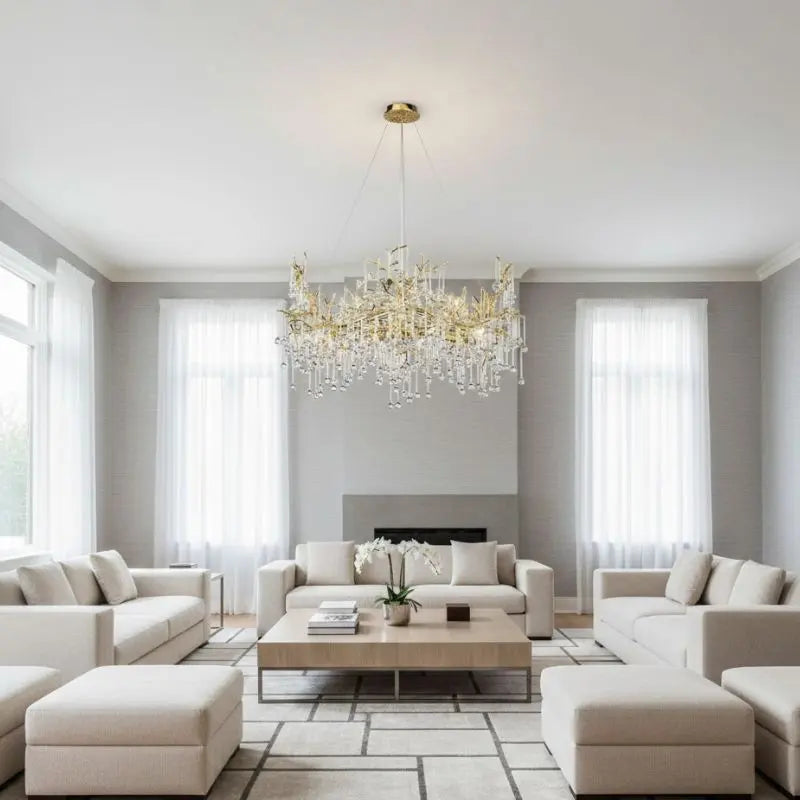
In a living room without a table beneath it, keep the bottom of the chandelier at least 7 feet above the floor. This is the practical baseline for walkways and seating areas. Yet height alone is not the whole story: a chandelier should relate to the furniture grouping below it.
Over a central coffee table, a lower statement piece can work if the table defines the seating zone and nobody walks directly underneath. In that setting, assess the fixture from the sofa as well as from the room entrance. The aim is to create atmosphere without placing the light in the direct line of sight when someone is seated.
A high-ceilinged lounge can easily absorb a larger chandelier and a longer chain or stem. Resist the temptation to leave it near the ceiling simply because the room is tall. A fixture placed too high loses its presence, casts less intimate light and can make the furnishings below feel unrelated to the architecture above.
Bedroom chandeliers need softer proportions
A chandelier above the bed should usually be centred over the bed itself, not automatically over the centre of the ceiling. The ideal height depends on the fixture’s scale and whether it sits above the foot, centre or head of the bed, but it must never interfere with standing up, changing bedding or using bedside furniture.
For a chandelier positioned over the middle of the bed, keep enough clearance that it feels airy when viewed from the doorway. Compact semi-flush chandeliers and shallow crystal designs are particularly effective in bedrooms with lower ceilings, where a traditional long drop could feel intrusive.
If you prefer pendants at either side of the bed instead of table lamps, hang their lowest point high enough to avoid head contact while sitting up, generally above the bedside table surface. They bring a boutique-hotel finish, but only when their scale is restrained and their light is well controlled.
Adjust the rule for ceiling height and fixture shape
The familiar measurements are starting points, not rigid laws. Ceiling height, chandelier diameter, chain length and the fixture’s visual weight all influence the final position. A delicate open-frame lantern can hang slightly lower than a dense, low-hanging crystal design because it preserves more visual transparency.
Before installation, mock up the height. Ask an installer or another adult to hold the chandelier packaging, or use painter’s tape and string to mark its lowest point. Live with the marker for a day, viewing it when seated, standing and entering the room. This simple check is far easier than reworking a heavy fitting after it has been wired.
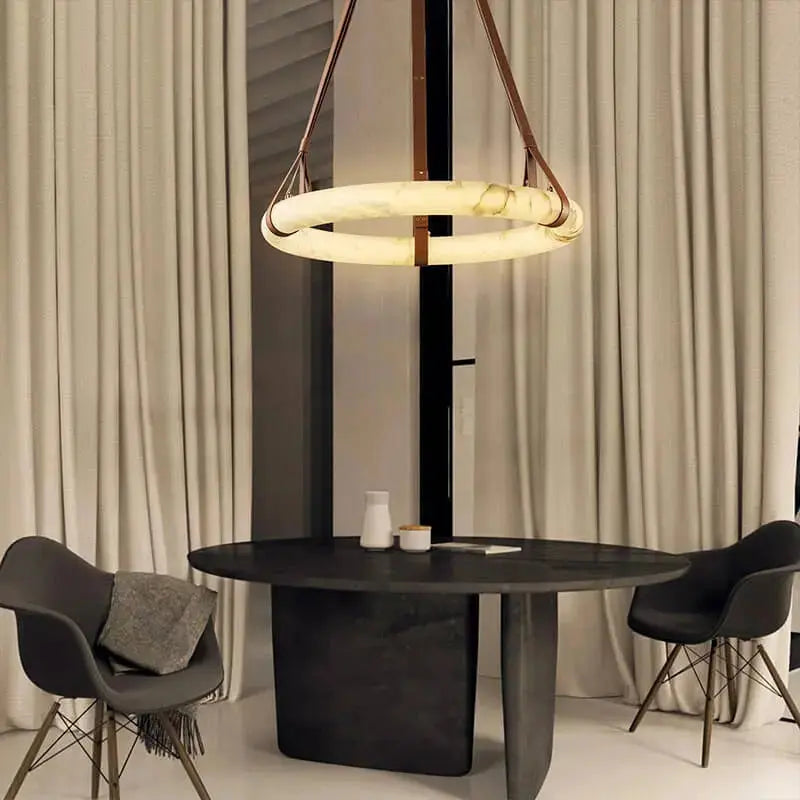
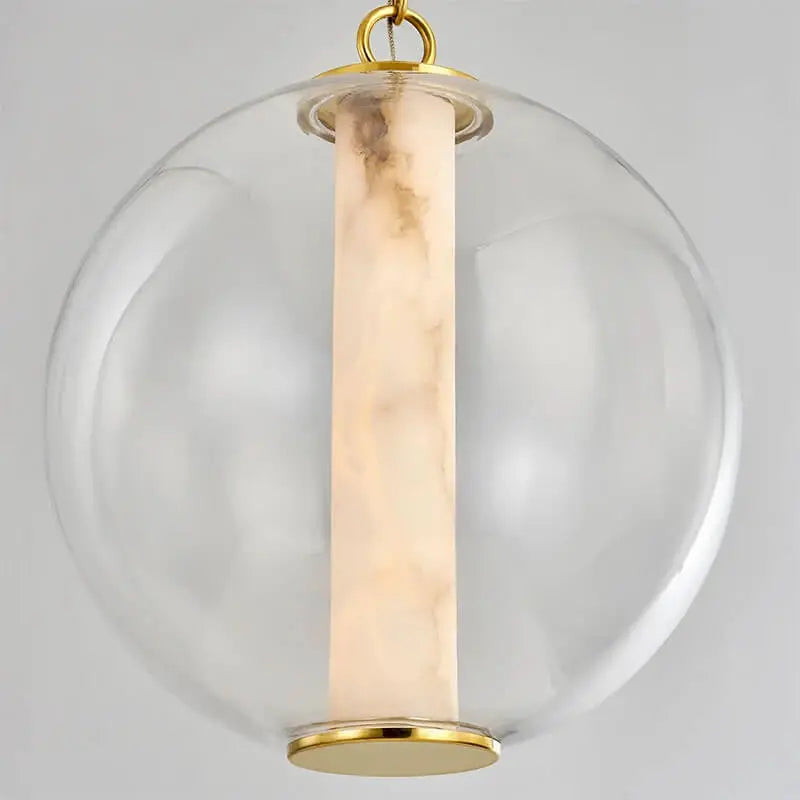
For very high ceilings, use a longer suspension rather than choosing a fixture that is merely oversized. Scale comes from both diameter and drop. A thoughtfully suspended alabaster or crystal chandelier can bring warmth and dimension to a tall room without overwhelming the furnishings.
Common placement mistakes to avoid
The most frequent mistake is treating every room like a foyer and hanging the chandelier from a fixed floor measurement. Above a dining table, it will almost always look too high. Another is choosing a dramatic fixture but shortening its chain until it sits tight to a lofty ceiling, which removes the very sense of theatre that made it appealing.
Also consider the bulb position and glare. Exposed bulbs installed too low can be uncomfortable at eye level, especially in dining rooms and lounges. A dimmer is a worthwhile finishing touch, allowing a brilliant crystal chandelier to offer soft evening ambience as easily as bright practical light.
Finally, check that the ceiling box and support are appropriate for the fixture’s weight. Larger luxury chandeliers require secure mounting and professional installation, particularly in stairwells, double-height foyers and rooms with vaulted ceilings.
A well-hung chandelier does more than light a room. It gives the space a focal point, draws the eye to its best proportions and makes everyday moments feel considered. Choose the measurement as your foundation, then trust the view from the doorway: that is where a beautiful fixture should make its first impression.