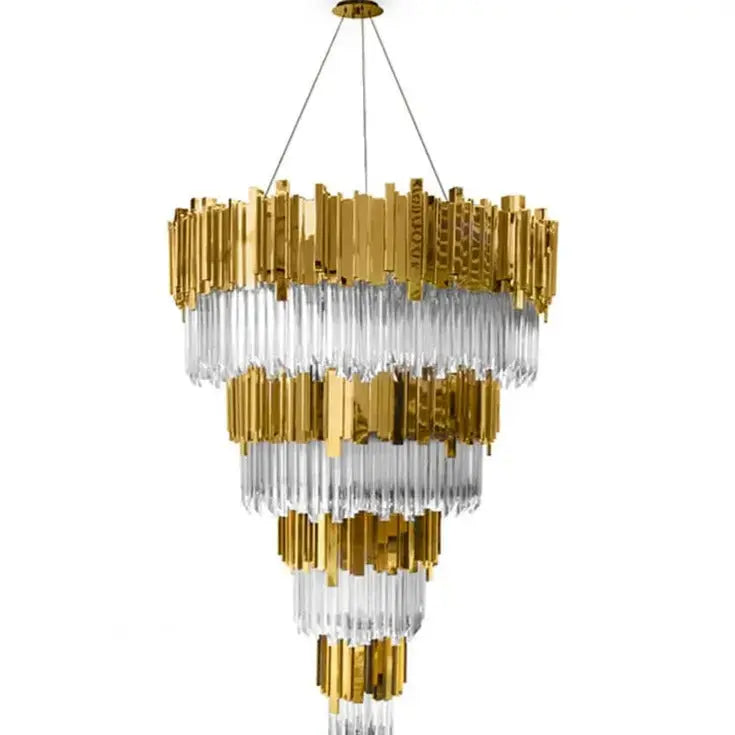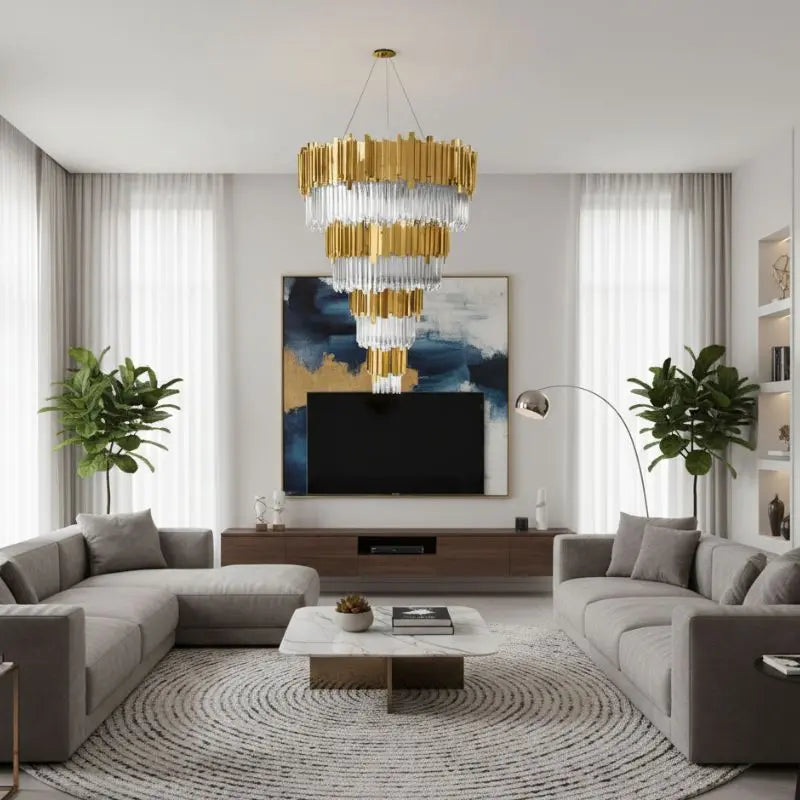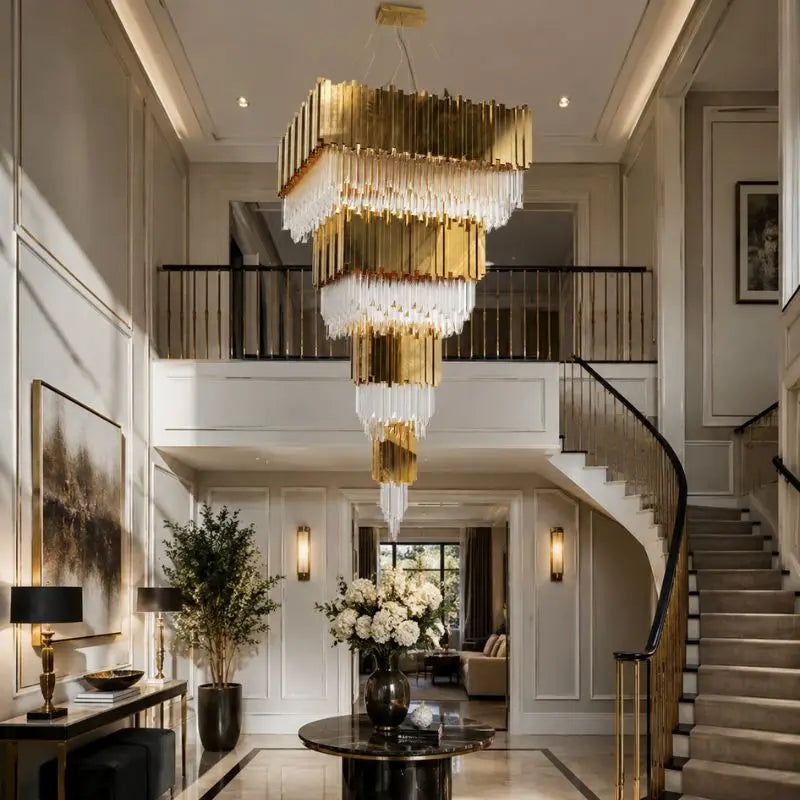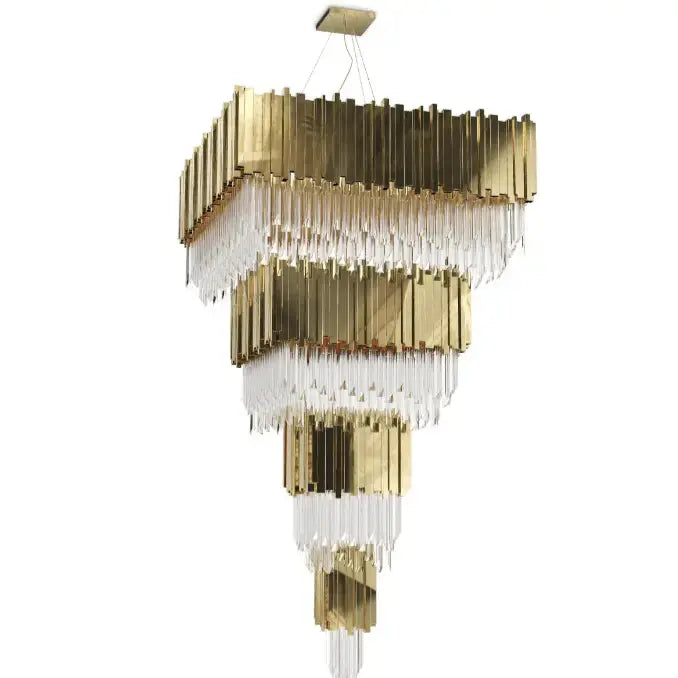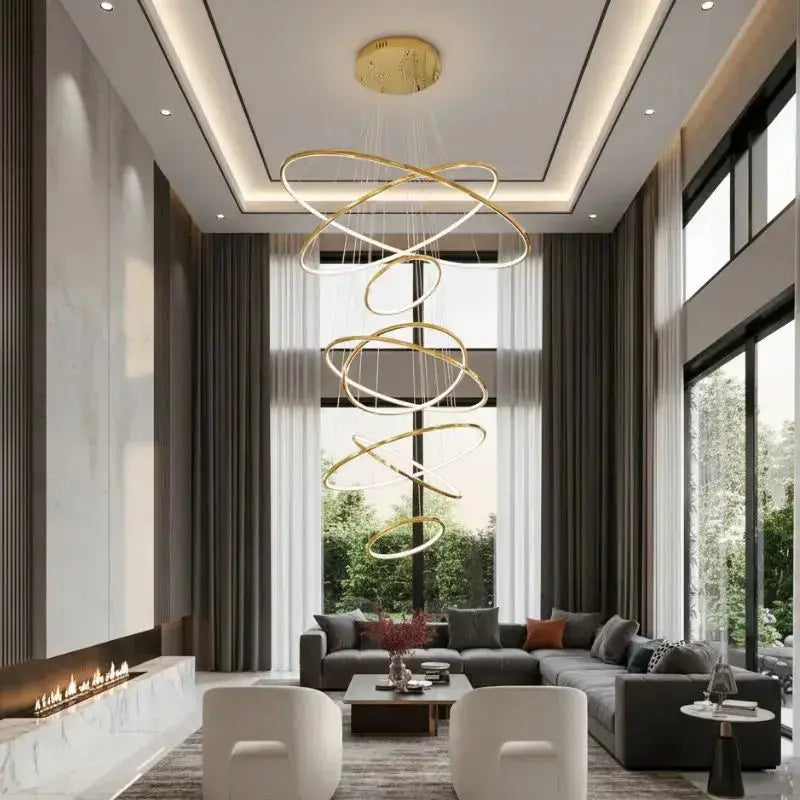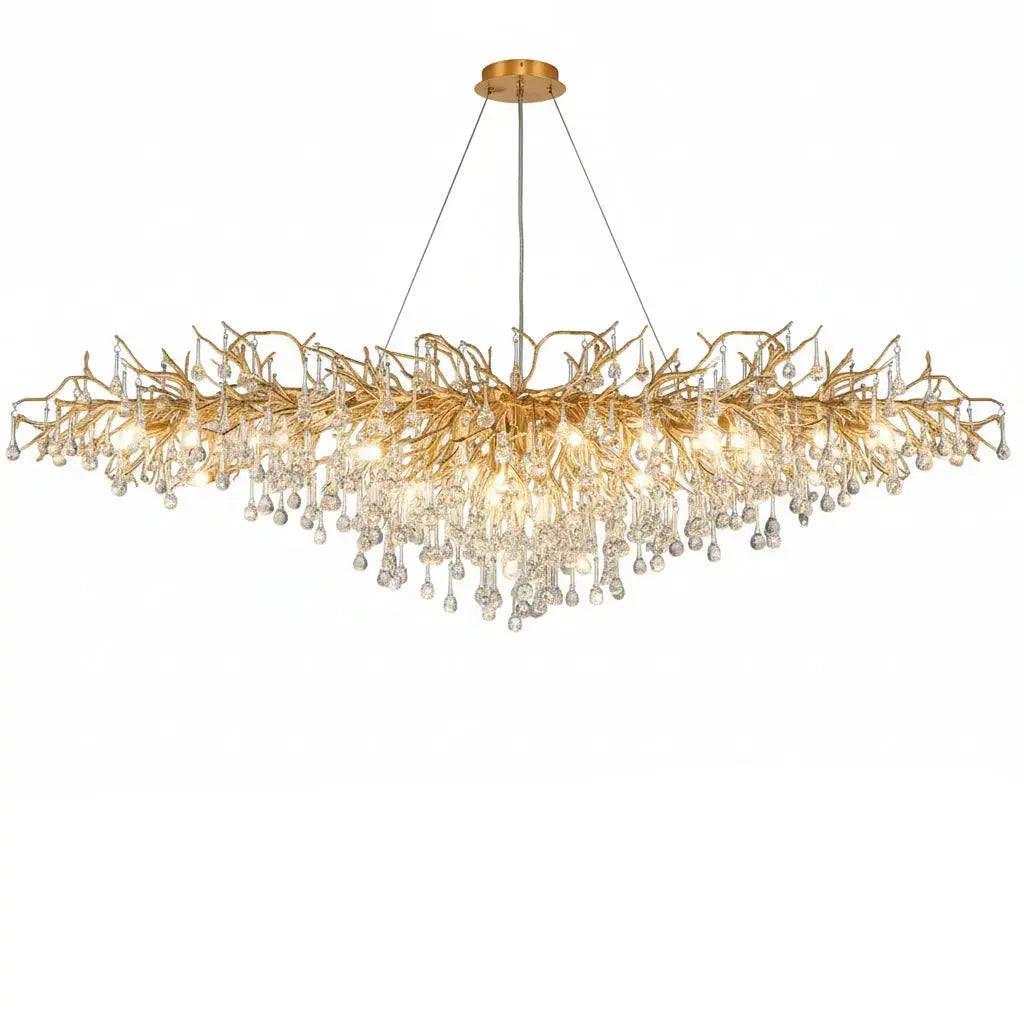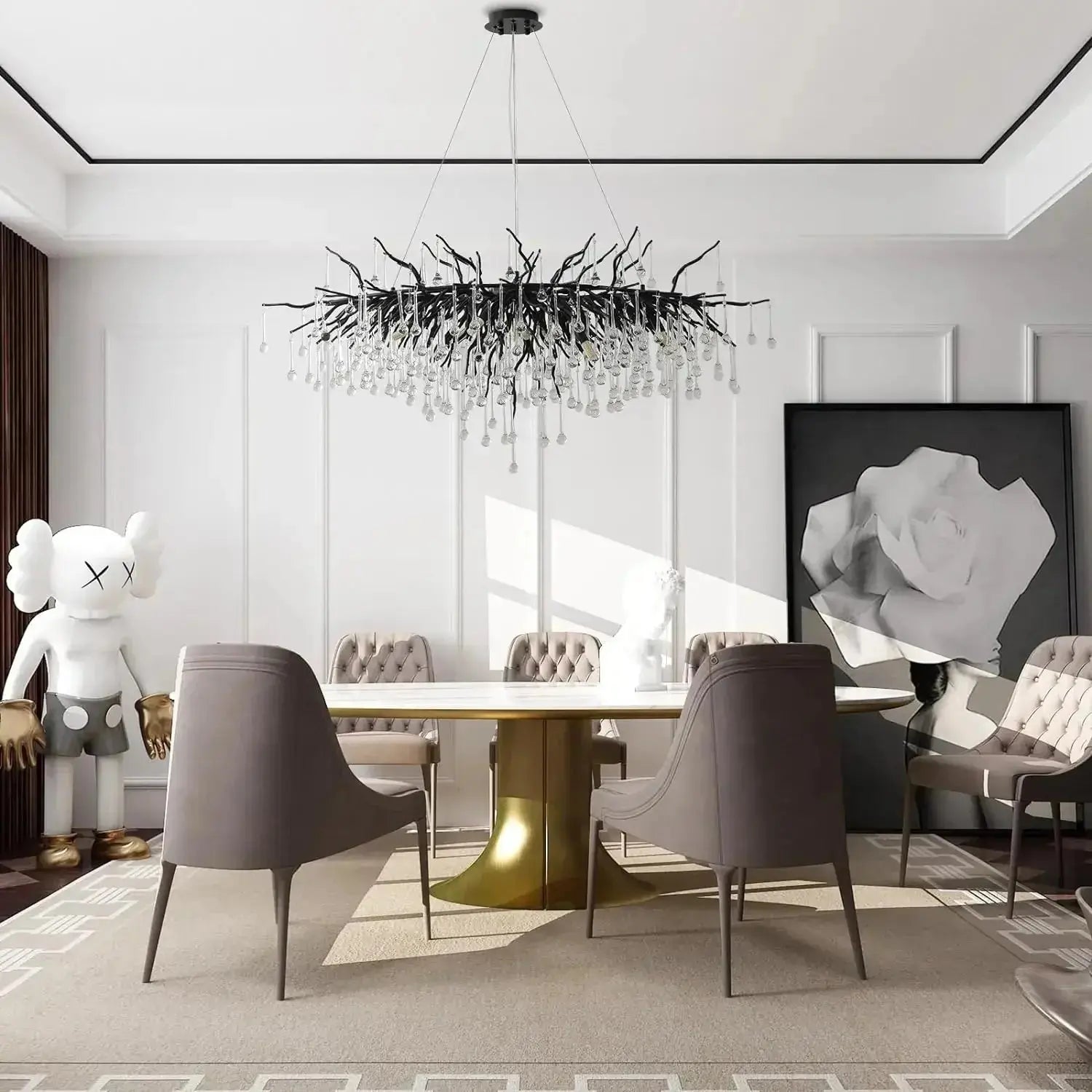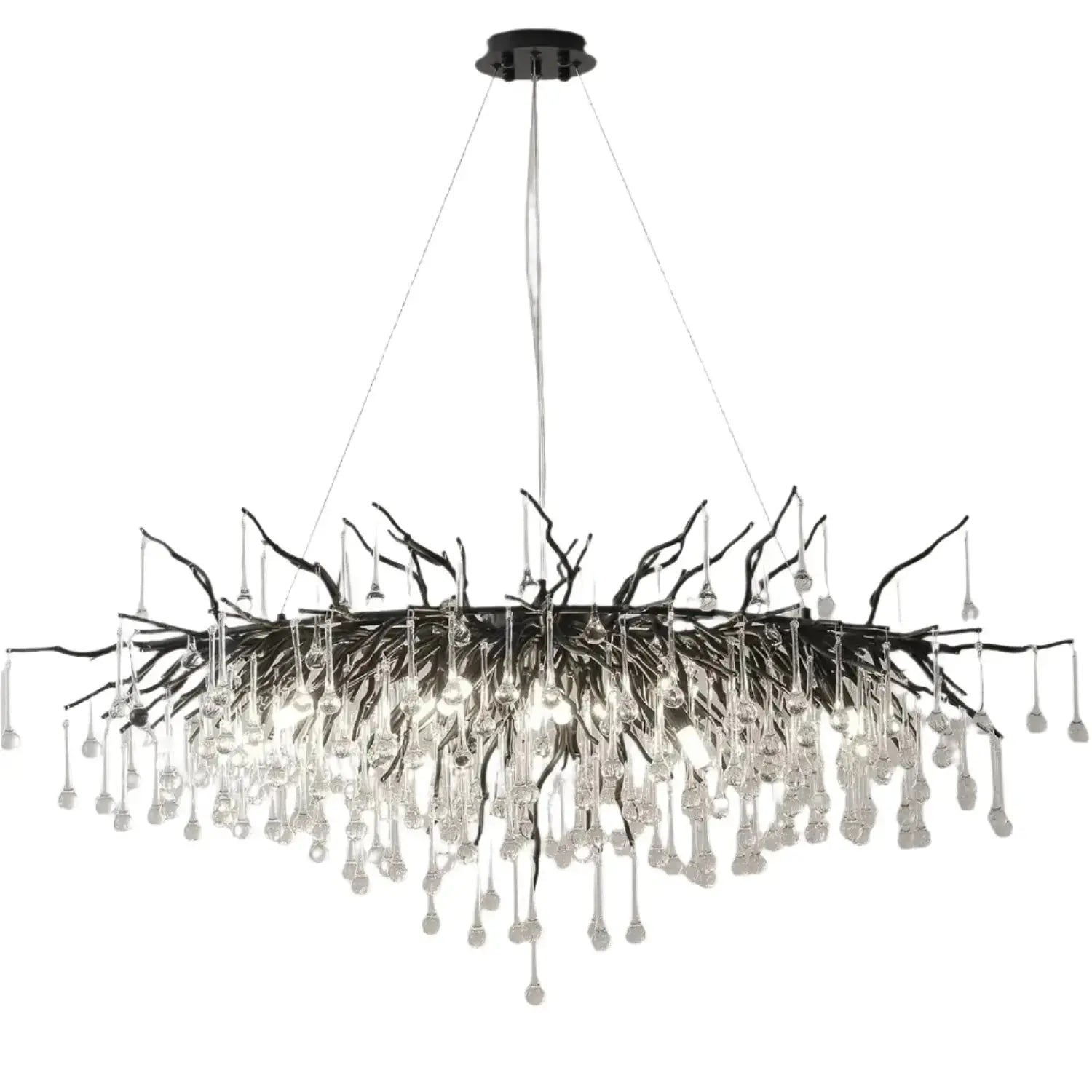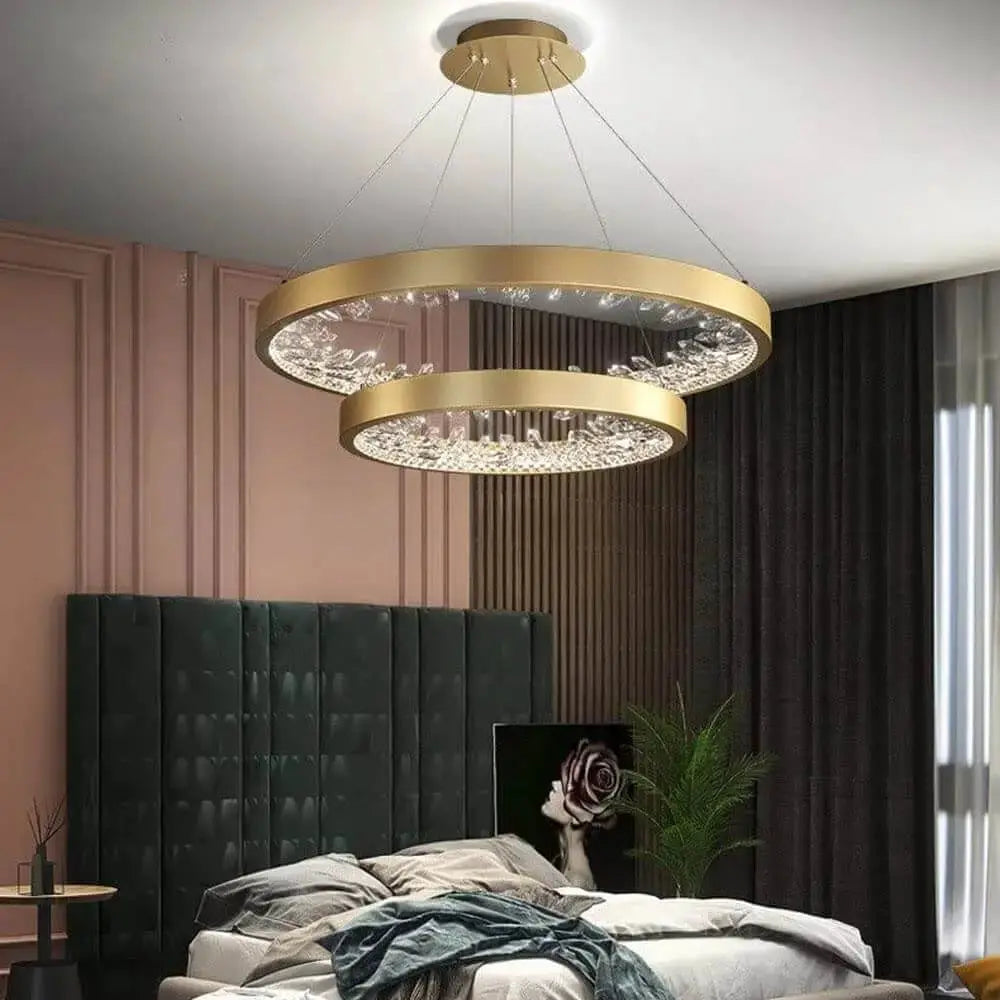
A vaulted ceiling gives a room instant presence, but it also changes the rules for statement lighting. The right chandelier for sloped ceiling spaces should look beautifully composed from every angle, rather than appearing to tilt awkwardly or hang too high above the room. With the correct mounting, proportion and drop, a chandelier can turn a pitched ceiling into the architectural feature it deserves to be.
Why sloped ceilings need a different approach
On a flat ceiling, a chandelier canopy sits flush and the fixture hangs directly below its electrical point. A sloped ceiling introduces an angle, which can leave a standard canopy sitting unevenly against the surface. More importantly, it can cause the chandelier itself to hang at an unwanted angle unless the suspension system is designed to compensate.
Many chandeliers are compatible with sloped ceilings, particularly styles suspended by chain, cable or an adjustable rod with a swivel joint. The key is not simply whether the fixture can be fitted, but whether its hanging method lets the body of the light settle level beneath the ceiling. A level chandelier feels intentional and refined. A visibly leaning fixture can distract from even the most exquisite crystal or sculptural silhouette.
The pitch of the ceiling matters too. A gentle cathedral ceiling may accommodate a wide range of fittings, while a sharply angled roofline can require a specialist vaulted-ceiling canopy or an angled adaptor. Before choosing by appearance alone, confirm the maximum ceiling slope the fitting supports and ensure your installer can assess the existing electrical point.
Choose the right chandelier for sloped ceiling installation
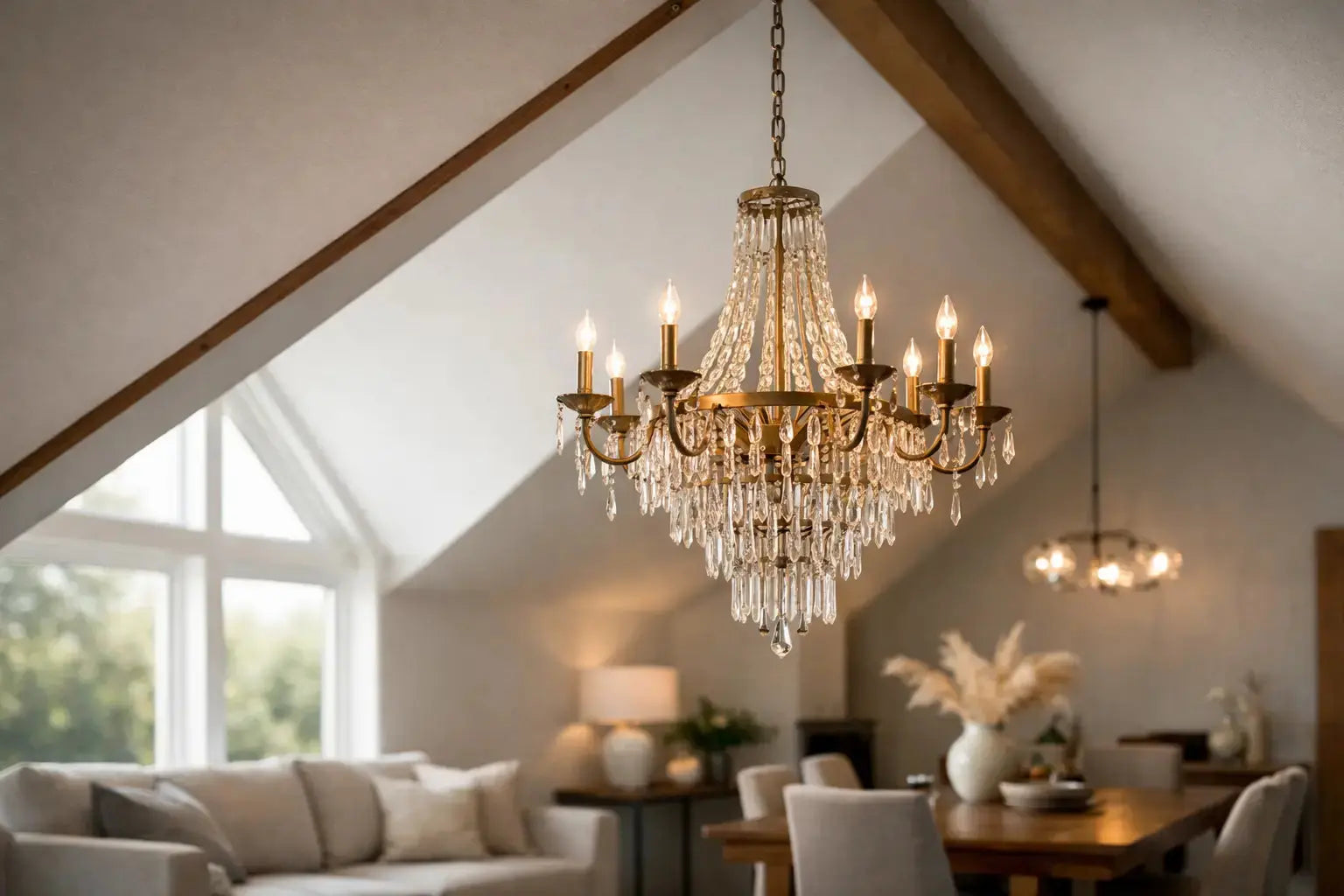
The suspension type often determines whether a design will work in your room. Chain-hung chandeliers are a natural choice for many pitched ceilings because the chain can pivot from the canopy and allow the fixture to hang straight. They suit traditional crystal designs, lantern chandeliers and transitional pieces with a classic sense of grandeur.
Cable-suspended chandeliers offer a more contemporary look. Fine adjustable cables can create a light, almost floating effect, making them particularly striking in open-plan living spaces, stairwells and modern dining rooms. Check that each cable can be independently adjusted. This allows the installer to make small corrections so a multi-light fixture sits perfectly level.
Rod-hung chandeliers create a clean, tailored line, but they need more careful specification. Look for a sloped-ceiling-compatible swivel or a dedicated angled mounting kit. Without one, a rigid downrod may follow the ceiling pitch rather than drop vertically, leaving the chandelier unbalanced. Some designs can be converted from chain to rod, but this should only be considered where the manufacturer confirms compatibility.
A flush or semi-flush ceiling fitting can be an elegant alternative in a room where the sloped ceiling is low. It will not deliver the same dramatic vertical effect as a hanging chandelier, but it can provide polished illumination without compromising headroom. This is often the better choice for loft bedrooms, dressing rooms or compact landing areas.
Measure the room before falling for the fixture
A chandelier should honour the scale of both the room and the ceiling volume. Sloped ceilings can make a space feel larger than its floor plan suggests, which is why an undersized light can disappear overhead. At the same time, a large fitting suspended too low can overwhelm a seating area or interrupt a clear route through the room.
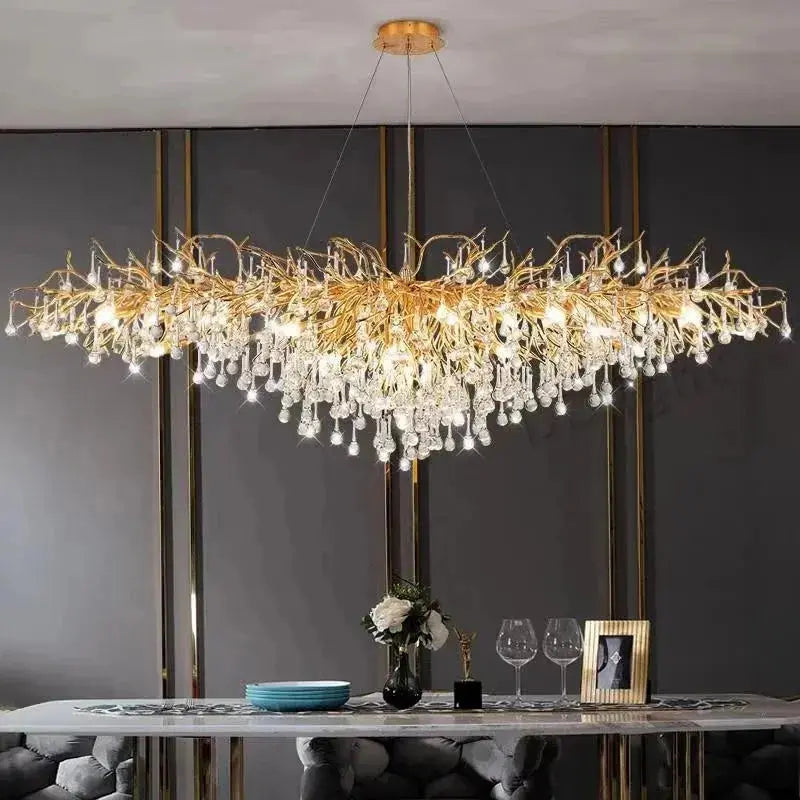
For a dining table, the chandelier should generally be centred over the table rather than the room. In most settings, allow around 76 to 91 centimetres between the tabletop and the bottom of the fixture. A vaulted ceiling can tempt you to hang the light higher, but the dining table creates its own visual zone. Keeping the chandelier within that zone makes the arrangement feel intimate, considered and purposeful.
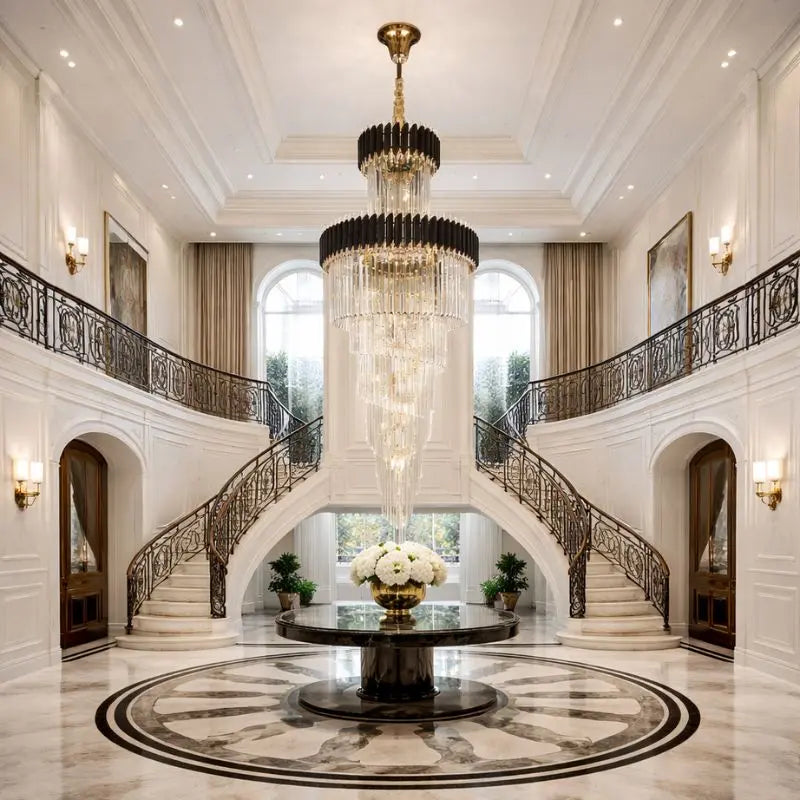
In a living room or bedroom, think about the lowest point of the fixture in relation to movement. A chandelier above a coffee table can sit lower than one placed in an open walkway. For circulation areas, maintain comfortable clearance beneath the fitting. In a foyer or staircase, the view from below and from an upper floor both matter, so a tiered chandelier with a generous vertical profile can be especially effective.
Diameter should be considered alongside drop length. A broad, low chandelier can complement a shallow vault, while a narrow cascading design makes the most of a tall apex. The aim is balance: enough presence to hold the room, without competing with beams, windows or artwork.
Let the ceiling height guide the drop
Adjustable chain and cable lengths are valuable because the ideal drop is rarely obvious from a product photograph. Start by identifying the room's functional centre, then assess the view from the doorway, the main seating position and any neighbouring mezzanine or staircase. A chandelier that looks exceptional from one viewpoint but cuts across a key sightline may need a shorter suspension.
For a double-height entrance hall, longer drops create the kind of arrival moment that makes the architecture feel more luxurious. In a dining room with a moderate pitch, a slightly shorter drop may preserve a more relaxed, welcoming atmosphere. The right length depends on how the room is used, not just on the ceiling's highest point.
Select a style that belongs in the architecture
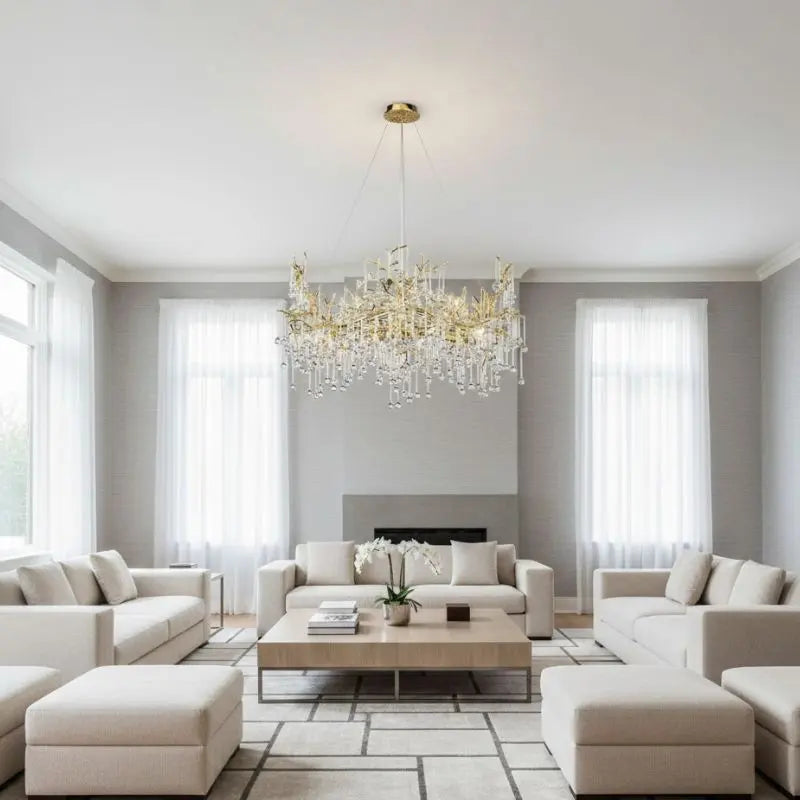
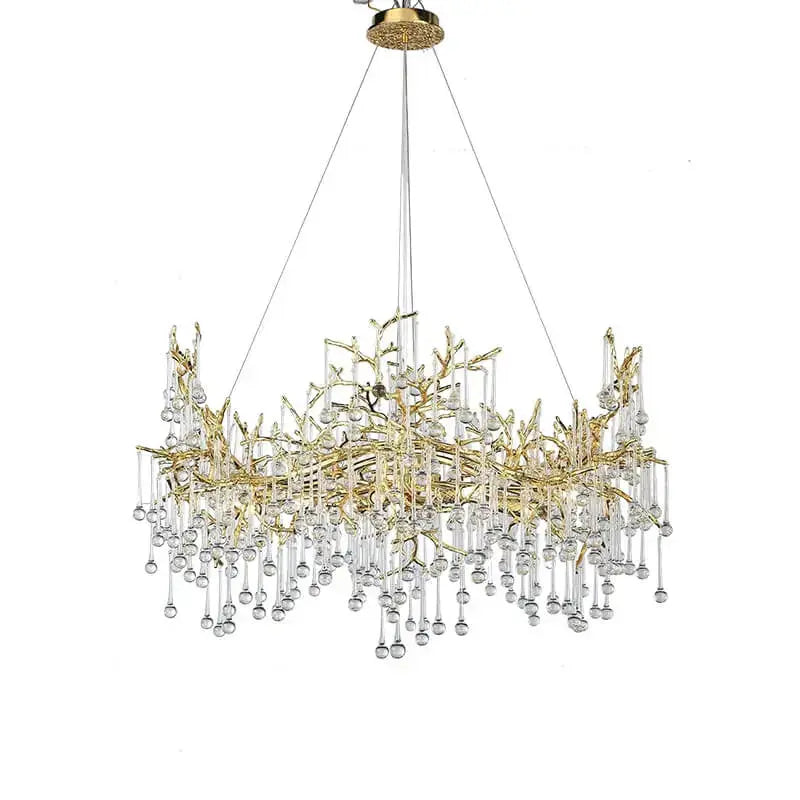
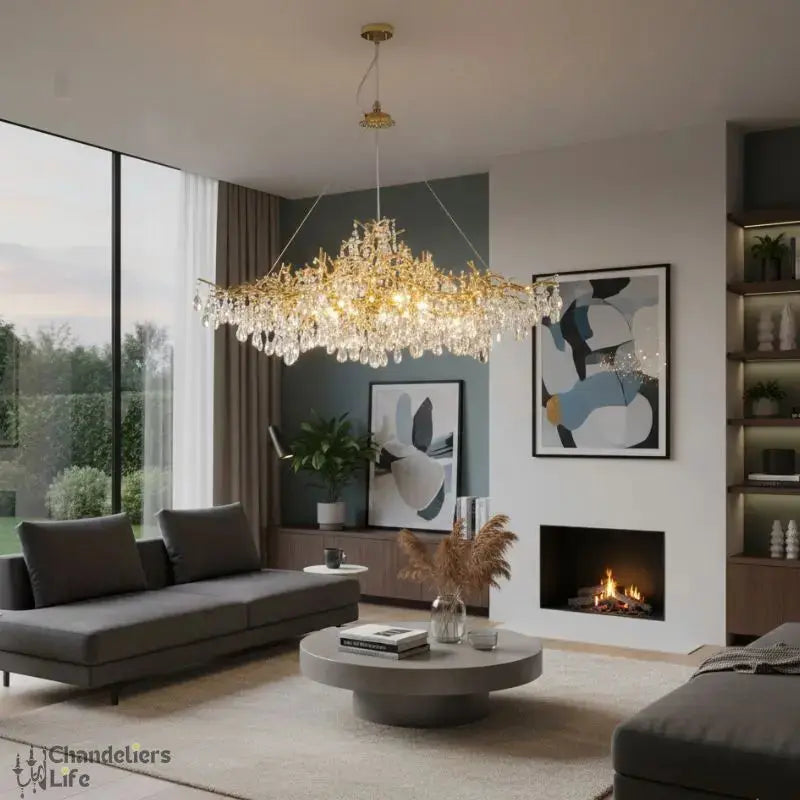
A sloped ceiling already brings movement and shape to a room. Your chandelier can either echo that drama or offer a calm counterpoint. In a traditional vaulted dining room, a crystal chandelier introduces timeless elegance, catching daylight from roof windows and creating a luminous display after dark. Candle-style arms and warm metal finishes can add a sense of heritage without making the room feel formal or heavy.
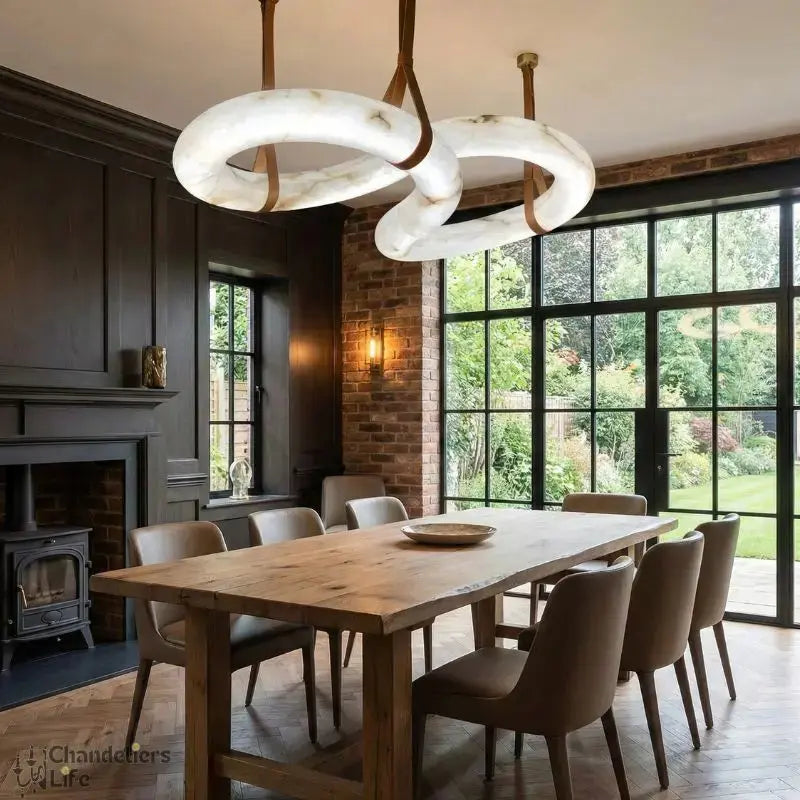
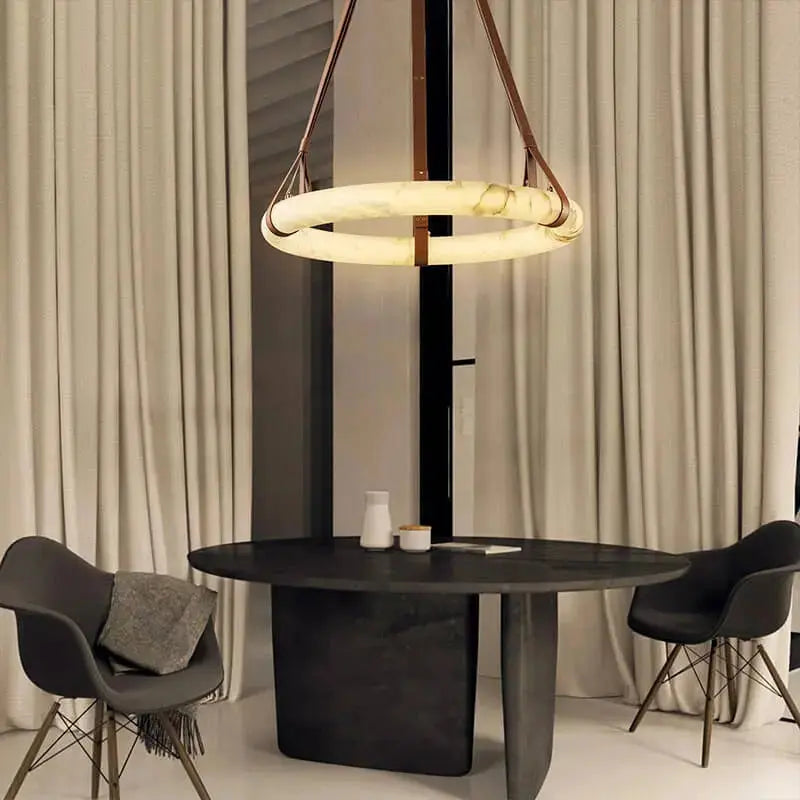
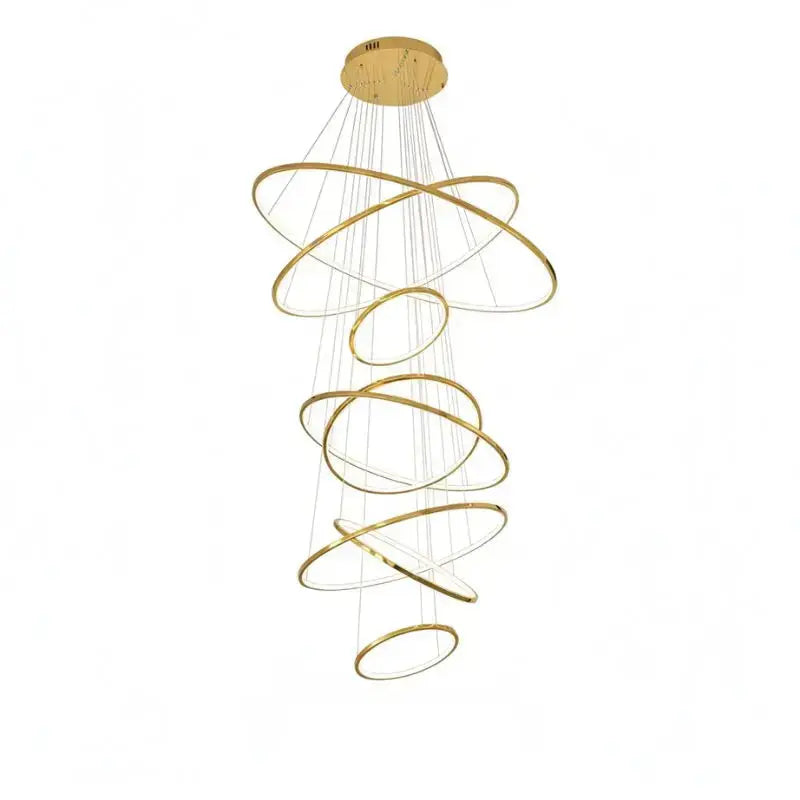
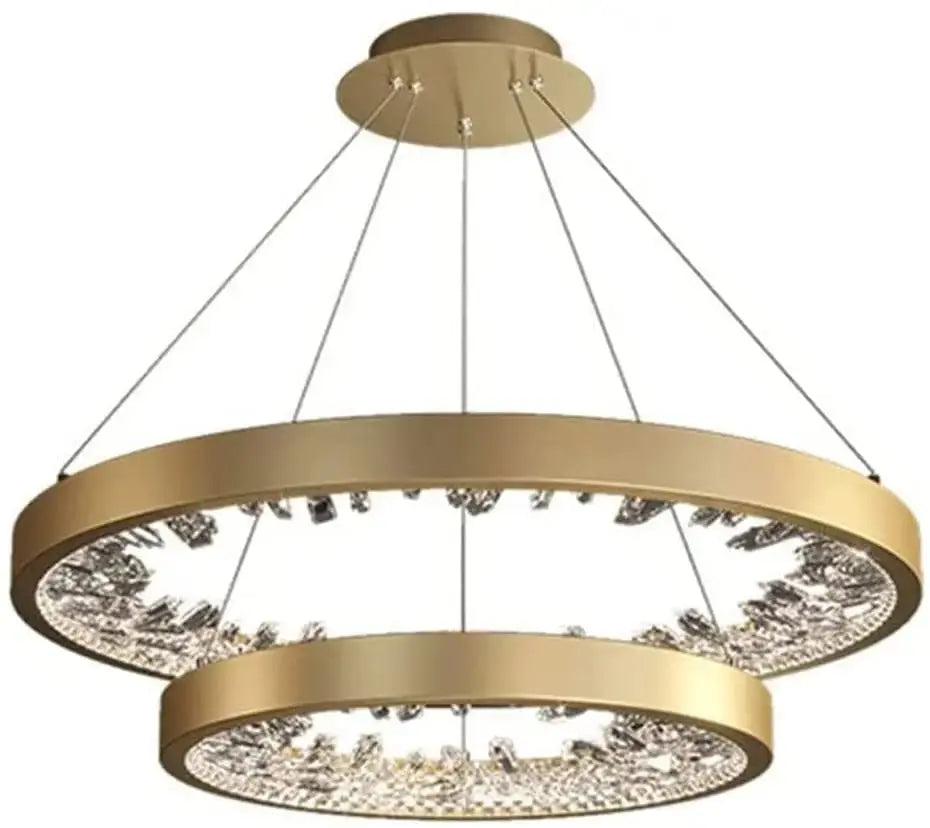
For contemporary interiors, linear chandeliers and asymmetric glass designs work beautifully above a dining table or kitchen island beneath an angled ceiling. Their disciplined geometry can balance the organic lines of timber beams, plasterwork and exposed rafters. A sculptural ring chandelier is another strong choice, especially in a living room where you want a clear focal point without visual clutter.
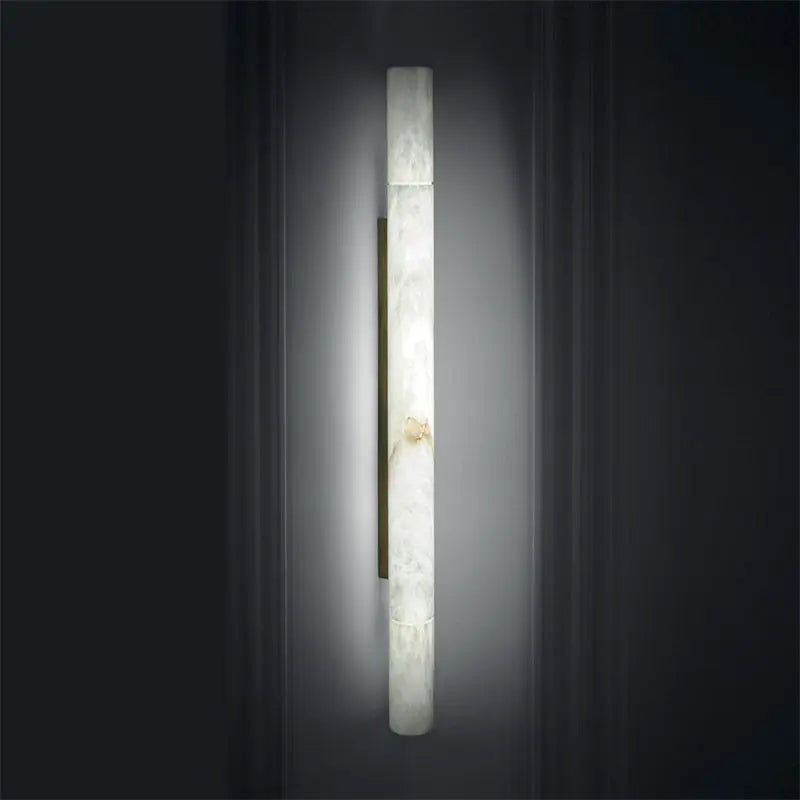
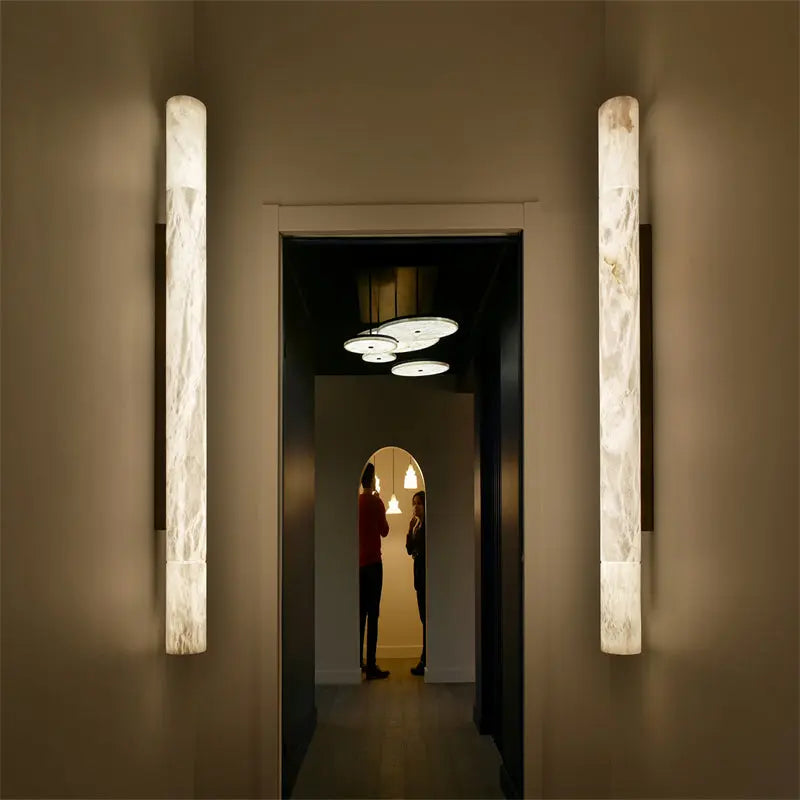
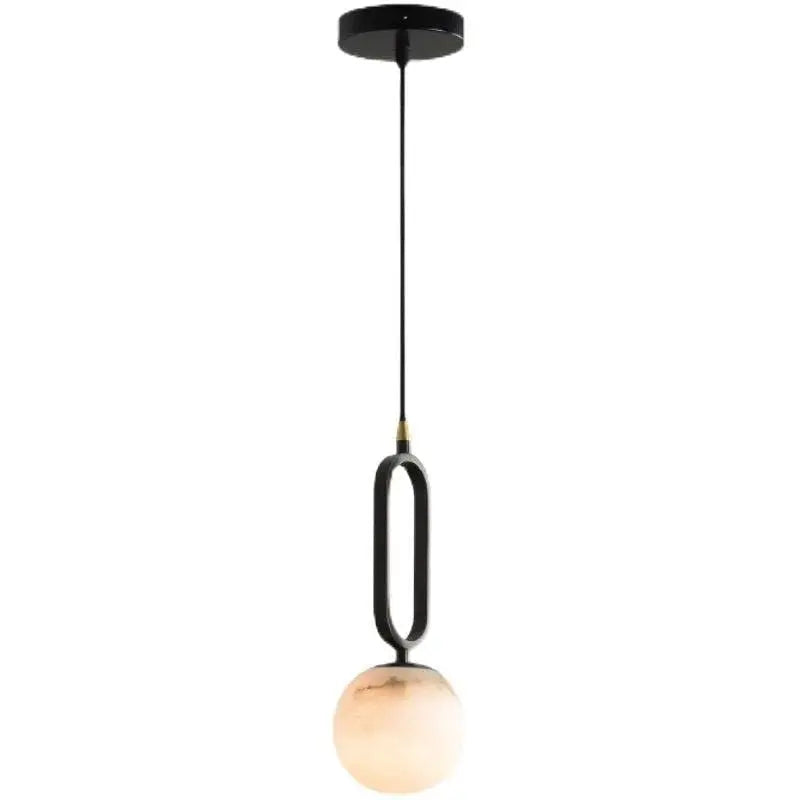
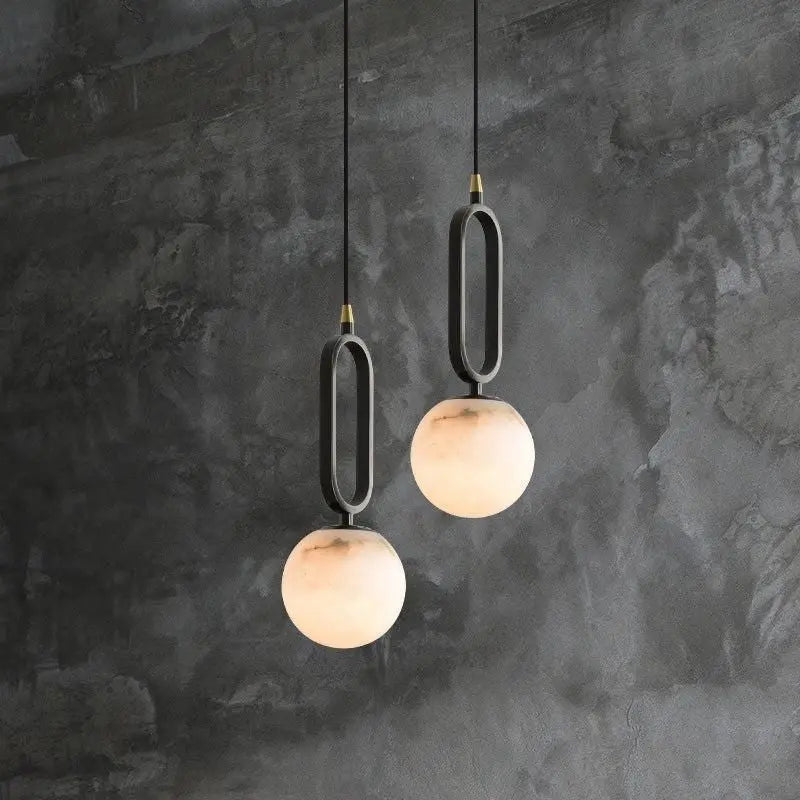
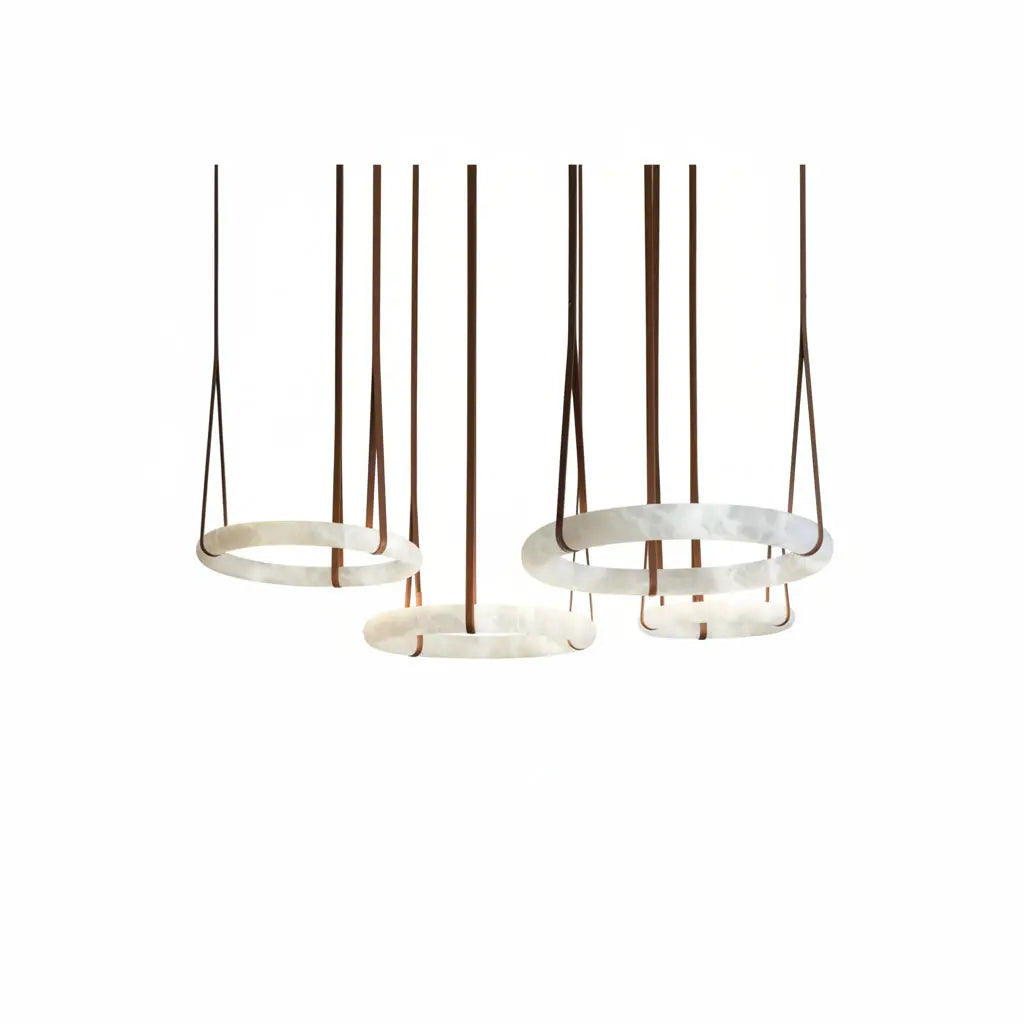
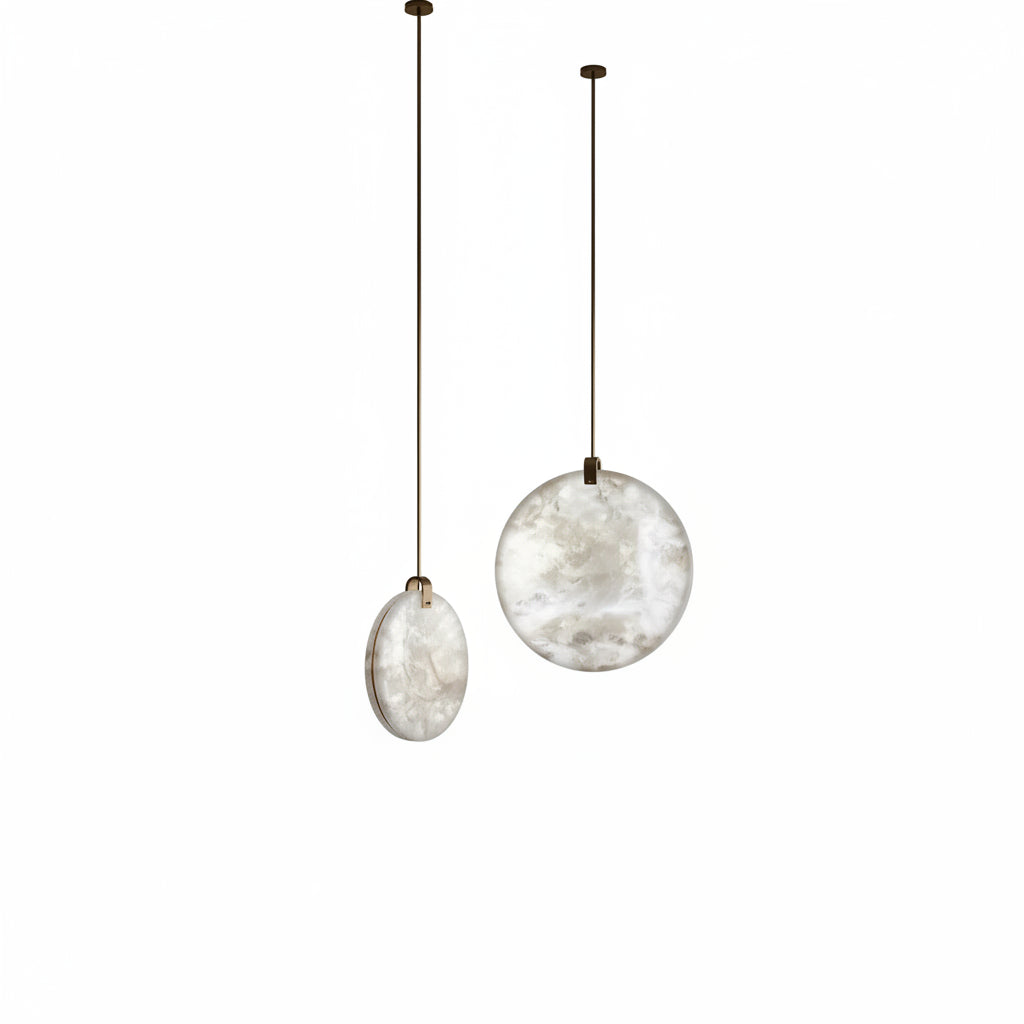
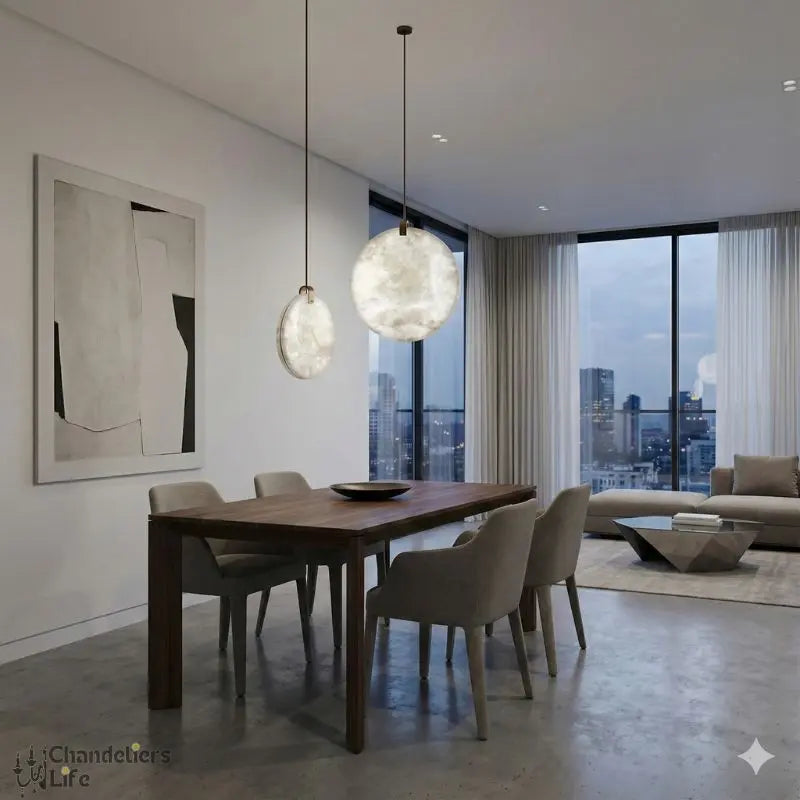
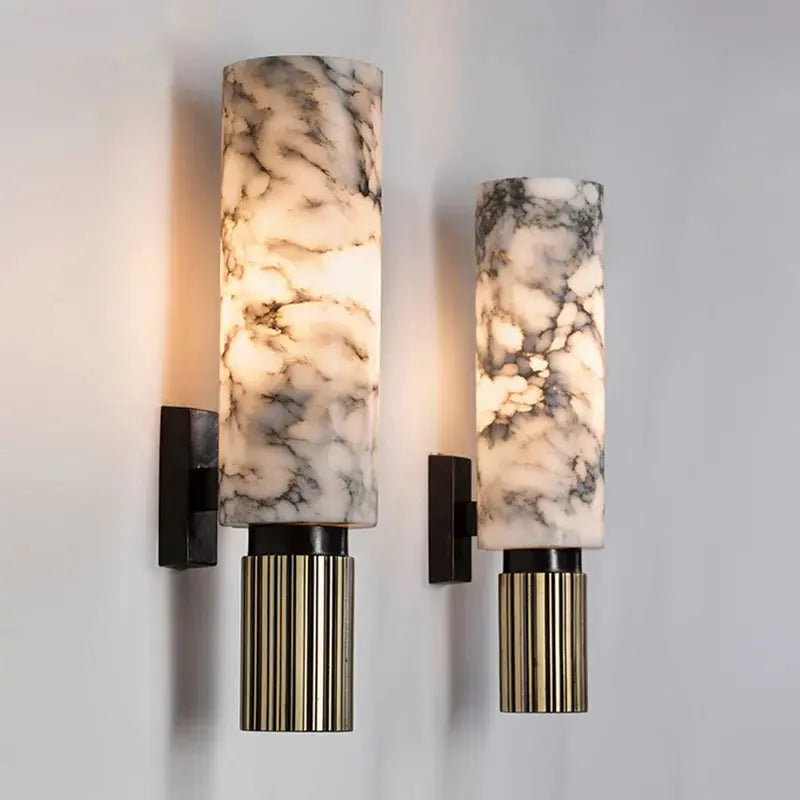
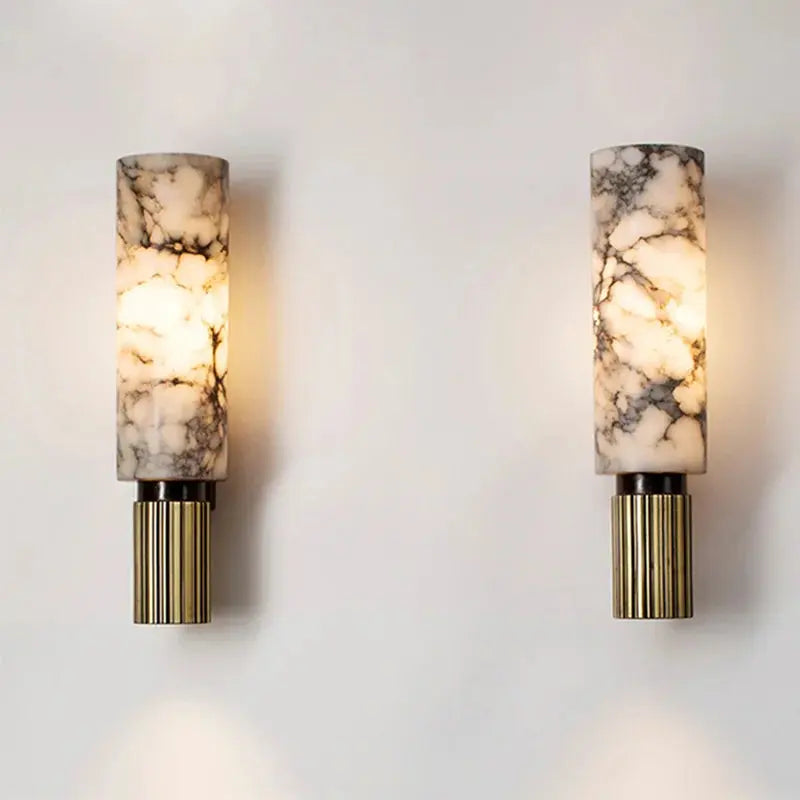
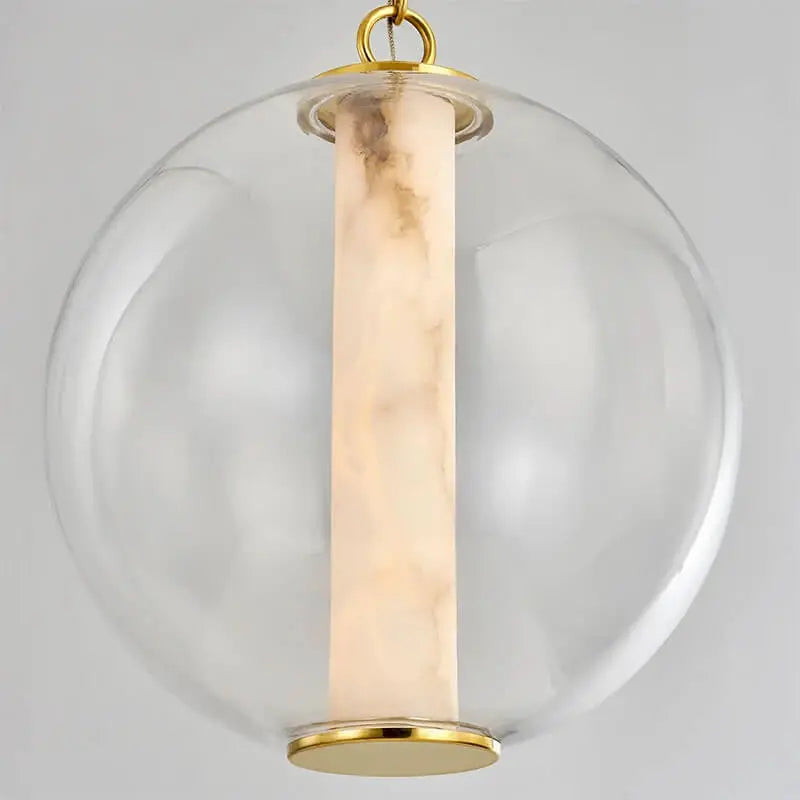
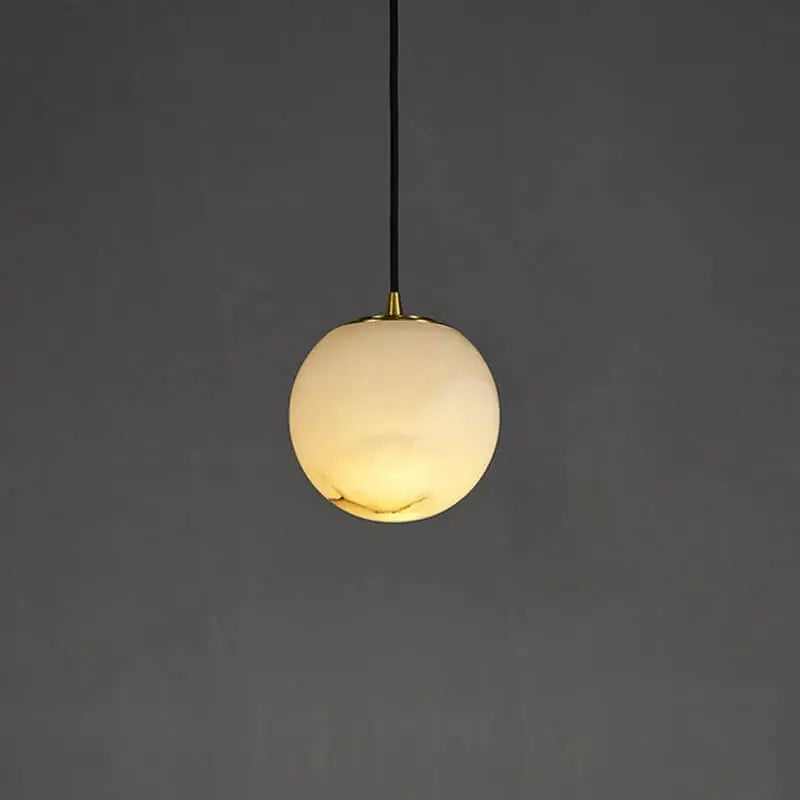
Alabaster-inspired shades bring a softer, more diffused glow to vaulted bedrooms and lounges. Their natural veining feels quietly luxurious, while their restrained profile lets the ceiling architecture remain visible. If the ceiling itself is richly detailed, a simpler chandelier often has greater impact than an overly ornate piece.
Finish also affects how prominent the fitting feels. Polished brass and crystal reflect light generously and suit interiors built around glamour. Matte black creates contrast against pale vaulted ceilings, while brushed nickel and soft gold offer a versatile, elevated middle ground. Consider the finishes already visible in door furniture, curtain poles and furniture legs, but do not feel obliged to match every metal exactly. A thoughtfully layered palette looks more collected than a perfect match.
Plan the lighting, not just the centrepiece
A chandelier makes a statement, but it should not be expected to do every job. High, sloped ceilings can absorb light, particularly when the walls and flooring are dark. Pairing a central chandelier with wall lights, floor lamps or discreet accent lighting gives the room depth and makes it more comfortable at different times of day.
Dimming is especially worthwhile. It lets a crystal fixture sparkle during dinner while allowing a softer glow for quiet evenings. In a tall room, choose bulbs with an appropriate brightness and colour temperature, as changing them later may require specialist access equipment. Warm white light generally flatters living spaces, dining rooms and bedrooms, enhancing the material richness of glass, metal and natural stone.
If the chandelier has exposed bulbs, consider their appearance when switched off as well as their output. Decorative filament bulbs can reinforce a vintage or industrial style, while frosted bulbs soften glare in fixtures positioned near an upper landing or bedroom sightline.
Installation details that protect the finished look
Even the most beautiful chandelier needs a secure, precise installation. A substantial fixture may require a properly rated ceiling box and additional support fixed to structural framing. The electrical point on a vaulted ceiling is not automatically suitable for the chandelier you have chosen, especially if the fitting is heavy or has a wide canopy.
Use a qualified electrician to inspect the support, fit the appropriate canopy or adaptor, and ensure the chandelier is level. This is not a place to compromise. The small details - a canopy sitting flush, a chain adjusted evenly, cables cut to matching lengths and no visible strain on the wiring - are what make luxury lighting look effortless.
Before installation day, unpack the fixture carefully and check its dimensions, suspension components and instructions. It is far easier to resolve a compatibility question before the electrician arrives than after the fitting has been partially assembled at ceiling height.
A pitched ceiling should never limit your design ambition. Choose a chandelier with the right suspension, give it room to breathe, and let its glow draw attention to the height, texture and character that made the space special in the first place.