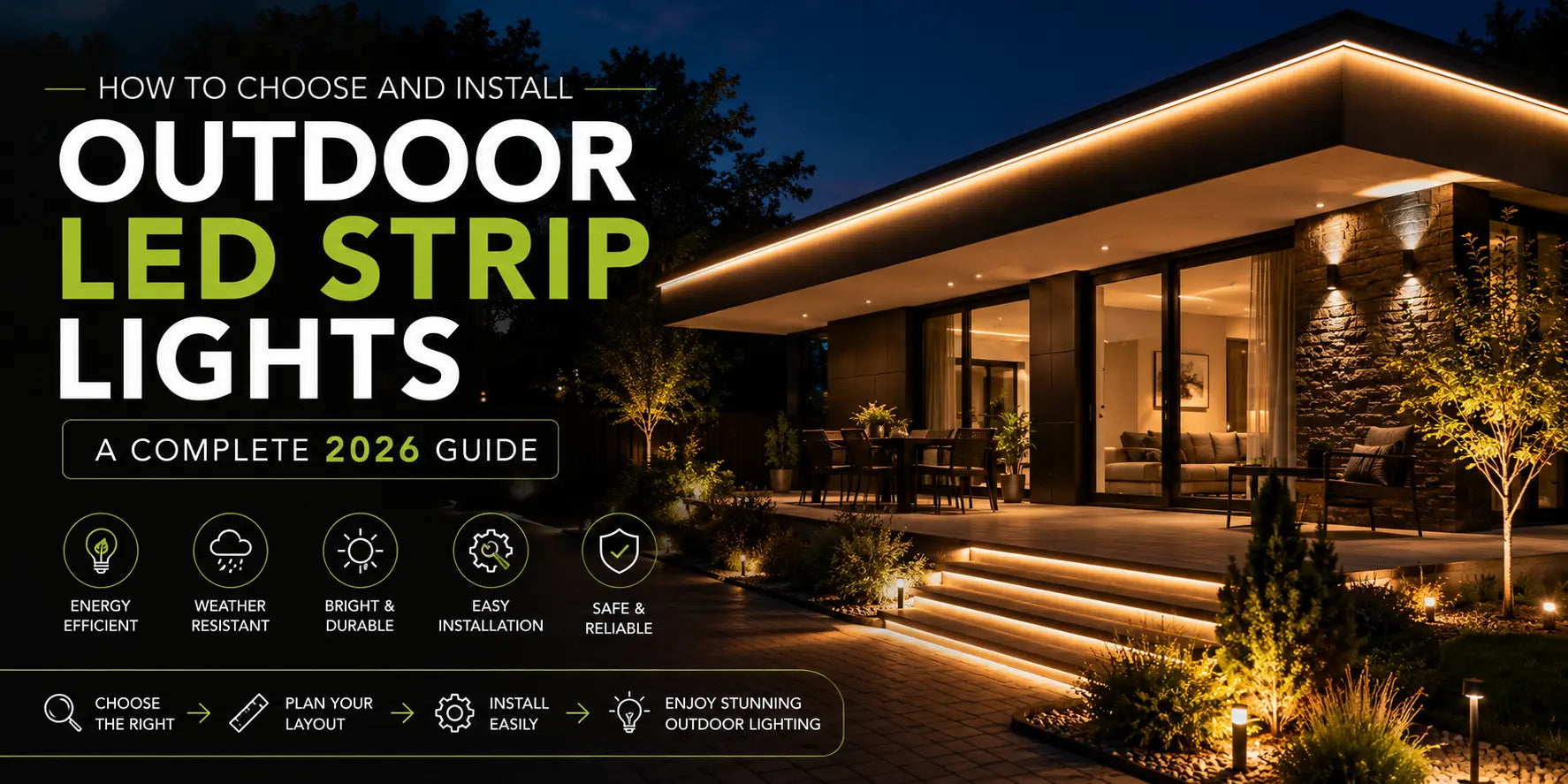
Outdoor lighting transforms gardens, patios, and architectural features after dark, adding ambiance and safety. Outdoor LED strip lights combine flexibility, brightness, and energy efficiency in a waterproof form, making them ideal for illuminating exterior spaces. Understanding how these lights operate and how to install them correctly ensures vibrant, durable outdoor lighting setups that withstand UK weather conditions.
What Are Outdoor LED Strip Lights and How Do They Work?
LED strip lights consist of tiny light-emitting diodes mounted on a flexible printed circuit board (PCB). For outdoor use, these strips incorporate weatherproof coatings such as silicone or epoxy that shield delicate LED chips and circuitry from moisture and dust. The PCB provides structural support and electrical connections, while an adhesive backing simplifies installation on various surfaces. Waterproof ratings, indicated by IP codes, determine the level of protection, with outdoor strips typically rated IP65 or higher. Power supplies, commonly called LED drivers, regulate voltage—usually 12V or 24V DC—ensuring stable illumination. Control mechanisms range from simple on/off switches to remote or smart home controllers, enabling colour changes or dimming outdoors.
Key Features of Outdoor LED Strip Lights
Essential features for outdoor LED strips begin with waterproof ratings: IP65 withstands rain and splashes, IP67 offers temporary submersion protection, while IP68 suits continuous underwater use. Voltage options such as 12V, 24V, and occasionally 48V tailor power delivery to project scale and run lengths. LED types vary from standard SMD (surface-mounted device) chips producing distinct points of light, to COB (Chip on Board) strips offering smooth, dotless illumination. RGB, RGBW, and single colour LED strip lights provide multi-colour effects, with RGBW adding dedicated white LEDs for more natural white tones. Outdoor strips often include UV-resistant materials and can tolerate temperature fluctuations found in UK climates, ensuring longevity and reliable performance in exposed locations.
Choosing the Right Outdoor LED Strip Lights for Your Project
Determining Voltage: 12V vs. 24V Outdoor LED Strips
Choosing between 12V and 24V outdoor LED strips depends largely on the length of the installation and power efficiency. 12V LED strip lights are easier to source and install for short runs up to around 5 metres but suffer more from voltage drop, leading to dimming at the strip’s end. Longer runs require multiple power injection points, increasing complexity. Conversely, 24V systems support longer continuous runs—often 10 metres or more—with reduced voltage drop and better efficiency, decreasing the need for frequent power injections. While 24V setups may cost slightly more initially, they provide greater flexibility and less wiring complication for expansive outdoor designs.
Selecting LED Type: COB vs. Standard SMD, and RGB/RGBW
Standard SMD strips display individual LED points creating pinpoint beams of light, suitable for accent or decorative purposes. COB LED strips emit a smooth, continuous glow without visible dots, ideal for under-cabinet lighting or architectural washes where seamless illumination is preferred. Outdoor RGB LED strip lights allow colour-changing effects and dynamic lighting schemes, perfect for festive or entertainment settings. RGBW LED strip lights enhance these effects with an additional dedicated white LED that delivers cleaner, more natural whites—a key advantage for balanced garden scenes or patios where crisp white light enhances plant colours and outdoor furniture.
IP Ratings and Weatherproofing for Outdoor Use
IP ratings define how well LED strips handle exposure to elements. IP65 ensures protection against water jets and dust ingress, often suitable for covered outdoor areas. IP67-rated strips resist temporary immersion, making them ideal for wetter conditions like near pools or fountains. For installations fully exposed to rain or submerged environments, IP68 ratings guarantee continuous waterproofing. Maintaining this protection extends to sealing cut ends with silicone and using IP-rated connectors and end caps. Proper sealing ensures longevity and prevents moisture compromising the LED circuitry.
Essential Outdoor LED Strip Accessories
Selecting the right LED driver is critical; it must match the strip voltage and wattage while carrying an outdoor rating (IP66 or above) to endure weather. LED aluminium profiles serve as heat sinks, improving LED lifespan by dissipating heat and offering physical protection. These profiles frequently include diffuser covers that soften light output for a polished finish. Connecting and securing outdoor strips requires compatible waterproof connectors, couplers, and junction boxes to preserve IP ratings. Mounting clips provide sturdy attachment to uneven or challenging surfaces, while cable management solutions ensure tidy, safe wiring runs resistant to environmental damage.
Planning Your Outdoor LED Strip Lighting Installation
Measuring and Preparing the Site
Accurate measurement of strip lengths prevents costly excess or shortage. Identify mounting points according to surface type—wood, metal, or concrete—with different preparation methods such as cleaning, priming, or roughening surfaces to improve adhesive bonding. Optimal placement ensures even illumination and maintains aesthetic appeal.
Power Supply and Cable Routing
LED drivers should be positioned in sheltered, well-ventilated, and accessible locations protected from direct weather. Outdoor-rated cables routed through conduits or buried at suitable depths guard against damage from soil moisture or physical impact. Use UV-resistant cable for above-ground sections to avoid degradation under sunlight.
Deciding on Control Options
Control choices range from simple dimmer switches that adjust brightness to remote control units for convenience. App-based and smart home integrations provide advanced scheduling and colour-changing functions. Controller compatibility with the chosen LED types—particularly RGB and RGBW—alongside voltage and power supply parameters ensures system reliability.
Step-by-Step Installation Guide for Outdoor LED Strip Lights
Start by thoroughly cleaning the mounting surface to ensure proper adhesion. Cut LED strips only at manufacturer-marked points to maintain circuit integrity, then seal these ends with waterproof silicone or end caps to prevent moisture ingress. Attach strips using their adhesive backing on smooth surfaces or secure them with mounting clips and LED aluminium profiles for added protection. Wire strips following manufacturer instructions, wiring in series or parallel as recommended to match power needs and control setups. Connect strips to an LED driver precisely matching voltage and wattage specifications to avoid overloads or dimming. Waterproof all connections using heat shrink tubing or IP-rated waterproof connectors to maintain protection. Before finalising your installation, test all components to verify consistent lighting and troubleshoot common issues like flickering or unexpected dimming by checking wiring and power supply output.
Best Practices for Maintaining Outdoor LED Strip Lights
Regular visual inspections can catch early signs of damage or moisture penetration. Clean aluminium profiles and diffuser covers gently to preserve brightness and colour quality. LED drivers typically last several years but monitor for flickering or failure as signs for replacements. After maintenance or adjusting run lengths, reseal all connectors to sustain waterproofing. Keeping records of installation details aids future troubleshooting or expansions.
Common Questions About Outdoor LED Strip Lights
Can outdoor LED strip lights be used in wet or submerged areas?
Yes, but they must have a minimum IP67 rating to handle wet conditions and IP68 for continuous submersion. After cutting, waterproof integrity is maintained by sealing ends with silicone or professional waterproof connectors designed for outdoor use.
What’s the difference between RGB and RGBW outdoor LED strip lights?
RGB LED strips mix red, green, and blue LEDs to create various colours but lack a dedicated white, resulting in whites that are often tinted or dimmer. RGBW LED strip lights include an extra white LED, producing truer and brighter whites, ideal for both functional and decorative applications outdoors in gardens or patios.
How long can LED strip runs be outdoors before voltage drop becomes an issue?
Voltage drop limits vary by voltage: 12V strips typically max out around 5 metres before dimming appears, while 24V systems can extend to 10 metres or more. Power injection points along the run help maintain consistent brightness for longer lengths.
Are outdoor LED strip lights energy efficient and cost effective?
They outperform traditional outdoor lighting by using less power and producing less heat. Their long lifespan reduces replacement frequency and maintenance costs, making them an economical and eco-friendly choice.
Can I install outdoor LED strip lights myself?
Simple low-voltage 12V or 24V setups are often manageable for DIY enthusiasts with basic electrical knowledge. However, mains-connected systems or complex wiring should be installed by a qualified electrician to comply with safety regulations.
Enhancing Your Outdoor LED Strip Lighting Experience
Using LED aluminium profiles with diffuser covers gives a refined, continuous light effect perfect for modern outdoor designs. Pairing with smart controllers allows dynamic colour effects and scheduling to match moods or events. Combining single colour LED strip lights for general illumination with RGBW LED strip lights for accent colours enables layered lighting complexity. These setups beautifully complement garden features, patios, decking areas, and architectural facades, creating distinctive outdoor environments.
Where to Buy Quality Outdoor LED Strip Lights and Accessories
Look for reputable UK suppliers specialising in outdoor-specific LED strip lighting products with robust IP ratings. Prioritise brands offering warranties and accessible UK technical support to address installation questions or troubleshooting. Complete kits can simplify sourcing compatible LED drivers, controllers, and connectors. Always verify compatibility between controllers, LED drivers, and LED strips to ensure a cohesive, hassle-free installation tailored to your outdoor lighting project.