
Picking out an external porch light might seem simple, but there’s more to it than grabbing the first fixture you see at the store. The right light can make your home look great, keep your entryway safe, and even help you spot who’s knocking at your door at night. With so many styles, materials, and new tech options out there, finding the perfect fit can feel a little overwhelming. This guide breaks down what you need to know to choose an external porch light that matches your home’s style and keeps your porch well-lit and secure in 2026.
Key Takeaways
- Think about both security and style when picking an external porch light—good lighting keeps your home safer and makes it look more inviting.
- There are lots of styles to choose from, like wall sconces, hanging lights, flush mounts, and post lights—pick one that fits your porch and matches your home’s look.
- Look for weather-resistant materials like aluminum or brass, and pick a finish that can handle your local climate without rusting or fading.
- Make sure the size and placement of your porch light work for your space—too big or too small can look odd, and bad placement can leave dark spots.
- LED bulbs are usually the best choice for energy savings and long life, and smart features like motion sensors or color-changing options can add convenience and fun.
Understanding the Role of an External Porch Light
Enhancing Home Security and Safety
Porch lighting helps keep your home safer by making your entrance and walkways visible after dark. Having a bright light at your front door means you won't have to fumble for keys or trip over steps when you get home late. Plus, it lets you check who's at the door without opening it, giving you extra peace of mind. Porch lights, especially those with motion sensors, also discourage intruders—they prefer to stay in the shadows, not under a spotlight.
Some common ways porch lights increase security and safety:
- Lights up front steps and paths, helping you see hazards like loose stones or packages.
- Clearly marks the entryway, which helps guests and delivery drivers find your house.
- Works with security cameras by providing enough light for footage to be clear at night.
A porch light is more than just a convenience—it's your first line of defense against accidents and break-ins.
Boosting Curb Appeal with Lighting
Porch lights do more than just let you see at night—they give your house a welcoming look. The style of the fixture, as well as the color and brightness of the light, can show off the design features you like most about your home. Swapping out a dated fixture for a new one is one of the quickest ways to update your curb appeal, especially if buyers or visitors arrive after sunset.
A few tips for using porch lights to boost curb appeal:
- Aim fixtures at interesting details, like brickwork or a pretty front door.
- Coordinate finishes and shapes with your house numbers or mailbox for a pulled-together look.
- Use warm bulbs for a cozy, inviting vibe, or crisp white light if you want a modern feel.
Improving Outdoor Functionality
When it gets dark, a front porch without lighting is almost useless. But a good porch light lets you use your space well into the night. You can come home later, chat with friends on the porch, or bring in groceries without struggling to see. If you set up lighting that works for different times—say, soft string lights for relaxing but a brighter fixture for busy evenings—you’ll actually want to spend more time outside.
Some practical benefits of porch lighting include:
- Easier to unlock your door, sort through mail, or bring in bags.
- Lets you supervise kids or pets, even after the sun sets.
- Makes it possible to welcome guests, enjoy your porch swing, or set up outside decorations throughout the year.
| Porch Lighting Functions | Example Benefits |
|---|---|
| Safety and Security | Prevent trips, deter theft, monitor door |
| Curb Appeal | Boost home value, welcome guests |
| Outdoor Functionality | Host gatherings, use space in evenings |
With the right lighting on your porch, the entry to your home becomes safer, friendlier, and more useful every day.
Exploring Popular Styles of External Porch Lights
When you’re looking for the right external porch light, the sheer number of styles out there can be overwhelming. The best choice often comes down to how you use your space, your home’s personality, and a bit of practicality. Here’s a look at the most popular options in 2026.
Classic Wall Sconces for Timeless Appeal
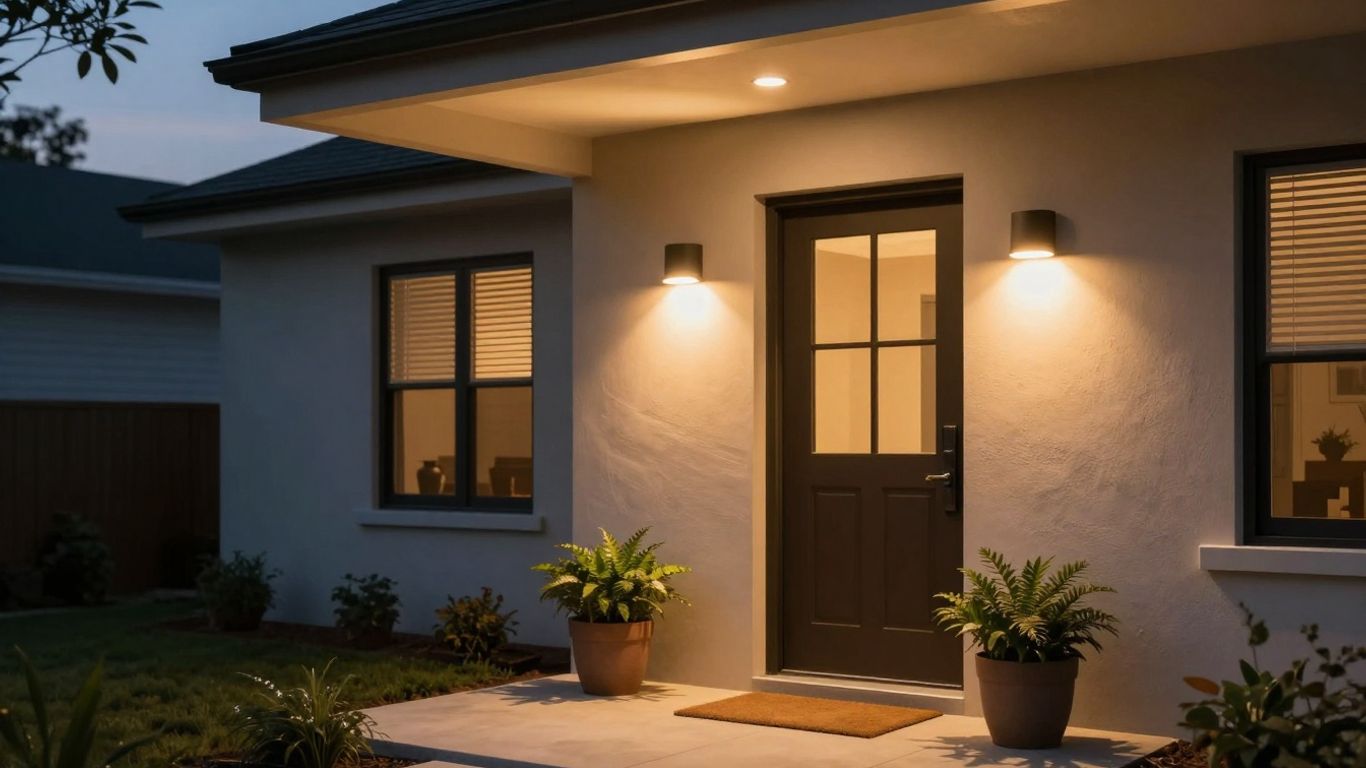
Wall sconces keep showing up on front porches for a reason—they work. These lights mount right onto the wall, usually on either side of the front door. Their beauty is in their flexibility, from old-fashioned lanterns with frosted glass to boxed shapes with clean lines. Wall sconces can either blend in or stand out, depending on the finish and design you choose.
Benefits of wall sconces:
- Easy to install on most wall surfaces (brick, wood, vinyl)
- Offer a balanced look when used in pairs
- Plenty of weatherproof choices for all climates
If you want a porch that feels welcoming at all hours, classic wall sconces are rarely a wrong pick.
Ceiling-Mounted and Hanging Lights
If your porch is covered and you want serious lighting, ceiling fixtures might be the way to go. This category includes flush mounts (sit flat to the ceiling), semi-flushes (drop slightly), and hanging pendants or lanterns. Longer porches especially benefit from these, since overhead light cuts through dark corners and makes nighttime gatherings pleasant.
Consider these aspects with ceiling lights:
- Best for porches with at least 8' ceilings
- Hanging fixtures can make a real statement
- Look for damp- or wet-rated options
Contemporary Flush Mount Fixtures
Homes with lower porch ceilings or a modern vibe can benefit from flush mount lights. These fixtures sit tight against the surface, usually the ceiling but sometimes under eaves. Designs lean toward minimalism with clean shapes and no fussy details. They can be sleek squares or gentle ovals—whatever complements your architecture.
Top reasons to pick a flush mount:
- Perfect for small or medium porches
- Won’t block sight lines or swing in the wind
- Available in a range of simple finishes like matte black, brushed nickel, or white
Versatile Post and Pathway Lights
Post lights and pathway fixtures aren’t just for your garden—porch edges and steps need light too. These go atop posts, along railings, or bordering entry pathways to help people see where they’re walking
Key points with post and pathway lighting:
- Ideal for guiding guests to your door safely
- Can highlight landscaping or special features
- Lots of solar-powered models mean fewer wires and eco-friendly setup
| Style | Best Used For | Typical Finish Options |
|---|---|---|
| Wall Sconce | By front door or garage | Bronze, Black, Brass |
| Ceiling/Hanging | Large, covered porches | Black, Nickel, Gold |
| Flush Mount | Smaller, lower porches | White, Matte Black |
| Post/Pathway | Steps, rails, garden borders | Bronze, Stainless, Black |
Each style brings something a little different to the table. Mix and match if it fits your taste—just keep the overall look coordinated so your porch doesn’t feel chaotic.
Selecting Materials and Finishes Built to Last Outdoors
When you're picking out a porch light, the material and finish matter just as much as the style.
Weather-Resistant Materials Like Aluminum and Brass
Porch lights live outside year-round, so you want tough materials built for the elements. Some of the top options include:
- Aluminum: Lightweight, resists rust, and can handle just about any climate. Good for areas that see a lot of rain or humidity.
- Brass: Holds up to moisture and ages gracefully with a nice patina. It’s on the heavier (and sometimes pricier) side but stands the test of time.
- Stainless Steel: Fights off corrosion and rust, especially in coastal or high-humidity places.
- Powder-Coated Finishes: Add extra protection to metal lights by blocking out moisture and UV rays.
The table below breaks down common materials and their pros and cons:
| Material | Pros | Cons |
|---|---|---|
| Aluminum | Affordable, rust-resistant | Can dent or scratch |
| Brass | Long-lasting, develops patina | Expensive |
| Stainless Steel | Very durable, modern look | Shows fingerprints |
| Powder-Coated | Color choices, extra shield | Needs touch-ups |
Choosing Finishes for Style and Durability
The finish you select does more than look good; it helps shield your light from weather, dirt, and sunlight. Here are a few points to consider:
- Matte black and bronze finishes blend into most homes and hide grime well.
- Shiny chrome or nickel looks modern but can show water spots and fingerprints fast.
- For coastal homes, opt for marine-grade finishes that resist salt and corrosion.
- Some finishes, like aged brass, look even better over time as they develop character from the weather.
Even the toughest finish will last longer with a quick wipe-down every so often, especially after heavy rain or pollen season.
Matching Fixtures to Architectural Elements
It's easy to get caught up in material specs and forget about fit. Your porch light should coordinate with your home's overall look. Try these tips:
- Look at door hardware and window frames; matching the metal is a safe bet.
- For traditional homes, choose lights with warm, classic tones—think bronze or brass.
- Go for sleek, simple shapes in matte or brushed metals for a more modern vibe.
- Don’t mix too many finishes on your porch. Keeping things consistent creates a streamlined feel.
If you take weather, location, and your home's style into account, your new porch light will keep shining for years—and won’t leave you fussing about repairs come storm season.
Optimizing Size, Placement, and Proportion for Your Porch
Choosing the right porch light isn’t just a style thing—it’s all about finding a balance between what looks good and what actually works for your space. The wrong proportion can throw off your whole entryway, either overwhelming it or leaving it in the dark. Here’s how to get it right, with some practical steps and real talk.
Measuring for the Right Fixture Scale
Before you even start browsing lights, grab a tape measure. People often guess and end up with something way too big or pathetically tiny. Follow this process:
- Measure the height and width of your door.
- Plan for your porch light to be roughly ¼ to ⅓ the height of your door. For double-door setups or wide porches, consider larger or two fixtures.
- Sketch a quick drawing or use painter’s tape on the wall to visualize how different sized fixtures will look next to your door.
| Door Height (inches) | Recommended Fixture Height (inches) |
|---|---|
| 80 | 20–26 |
| 96 | 24–32 |
| 108 | 27–36 |
When lights are too small, the porch looks unfinished, and if they’re too big, the space feels crowded. Take five minutes to measure before you shop, and avoid return headaches later.
Strategic Placement for Maximum Illumination
Plopping a light anywhere won’t cut it. Placement can make or break porch lighting. Here are some rules of thumb:
- Mount wall lights about 66 inches from the ground to the center of the fixture.
- For hanging lights, keep at least 7 feet of clearance from the floor for safe walking.
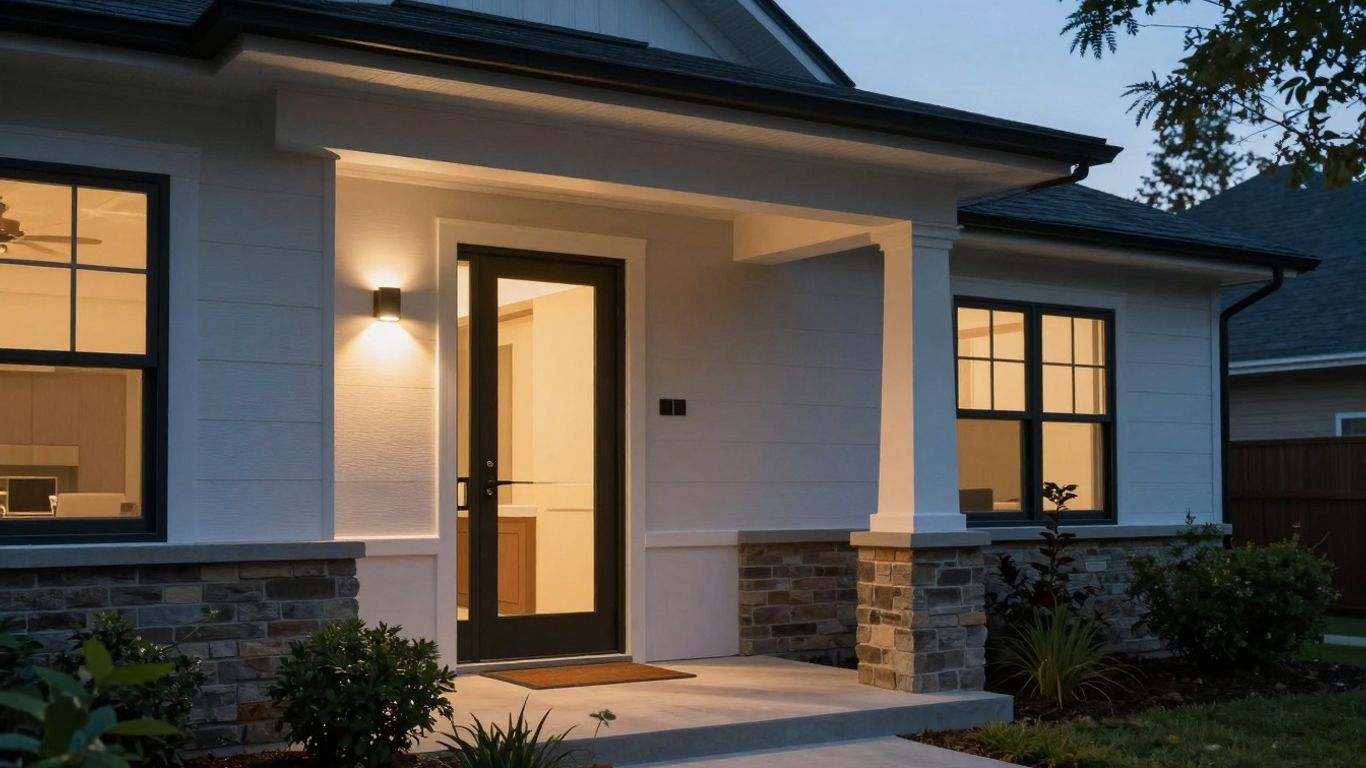
- Use two fixtures for big entrances: one on each side of the door. For tighter porches, a single central light usually works best.
- Think about your walkways and any steps—make sure they get enough spill light for safe footing.
Highlighting Architectural Features with Lighting
Your porch is more than just a door. Lighting can show off cool trim, brickwork, or a pretty railing. How you position fixtures can draw attention to these details:
- Use directional lights (fixtures with adjustable heads or that cast light upward/downward) to create shadows and draw out textures.
- Cluster small path or step lights along stairs or interesting borders.
- Pick fixtures in a style and color that echoes existing design features, like black finishes to match iron railings or warm bronze for brick.
Illuminating these elements not only makes your home safer but also gives your porch a boost in curb appeal, especially after sunset. And honestly, it just feels good to walk up to a house that looks like someone thought it through.
Choosing the Best Bulbs and Technology for Your External Porch Light
There’s a lot more to porch lighting than just picking out a fixture and flipping a switch. The bulb and tech you go with can make a big difference when it comes to energy bills, safety, and even the vibe you set for guests. Here’s what to know (without getting totally lost in technical details!).
Comparing LED, CFL, and Incandescent Options
Selecting the right bulb means picking one that balances brightness, durability, and efficiency. Here’s a straightforward comparison:
| Bulb Type | Lifespan | Energy Use | Brightness Range | Good For |
|---|---|---|---|---|
| LED | 15+ years | Low | Flexible | Energy savings, smart homes |
| CFL | 7-9 years | Medium | Good | Budget-conscious |
| Incandescent | 1-2 years | High | Warm, cozy | Quick replacement, classic look |
Some notes:
- LEDs have really taken over; they use less power, last way longer, and nowadays come in almost any style (including those old-timey Edison bulbs people love).
- Incandescents are on the way out—they just don’t last and eat up too much power. I wouldn’t bother, unless you really want that super warm, vintage glow.
- CFLs are a bit of a middle ground, but most folks just go straight to LEDs now.
Selecting Color Temperature and Brightness
One common mistake is installing a bulb that either blinds everyone or leaves the porch looking gloomy.
- Brightness (measured in lumens): For a porch light, 800-1200 lumens is usually plenty. A 60-watt incandescent or equivalent LED is a safe bet for most entryways.
- Color Temperature (measured in Kelvins):
- Warm White (2700K-3000K): Cozy, inviting, works well with brick and wood.
- Neutral White (3500K-4000K): Cleaner look, fits modern styles.
- Cool White (5000K+): Super bright, but can look pretty harsh—usually not advised for residential entries.
Exploring Smart and Color-Changing Bulbs
Smart lighting is turning even basic porch setups into high-tech setups these days. Benefits include:
- Adjusting brightness and color right from your phone
- Scheduling on/off times or setting them to work with sunrise/sunset
- Color-changing options for holidays, parties, or whenever you want to shake things up
A little list of features to look for if you’re into tech:
- WiFi or Bluetooth control (check compatibility with Alexa or Google Home!)
- Dimmable options for flexible mood-setting
- Color-changing features for seasonal fun
Porch lighting really isn’t one-size-fits-all anymore. The bulb you choose can set the tone for every evening at home, and new tech means it’s easier than ever to make lighting work for your lifestyle. Don’t be afraid to experiment—sometimes the perfect glow just takes a bit of tweaking.
Energy Efficiency and Eco-Conscious Porch Lighting
Porch lights have come a long way from the bulky, power-hungry fixtures of decades past. If you've ever gotten your electricity bill after keeping the porch light running all night, you know it can add up fast. Switching to energy-efficient and eco-friendly porch lighting is the easiest way to cut your energy costs while shrinking your carbon footprint. Let's take a closer look at the best options and tips for a greener porch:
Benefits of LED and Solar-Powered Lights
- LED bulbs use up to 85% less energy than traditional incandescent bulbs and can last more than ten times as long.
- Solar-powered porch lights gather sunlight during the day with built-in panels and glow once the sun sets—no wiring, no added cost to your electric bill.
- Both LEDs and solar options produce less heat than their older counterparts, reducing fire risk and heat exposure during summer evenings.
| Porch Light Type | Average Lifespan (hours) | Typical Energy Use (watts) |
|---|---|---|
| Incandescent | 1,200 | 40–100 |
| CFL | 10,000 | 8–15 |
| LED | 25,000–50,000 | 4–12 |
| Solar | Varies (battery cycle) | 0 (solar-charged) |
Reducing Energy Costs and Environmental Impact
- Replace every exterior bulb with LED versions as soon as possible; the upfront cost is quickly recovered through lower energy bills.
- Add solar path lights along walkways or steps. They're quick to install, require no wiring, and work even during power outages.
- Pick fixtures designed for 'Dark Sky' compliance—they focus light downward, reducing wasted light and the effect on wildlife and neighbors.
Not every environmentally friendly upgrade has to break the bank. Swapping in a few LED porch bulbs or snapping a solar light onto your railing is easy, and the savings stack up every month.
Adopting Motion Sensors and Dusk-to-Dawn Features
- Motion sensors make your porch light turn on only when someone approaches, so it isn’t burning unnecessarily all evening.
- Dusk-to-dawn lights use a smart sensor to automatically shut off the light during the day and turn it back on as night falls—no more forgetting to flip the switch.
- For rental homes or vacation properties, these features give peace of mind; your porch light is always working only when needed.
In short, picking greener porch lighting options saves you money and makes your home more eco-conscious, all while keeping your porch well lit and welcoming. If you’re settling into a new place, or just thinking about making smart home updates, these changes are an easy win for both your wallet and the planet.
Ensuring Proper Installation and Safety for Porch Lights
Getting your external porch light up and working isn’t just plug-and-play. There are a few important steps to make sure your light works properly and your house stays safe. Taking care during installation can help you avoid electrical problems and keep things looking tidy.
DIY Installation Versus Professional Help
If you enjoy handling projects yourself, you might think about installing a porch light on your own. But here are a few things to consider before you grab your toolkit:
- If you know your way around the basics of electrical work, doing it yourself could save money.
- If you have any doubts about wiring, don’t risk it—call a professional electrician.
- Local codes sometimes require licensed professionals for outdoor lighting projects, so check your area’s rules.
Making mistakes with wiring outside can lead to bigger problems—like short circuits, flickering lights, or tripped breakers. Sometimes it’s just easier (and safer) to get someone who does this every day.
Ideal Mounting Heights and Locations
Mounting height might not sound like a big deal, but it really matters for both looks and usability. Here’s a simple guide:
| Porch Light Position | Recommended Height |
|---|---|
| Wall-mounted by the door | 60"–66" from the ground |
| Hanging light (ceiling mount) | At least 7' above the ground |
A few more placement tips:
- Make sure lights don’t shine directly into visitors’ eyes or your neighbors’ windows.
- If you have steps or a walkway, aim fixtures to cover those areas without leaving dark patches.
- Avoid putting lights in spots blocked by shrubs or hanging plants.
Following Outdoor Electrical Safety Practices
Wiring and electricity outdoors come with extra hazards because of the weather. To keep things safe:
- Always turn off the power at your breaker before starting any work.
- Use only weatherproof light fixtures, boxes, and connections rated for outdoor use.
- Check that all wire nuts and connections are tight and protected from moisture.
- Avoid running cords or cables where they could get tripped on or damaged.
- Test the light after installation, but keep kids and pets away until you’re finished.
Outdoor lights keep your home safer—but only if they’re installed the right way. Double-checking your work (or hiring a pro) gives you peace of mind every time the sun goes down.
Wrapping Up: Finding the Right Porch Light for Your Home
Picking out a porch light might seem like a small thing, but it really does make a difference. It’s not just about seeing where you’re going at night or making your house look nice from the street. The right light can help you feel safer, make it easier to welcome guests, and even save you a bit on your energy bill if you go with something efficient. There are a lot of options out there—different styles, materials, and features—so it’s worth taking a little time to figure out what works best for your space and your needs. Think about your climate, how much light you want, and the look you’re going for. And if you’re not sure about installing it yourself, there’s no shame in calling in a pro. In the end, a good porch light is one of those small upgrades that can make coming home just a little bit better every day.
Frequently Asked Questions
What type of porch light is best for security?
For security, motion sensor lights or flood lights are great choices. They turn on automatically when someone approaches, which can scare off intruders and help you see who’s at your door.
How do I know what size porch light I need?
Measure your porch and the area around your door. The light fixture should be about one-third to one-fourth the height of your door. Make sure it’s big enough to light up the space but not so large that it looks out of place.
Are LED porch lights better than incandescent bulbs?
Yes, LED bulbs are better because they use less energy, last much longer, and come in different brightness levels and colors. They’re also better for the environment and save you money on your electric bill.
What materials are best for outdoor porch lights?
Materials like aluminum and brass are best because they resist rust and weather damage. Always pick lights made for outdoor use so they last through rain, snow, and sun.
Can I install a porch light myself?
If you’re comfortable working with electricity and follow safety steps, you can install a porch light yourself. Always turn off the power first. If you’re unsure, it’s safer to hire a professional electrician.
What features should I look for in an energy-efficient porch light?
Look for LED or solar-powered lights, and consider models with motion sensors or dusk-to-dawn features. These options save energy by only turning on when needed and help lower your power bills.