
So, you've got some art you really love, and you want it to look its best. That's where a good led picture light comes in. It's not just about making the art visible; it's about making it pop. We're going to look at how to pick the right one, some cool tech that's out there, and how to actually put it up so it looks great. Plus, we'll talk about what makes a light good quality and why LEDs are the way to go for this kind of thing. It’s all about getting that perfect glow on your favorite pieces.
Key Takeaways
- When picking a led picture light, think about the fixture style, the size relative to your art, and the light's color temperature. Some work better for certain art sizes or shapes.
- Modern led picture light designs use smart optics to control light spread and reach, often in smaller, less noticeable fixtures.
- You have options for installation: plug-in, hardwired, or even rechargeable wireless lights, giving you flexibility depending on where your art is and if you have outlets nearby.
- Proper placement is key to showing off your art without causing glare or reflections, especially on pieces behind glass. Tilting the light correctly makes a big difference.
- Look for durable materials like real brass or anodized aluminum. LEDs last a really long time, use less energy, and don't need frequent bulb changes, saving you hassle and money.
Choosing The Right Led Picture Light
Picking out the right LED picture light can feel a bit overwhelming at first, but honestly, it's mostly about figuring out what works best for your specific artwork and your space. It’s not just about grabbing the first shiny thing you see; there are a few things to think about to make sure your art really pops.
Understanding Different LED Picture Light Fixtures
When you start looking, you'll notice there are a few main ways these lights are powered and installed. You've got your plug-in options, which are super easy to set up – just plug them into an outlet. Then there are hardwired lights, which connect directly to your home's electrical system. These usually look a bit cleaner because there are no visible cords, but they might need an electrician to install. And don't forget the rechargeable wireless lights. These are great if you don't want to deal with any wires at all, and many come with remote controls. They're a good middle ground if hardwiring isn't an option and you want something a bit more permanent than just plugging something in.
- Plug-in: Easiest setup, uses existing outlets.
- Hardwire: Cleanest look, requires electrical connection.
- Rechargeable Wireless: No cords, flexible placement, often remote-controlled.
Selecting The Ideal Size And Finish
Getting the size right is pretty important. A good rule of thumb is that the light fixture should be about one-third to two-thirds the width of the artwork it's illuminating. If you're unsure, it's often better to go a little larger. Think about how the light will look next to the frame or the art itself. Finishes are also key. You can find lights in materials like real brass or anodized aluminum, which come in various colors and textures. Some finishes are meant to stand out and be a decorative element, while others are designed to blend in more subtly with the artwork's frame.
| Artwork Width | Recommended Light Width |
|---|---|
| Small (under 12") | 4" - 8" |
| Medium (12"-24") | 8" - 16" |
| Large (over 24") | 16" - 32" |
Considering Bulb Type And Temperature
For LED picture lights, you'll want to pay attention to the color temperature of the light. This is measured in Kelvin (K). A warmer light, typically around 2700K, gives off a cozy, yellowish glow that many people prefer for artwork. It can make colors look richer. Cooler temperatures, on the other hand, can make things look a bit more stark or clinical. Also, make sure the LEDs you choose don't emit a lot of UV rays, as these can actually damage your artwork over time by causing fading. Low-wattage LEDs are generally the way to go because they're energy-efficient and won't overheat.
When choosing your LED picture light, think about the mood you want to create. A warmer light temperature (around 2700K) often feels more inviting and can make colors in your art appear more vibrant. Avoid lights with high UV output, as they can harm your artwork over time.
It's all about finding that balance between making your art look its best and fitting the overall vibe of your room. Don't be afraid to experiment a little to see what looks right to you.
Innovative Design And Technology
Modern Optical Designs For Superior Illumination
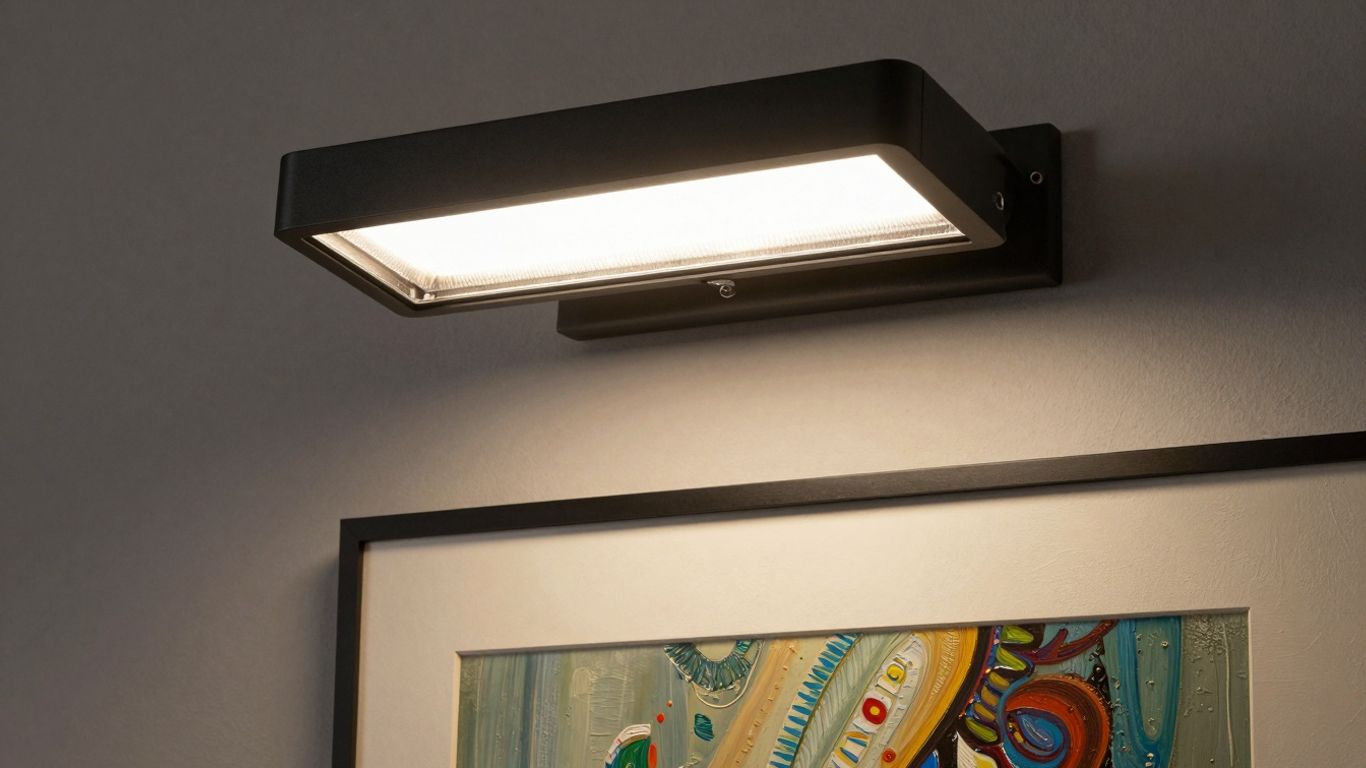
Forget those clunky old picture lights that just threw light everywhere. We're talking about lights designed from the ground up with modern optics. Think of it like a high-tech lens system for your artwork. These designs help direct the light exactly where it needs to go, both up and down the canvas, and also side-to-side. This means your art gets lit up evenly and beautifully, without harsh shadows or wasted light. It’s all about making your artwork pop, not the fixture itself.
Compact Form Factors For Discreet Installation
Because the technology is so advanced now, these lights can be really small. We're not talking about big, bulky bars anymore. Many are designed to be super slim and low-profile. This means they blend right in, so your focus stays on the art. Some can even be mounted discreetly on the back of the frame, or some are so small they don't compete with the art at all, yet they're still powerful enough. It's pretty neat how much light you can get from something so tiny.
Advanced Optics For Controlled Light Shaping
This is where things get really interesting. Advanced optics allow for precise control over the light. It's not just about brightness; it's about the quality and direction of the light. This means you can shape the light to perfectly match the size and texture of your artwork. Whether it's a large oil painting or a delicate watercolor, the right optics can bring out the best in it. Some systems even let you adjust the beam, so you can fine-tune the illumination to avoid glare and really make the details stand out.
Versatile Installation Options
When it comes to putting up your new LED picture light, you've got a few ways to go about it. It's not just about where you hang it, but also how it gets its power. This flexibility means you can really make it work for any room, no matter the setup.
Exploring Plug-In And Hardwire Solutions
For many, the choice boils down to plug-in versus hardwired. Hardwired lights, while requiring a bit more effort upfront, offer a clean look because there are no visible cords. They connect directly to your home's electrical system, often controlled by a wall switch, which makes them super convenient to use. Think of it like any other wall light – flip the switch, and it's on. On the other hand, plug-in options are fantastic if you're not keen on messing with wiring or if you're renting. You just plug the light into a nearby outlet. The main thing here is managing the cord; you'll want to hide it neatly so it doesn't distract from your artwork. There are some clever ways to do this, like running the cord along baseboards or using cord covers. Many people find that if a hardwired option isn't feasible, a well-hidden plug-in cord is almost as good.
The Convenience Of Rechargeable Wireless Lights
Then there are the rechargeable wireless lights. These are a game-changer for flexibility. Since they don't need any wires or even an outlet nearby, you can place them just about anywhere. They usually come with a remote and are charged up periodically, much like your phone. While they might not have the same extensive finish options as wired lights, they're incredibly practical, especially for temporary displays or in spots where running wires would be a real headache. Some even have mounting systems that attach discreetly to the back of the artwork itself, or can even rest on top of the frame.
Creative Mounting For Unique Displays
Beyond the power source, how you mount the light opens up even more creative possibilities. Most picture lights come with low-profile mounting brackets. These can be attached to the wall behind your art or, in some cases, directly to the frame of the artwork. This adaptability is great because it allows you to position the light exactly where you need it. You can even mount some fixtures to the bottom of a piece if the top is out of reach or if you prefer an uplighting effect. Don't be afraid to think outside the box; these lights can work wonders above cabinets, shelves, or even mirrors, adding a touch of sophistication wherever they're placed. For those looking for outdoor lighting solutions that are both stylish and durable, consider options like a waterproof LED up-down garden wall light for outdoor spaces.
Enhancing Your Artwork's Presentation
Getting the lighting just right for your art is more than just sticking a light above it. It's about making the piece pop, drawing the viewer's eye, and really bringing out the details. Think of it like a spotlight on a stage – it directs attention and sets the mood. The goal is to make your artwork look its absolute best, without any distractions.
Achieving Optimal Light Placement
Figuring out where to put the light is key. You don't want it too high, or the light will just spill onto the wall. Too low, and it might cast weird shadows. A good starting point is usually a few inches above the frame, maybe 2 to 6 inches, but you'll want to play around with it. I find that tilting the light fixture at about a 30 to 35-degree angle works wonders. It creates a nice, soft wash of light that follows the contours of the artwork. It’s all about finding that sweet spot where the light hits the piece perfectly.
Managing Glare and Reflection Effectively
Glare is the enemy of good art lighting. If your artwork is behind glass, you'll definitely run into this problem. The light bounces off the surface, making it hard to see the actual art. One trick is to position the light fixture a bit higher, which can help reduce the direct reflection. Also, the size of the frame can make a difference; a larger frame can sometimes help block some of that unwanted reflection. It’s a bit of a balancing act to get enough light without creating a mirror effect.
Highlighting Various Art Mediums
Different types of art need different lighting approaches. For paintings, you want to bring out the texture and colors. For photographs, especially those under glass, managing reflections is super important. Sculptures might need light from multiple angles to show off their form. Even the type of paint used can affect how light interacts with the surface. LEDs are great because they don't emit much heat or UV light, which is good for preserving your art over time. You can find some really nice designer picture lights that are made to work well with various mediums.
When you're choosing a light, think about the artwork's size. A general rule of thumb is that the light fixture should be about one-third to two-thirds the width of the piece it's illuminating. If you're unsure, it's often better to go a little larger. This helps create a balanced look and ensures the entire piece is well-lit.
Here's a quick rundown of what to consider:
- Placement: Center the light above the artwork.
- Angle: Tilt the fixture about 30-35 degrees.
- Height: Start 2-6 inches above the frame and adjust.
- Glare: Position light higher and consider frame size.
- Bulb Type: Opt for low-wattage LEDs with a warm color temperature (around 2700K) to protect your art.
Quality Craftsmanship And Materials
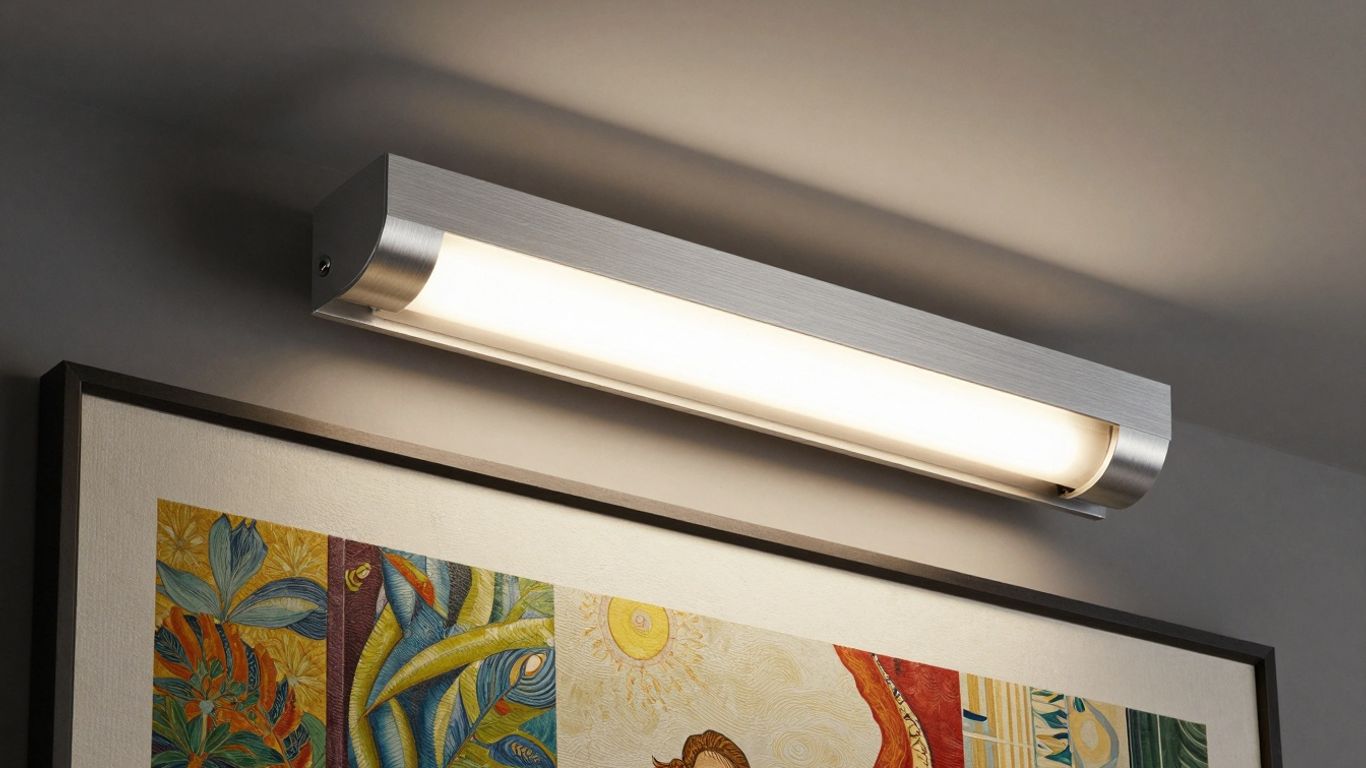
Authentic Brass And Anodized Aluminum Finishes
When you're picking out a picture light, the materials really matter. It's not just about how it looks, but how it feels and how it holds up over time. You'll find options in materials like solid brass, which can be finished in a bunch of ways – think polished for a sleek, modern vibe, or maybe a brushed look for something a bit softer. Then there's anodized aluminum, which is super durable and often comes in finishes that look really clean and contemporary. These aren't flimsy plastics; they're built to last and add a touch of real quality to your display. Choosing a finish that complements your artwork and the room is key, whether you're going for a classic antique brass or a sharp, modern chrome. It’s about making sure the light itself looks as good as the art it’s illuminating.
Durable Construction For Lasting Beauty
Nobody wants a picture light that looks great for a few months and then starts to sag or fade. The good news is that many of these lights are made with serious attention to how they're put together. We're talking about sturdy construction that can handle being moved or adjusted without falling apart. This means looking for things like well-secured joints, robust mounting hardware, and finishes that resist scratching or tarnishing. A well-built light fixture isn't just about aesthetics; it's about reliability. You want something that will keep your artwork perfectly lit for years, without you having to worry about it breaking or looking worn out. It’s an investment in keeping your art looking its best.
Designer Touches For Elegant Decor
Sometimes, it's the little details that make a big difference. You might notice that some picture lights have subtle design elements that really set them apart. This could be anything from a unique shape to the way the light is diffused. Many are designed by people who really know interior design, so they think about how the fixture will fit into your overall home decor. Think about how a light with a slightly curved arm might look different than a straight one, or how a particular texture on the metal can add depth. These aren't just functional items; they're part of your home's style. They can add a sophisticated touch that ties everything together, making your art display not just lit, but truly presented. For example, some modern home decor trends include stylish LED pendant chandeliers that can offer a similar blend of form and function.
Here's a quick look at common material finishes:
| Material | Common Finishes |
|---|---|
| Brass | Polished, Brushed, Antique, Oil-Rubbed Bronze |
| Aluminum | Anodized (Silver, Black, Bronze), Powder-Coated |
| Steel | Brushed Nickel, Chrome, Matte Black |
| Copper | Brushed, Patina |
Choosing a picture light made from quality materials means you're not just buying a light source; you're acquiring a piece that's built to last and designed to complement your art and home. It's about the tangible feel of solid metal and the assurance of a well-made product.
Energy Efficiency And Longevity
The Extended Lifespan Of Led Technology
When you're picking out a picture light, thinking about how long it'll last and how much power it uses is a pretty smart move. LED lights are the way to go here. They're not like those old incandescent bulbs that burn out fast and use a ton of electricity. LEDs are built to last, seriously. We're talking about lights that can keep shining for tens of thousands of hours. Imagine, that's like 30, 40 years, give or take, if you're using the light for a few hours every day. And when they do finally start to fade, it's not like they just die. They dim down slowly, so you barely notice it. No more sudden blackouts on your favorite painting!
Low Voltage And Adjustable Brightness
These lights are also designed to be easy on your wallet and the planet. They run on low voltage, which means they don't need a lot of power to do their job. Plus, most of them come with adjustable brightness settings. This is great because you can dial in the perfect amount of light for your artwork without wasting energy. You can make it brighter for a dramatic effect or softer for a more subtle look. It’s all about control and saving power.
Reduced Maintenance And Replacement Costs
Because LEDs last so long and don't burn out like old bulbs, you'll save a lot of hassle and money. Think about it: no more climbing ladders to change bulbs, no more buying replacement bulbs all the time. It's a set-it-and-forget-it kind of deal for a very long time. This means less time spent on upkeep and more time just enjoying your art. It's a win-win for your budget and your peace of mind.
Here's a quick look at what makes LEDs a smart choice:
- Long Lifespan: Rated for up to 70,000 hours of use.
- Gradual Dimming: LEDs fade slowly, not abruptly.
- Low Power Consumption: Uses less electricity.
- Adjustable Brightness: Control the light intensity.
- Minimal Maintenance: Forget frequent bulb changes.
Choosing LED picture lights means you're investing in a lighting solution that's not only beautiful but also incredibly practical. You get consistent, high-quality light for your artwork without the ongoing costs and effort associated with older lighting technologies. It's a smart, sustainable choice for any art lover.
Bringing Your Art to Light
So, there you have it. Picking the right light for your artwork isn't just about making it visible; it's about making it pop. We've talked about how LEDs have changed the game, offering better control and smaller designs than those old bulky lights. Whether you're going for a plug-in, hardwired, or even a wireless rechargeable option, there's a light out there that fits your needs and your art's style. Don't forget to think about the size, the finish, and even the warmth of the light to really make your pieces shine. It’s a simple step that can make a big difference in how your art is seen and appreciated.
Frequently Asked Questions
What makes LED picture lights better than older types?
LED lights use less energy and last much longer than old-fashioned bulbs. They also stay cooler, which is safer for your artwork. Plus, LEDs let us make lights that are much smaller and sleeker, so they don't distract from your art.
How do I pick the right size LED picture light?
A good rule of thumb is to choose a light that's about one-third to two-thirds the width of your artwork. If you're unsure, it's usually better to go with a slightly larger light. Think about the overall look you want – sometimes a light that's the same width can work, especially with multiple pieces.
Should I choose a plug-in, hardwired, or wireless picture light?
Plug-in lights are easy to use and don't require electrical work. Hardwired lights offer a cleaner look with no visible cords, but need professional installation. Wireless, rechargeable lights are super convenient, especially if you don't have an outlet nearby, and they often come with remote controls.
How can I prevent glare or reflections on my artwork?
Glare happens when light bounces off the surface, especially with framed art under glass. Try positioning the light a bit higher and tilting it at an angle, usually around 30-35 degrees. Some lights are designed with special optics to help control light direction and minimize reflections.
What's the best color temperature for art lighting?
Many people prefer a warm light, around 2700K to 3000K, which gives a cozy glow and makes colors look natural. However, the best temperature can depend on the artwork itself and your personal taste. It's good to have options that allow you to adjust the warmth.
How long do these LED lights last?
These lights are built to last! They can work for up to 70,000 hours, which is like 35 years if you use them for 5 hours every day. Even when they get old, they just get a little dimmer instead of burning out suddenly, so you won't have to replace bulbs often.