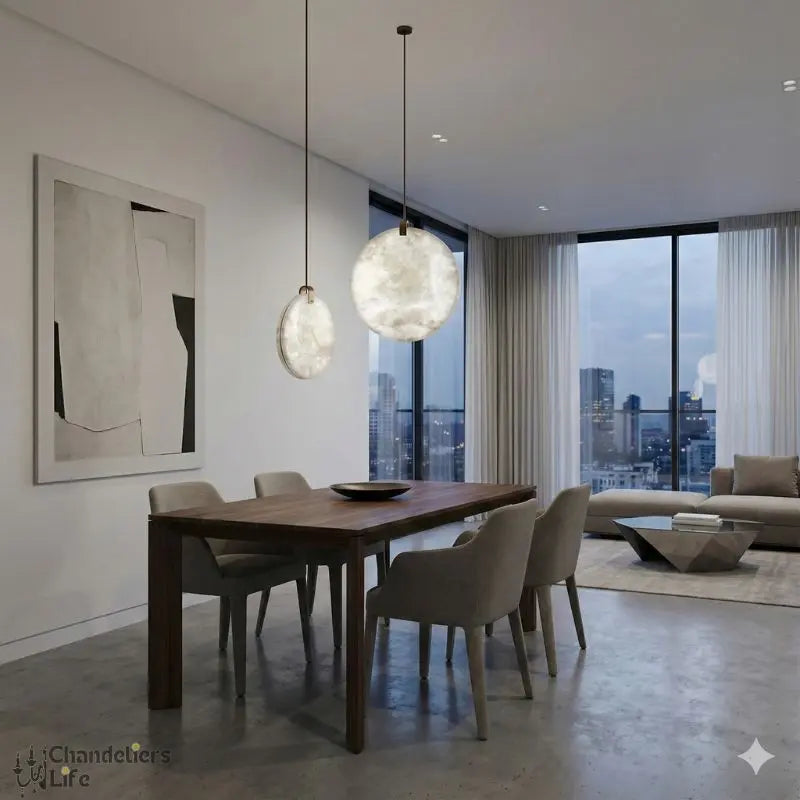
The dining table may host the conversation, but the light above it sets the entire scene. The best chandeliers for dining rooms do more than brighten a meal: they define the room’s focal point, flatter the table beneath them and give everyday suppers the polish of a special occasion. The right choice depends on proportion, ceiling height and the atmosphere you want to create - from crisp contemporary glamour to layered, timeless elegance.
Start with proportion, not just style
A chandelier can be exquisite on its own and still feel misplaced if its scale is wrong. Before falling for crystal droplets or sculptural forms, measure the dining table and the room. As a useful guide, choose a fixture around half to two-thirds the width of the table. This leaves a generous visual border at either end and keeps the composition balanced rather than crowded.
For a room-based estimate, add the room’s length and width in metres, then multiply the total by roughly 8.3 to find an approximate chandelier diameter in centimetres. A dining room measuring 3 metres by 4 metres, for example, will often suit a chandelier around 58 centimetres wide. This is a starting point, not a rule. A dramatic double-height room can carry a larger statement piece, while a compact dining nook may look more refined with a smaller fixture or a pair of pendants.
Hang the bottom of the chandelier approximately 76 to 91 centimetres above the tabletop. This preserves clear sightlines across the table while allowing the fixture to feel connected to the dining setting. Raise it slightly for particularly tall ceilings, but avoid hanging it so high that it loses its presence.
10 best chandeliers for dining rooms
1. Contemporary linear chandeliers
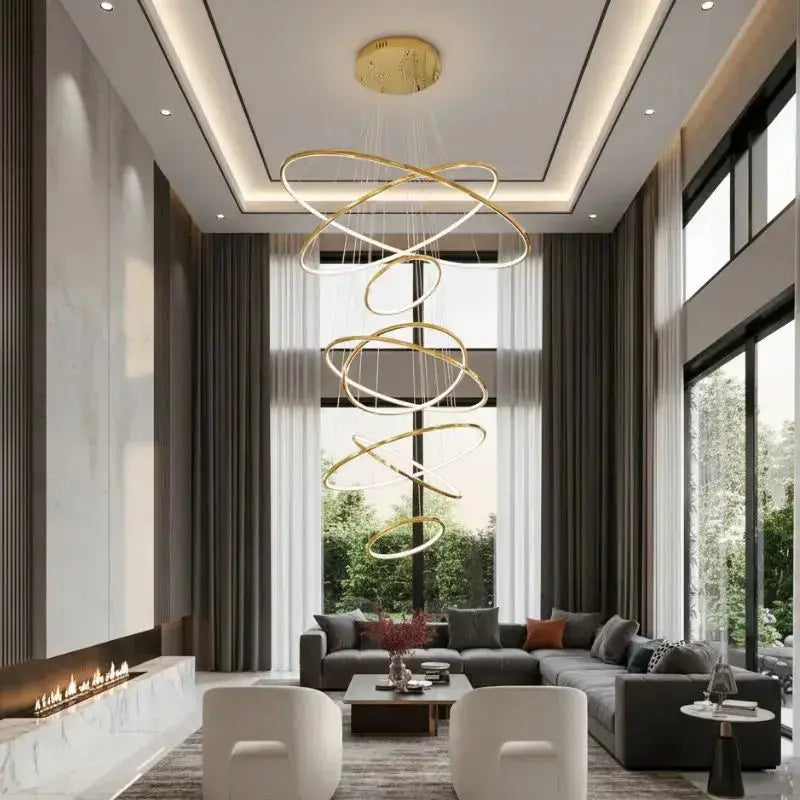
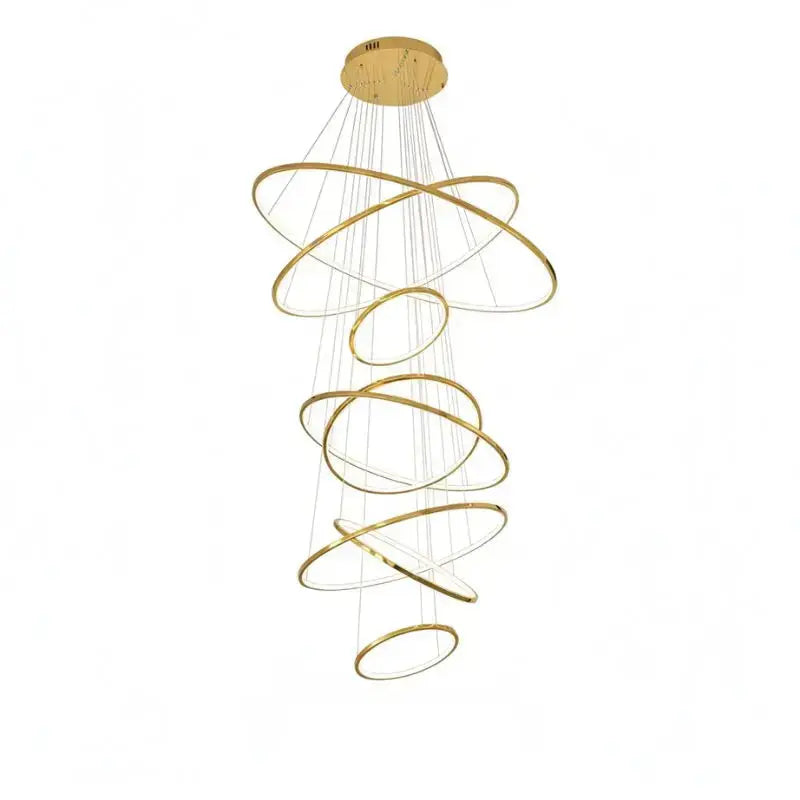
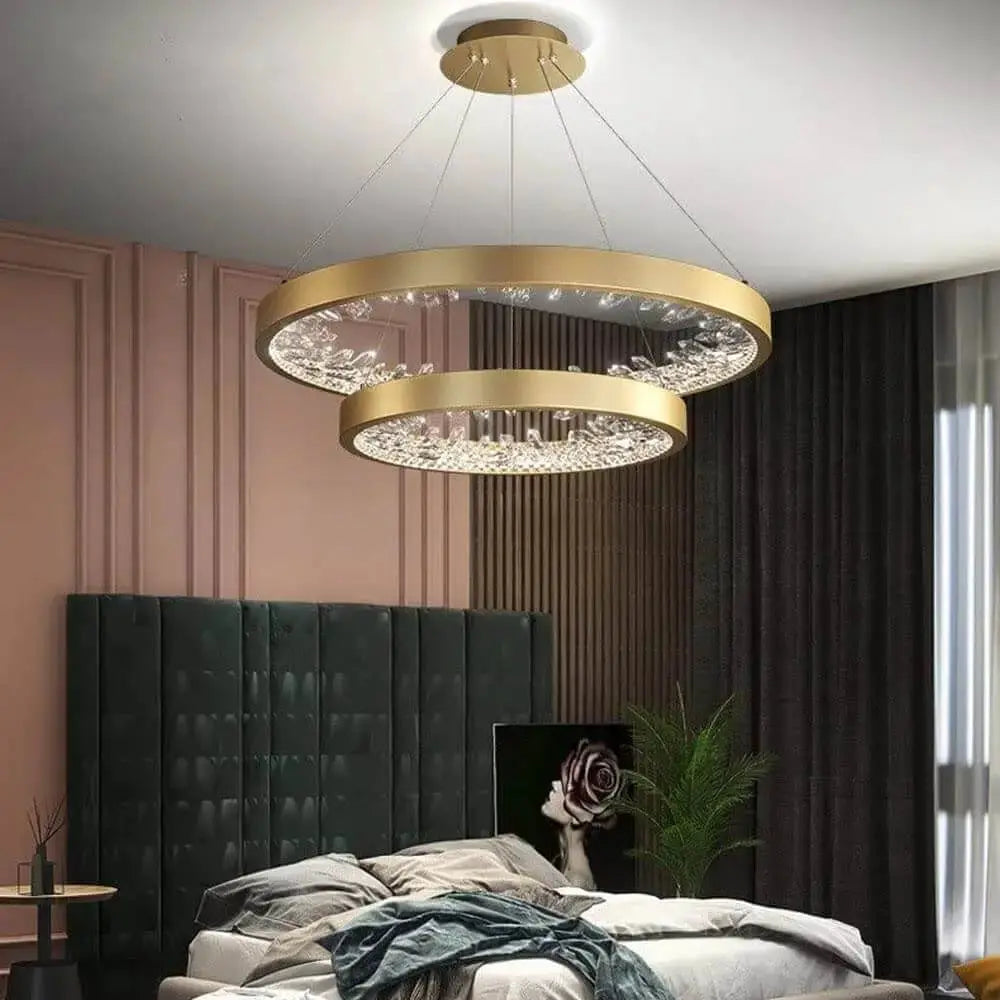
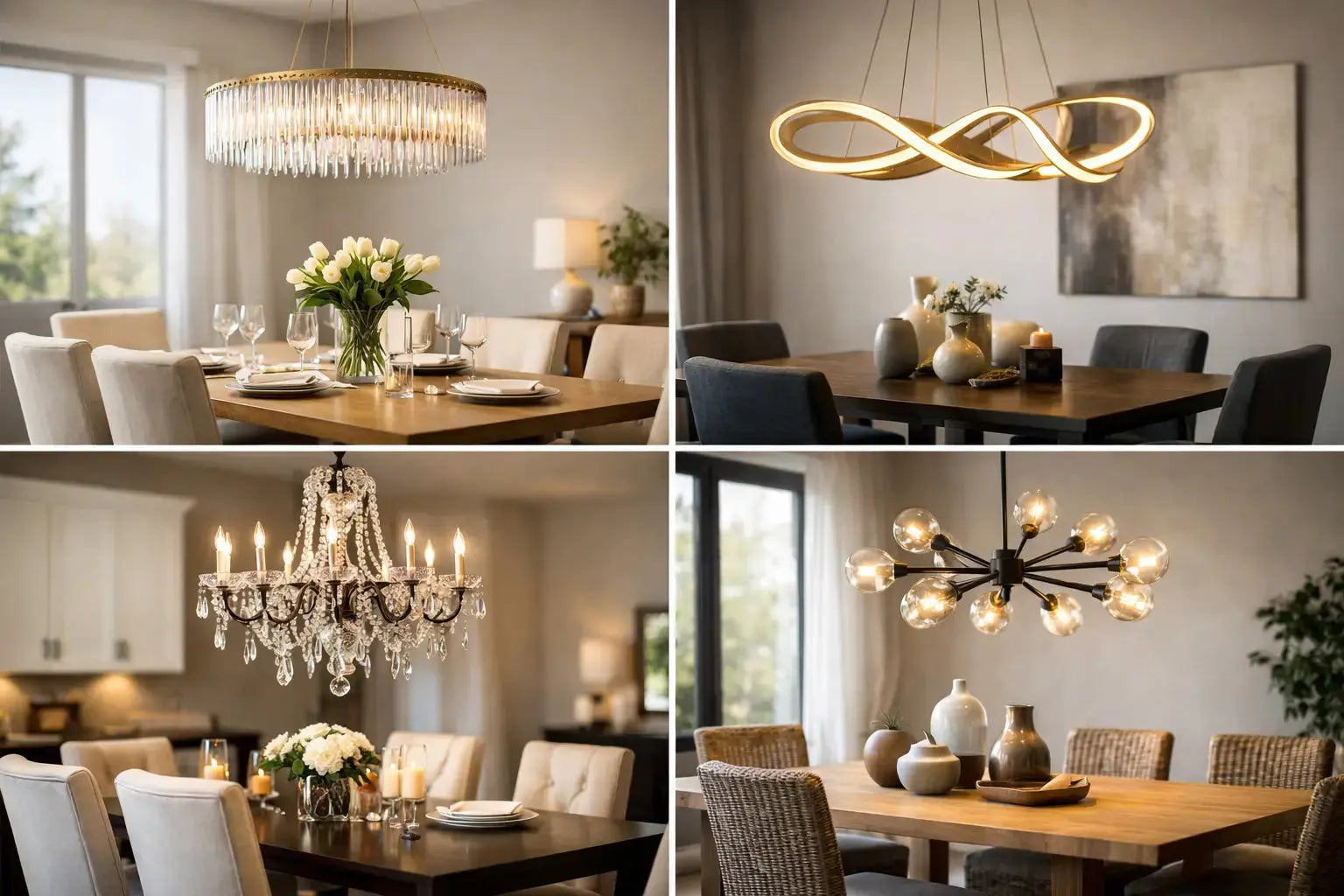
A linear chandelier is a natural choice over a long rectangular table. Slim LED bars, elongated frames and clustered glass elements echo the shape of the furniture below, creating a tailored, architectural effect. Choose brushed brass for warmth, black for a sharper modern look, or a mixed-metal finish for a more layered scheme.
These designs are especially effective in open-plan homes, where their clean silhouette brings structure without visually blocking the room. Look for dimmable integrated lighting or compatible bulbs so the atmosphere can shift from practical family dining to a softer evening setting.
2. Tiered crystal chandeliers
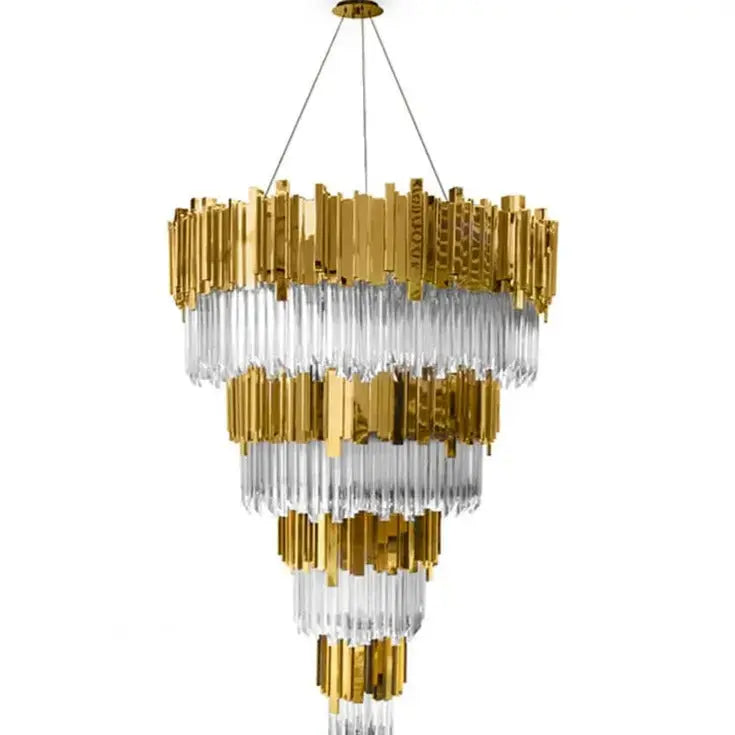
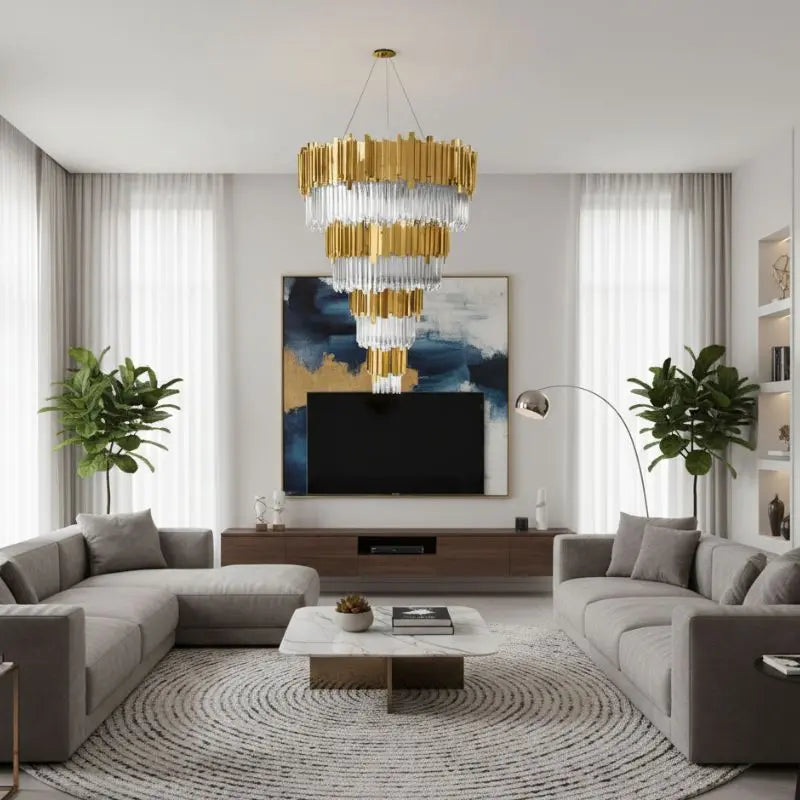
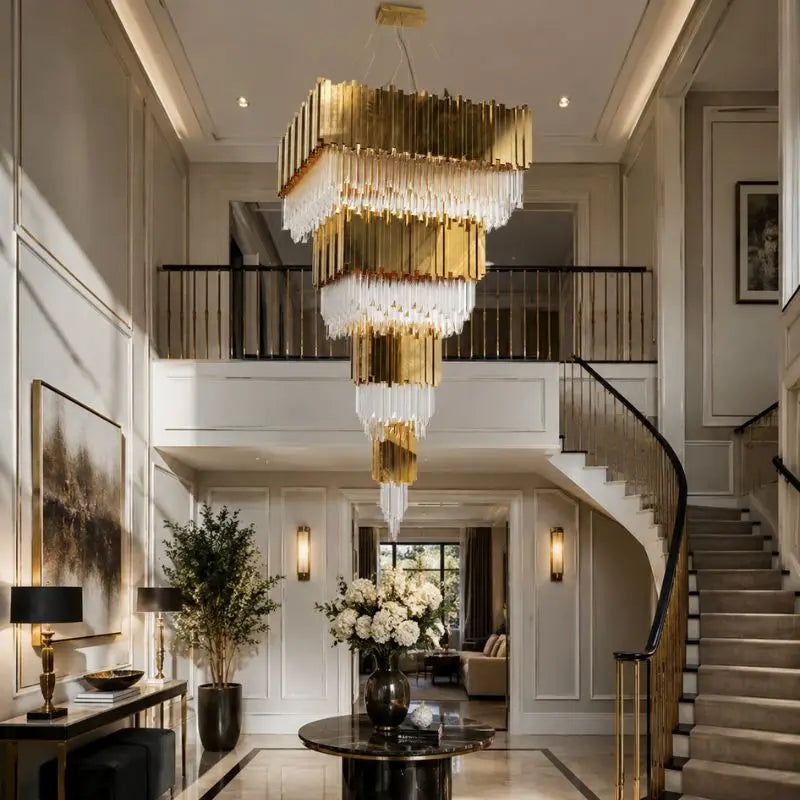
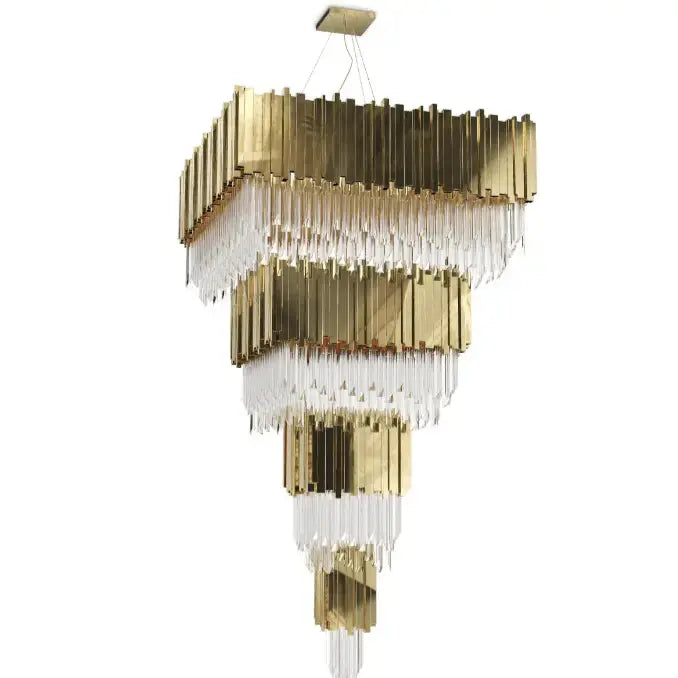
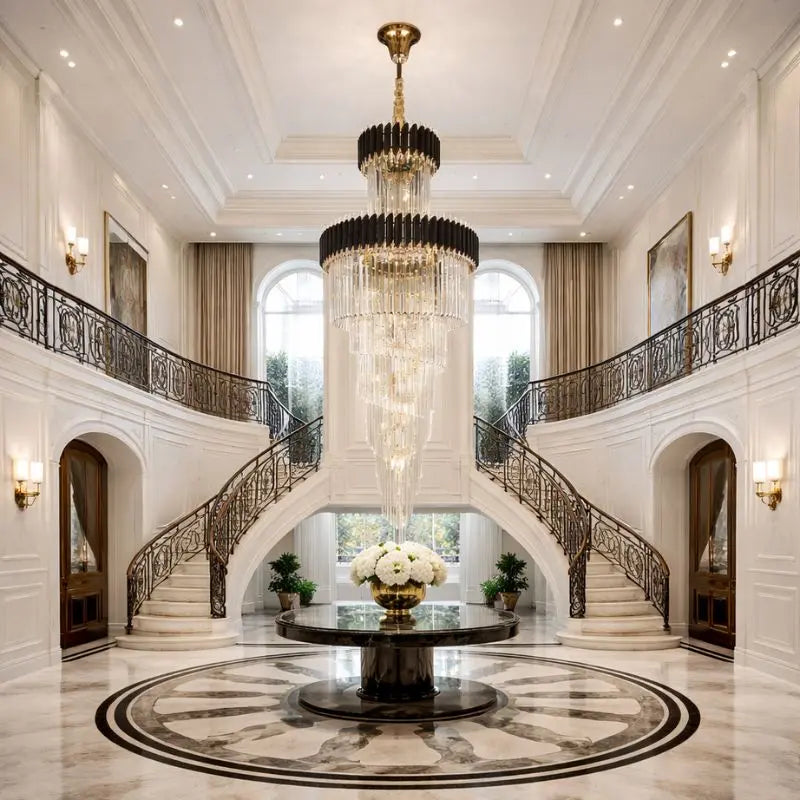
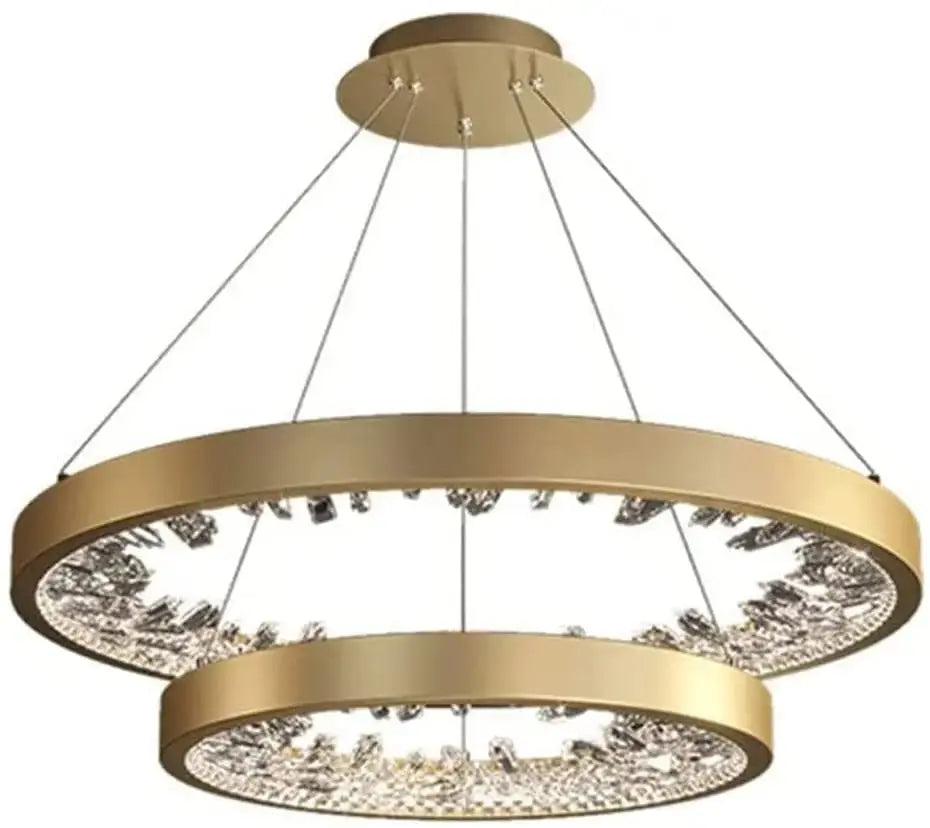
For formal dining rooms and homes that welcome a little drama, tiered crystal remains an enduring favourite. The layers catch and scatter light, giving the room depth, movement and a luxurious glow after dark. A classic crystal chandelier suits traditional architectural details beautifully, while a streamlined tiered design can bring glamour to a more contemporary interior.
The trade-off is maintenance. Crystal looks its best when kept clear of dust, so it asks for more care than a simple metal frame. In return, few fixtures make a dining room feel as celebratory or considered.
3. Sculptural globe chandeliers
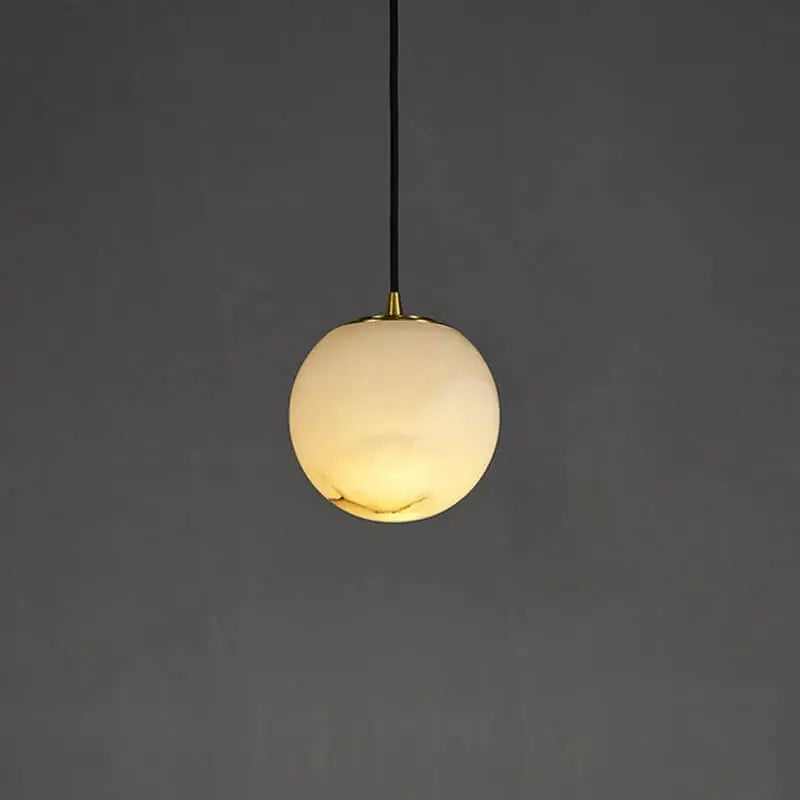
Globe chandeliers bring softness to dining spaces full of straight lines. Opal glass spheres offer a gentle, diffused glow, while clear or smoked glass creates more sparkle and visual depth. Their rounded forms work particularly well above circular tables, though a larger asymmetric cluster can look striking over an oval or rectangular setting.
Choose opal glass when the priority is flattering, even illumination. Clear glass is more decorative, but it reveals the bulb, so select warm-toned bulbs with an attractive filament for a more polished finish.
4. Candle-style chandeliers
A candle-style chandelier delivers the romance of traditional lighting without requiring a period property. Its upright arms and exposed bulbs create an elegant silhouette that feels especially at home with timber dining furniture, antique mirrors and richly coloured walls. For a fresher interpretation, choose a simplified form in matte black, satin nickel or aged brass.
This style provides ambient light rather than intense task lighting, which is often ideal for dining. If the room also needs brighter illumination for homework, serving or entertaining, support it with wall lights, discreet downlights or a nearby table lamp.
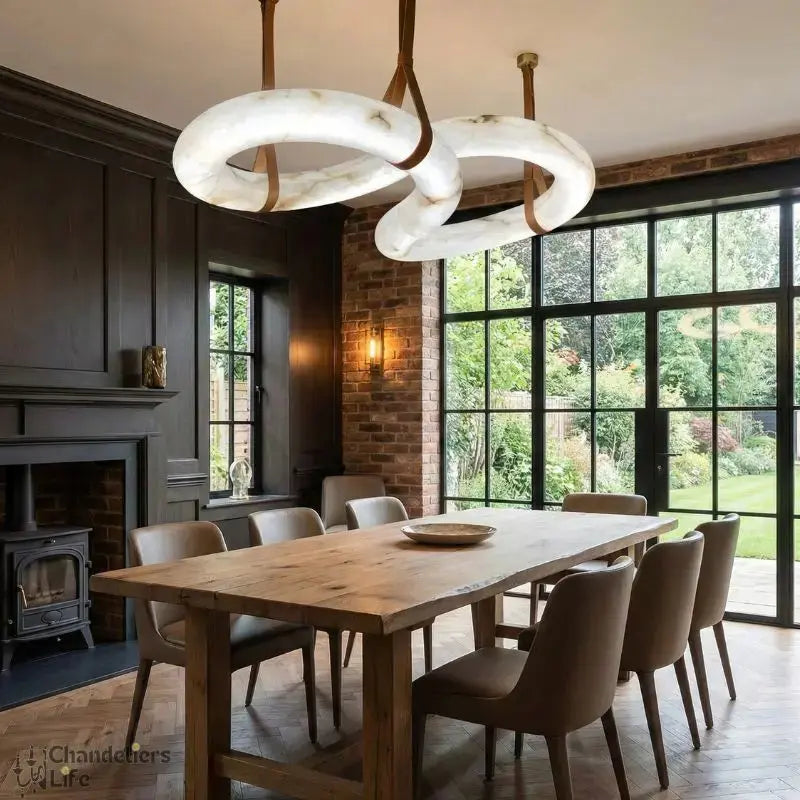
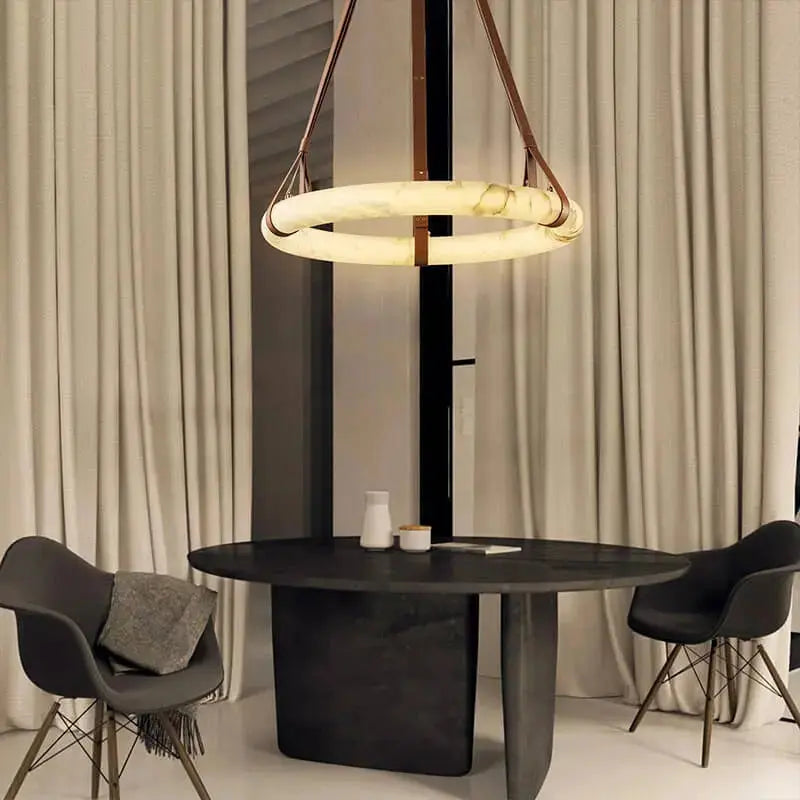
5. Alabaster chandeliers
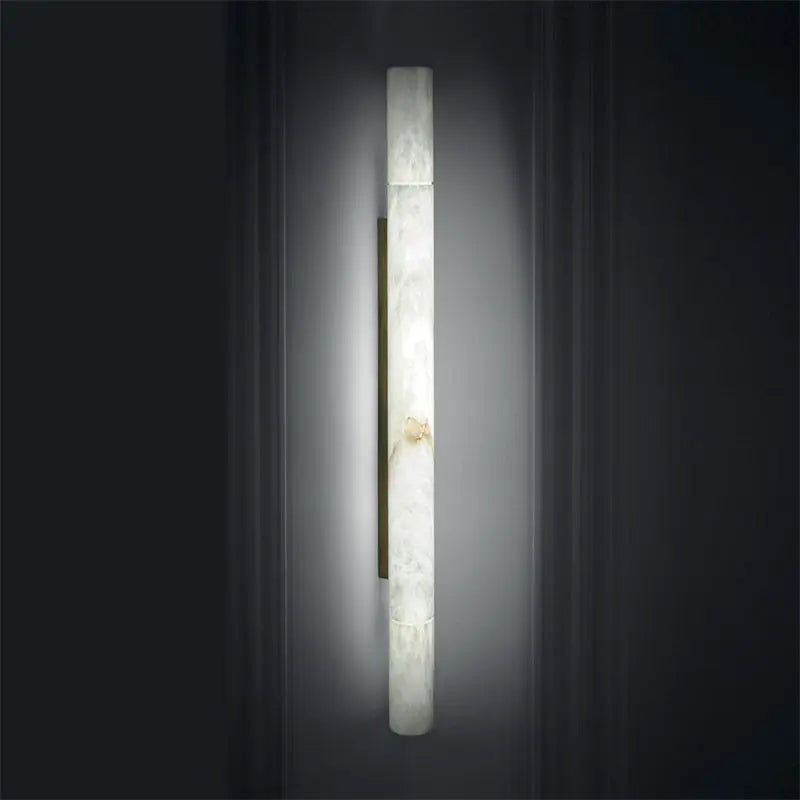
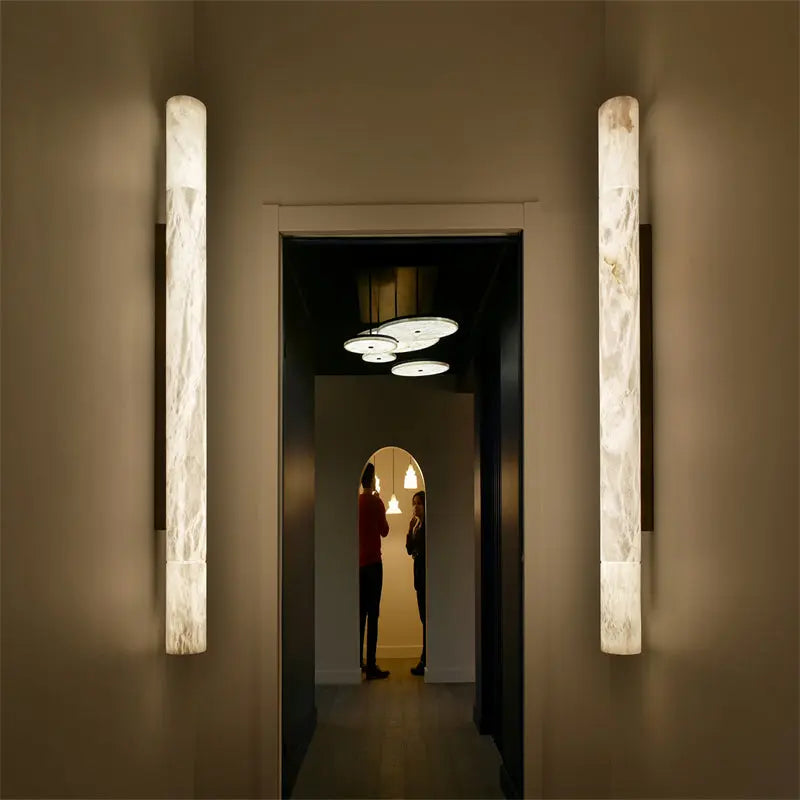
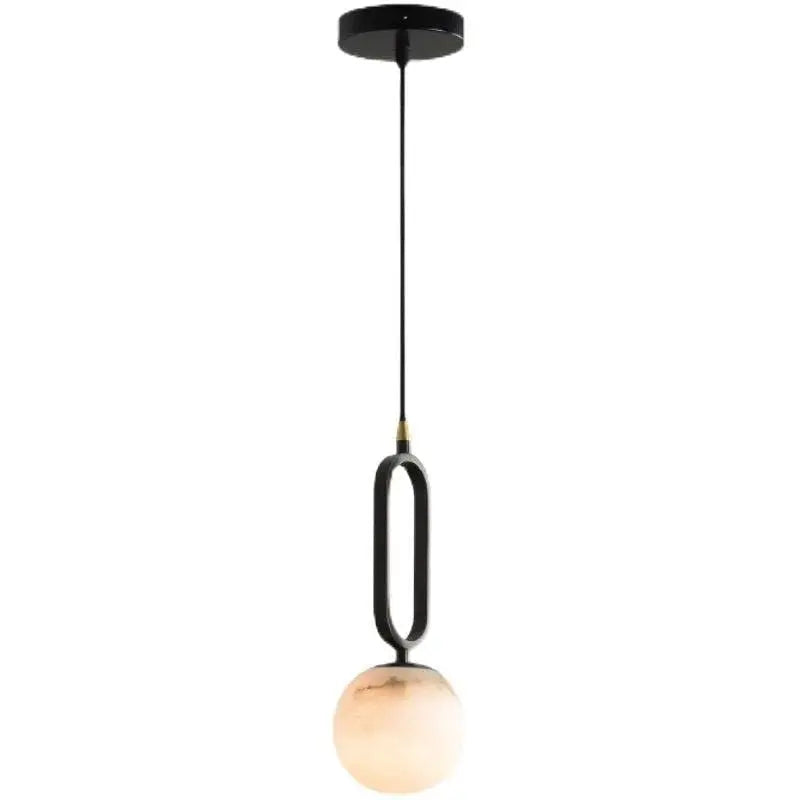
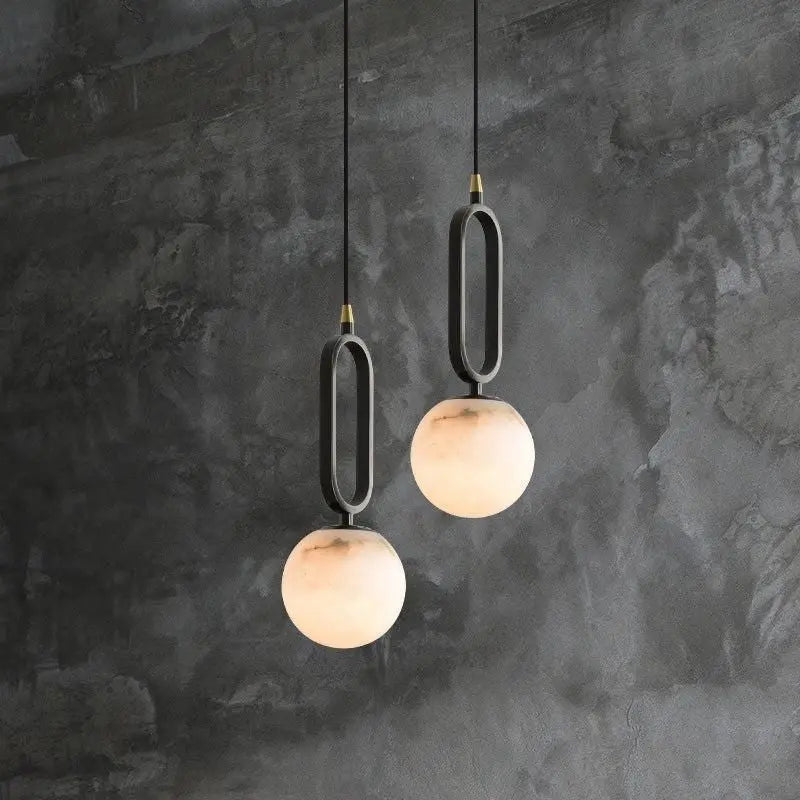
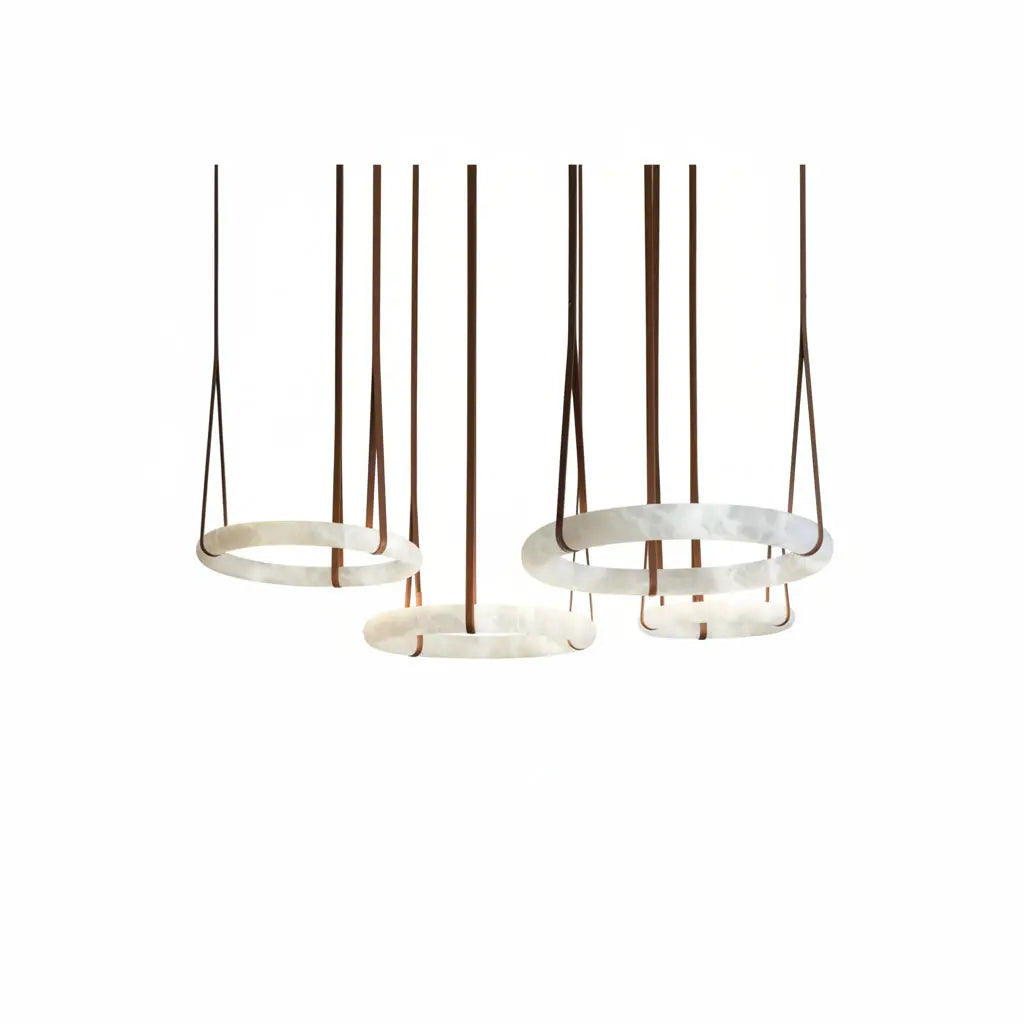
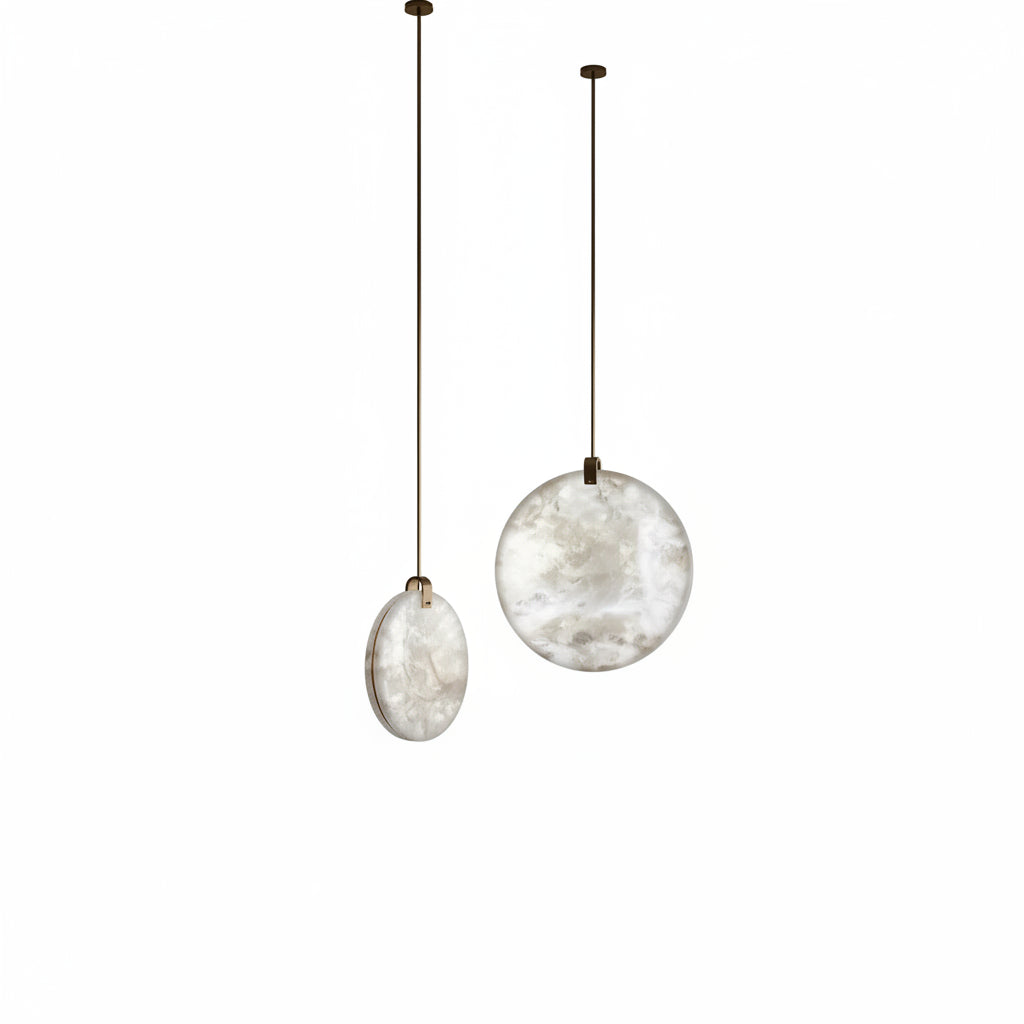
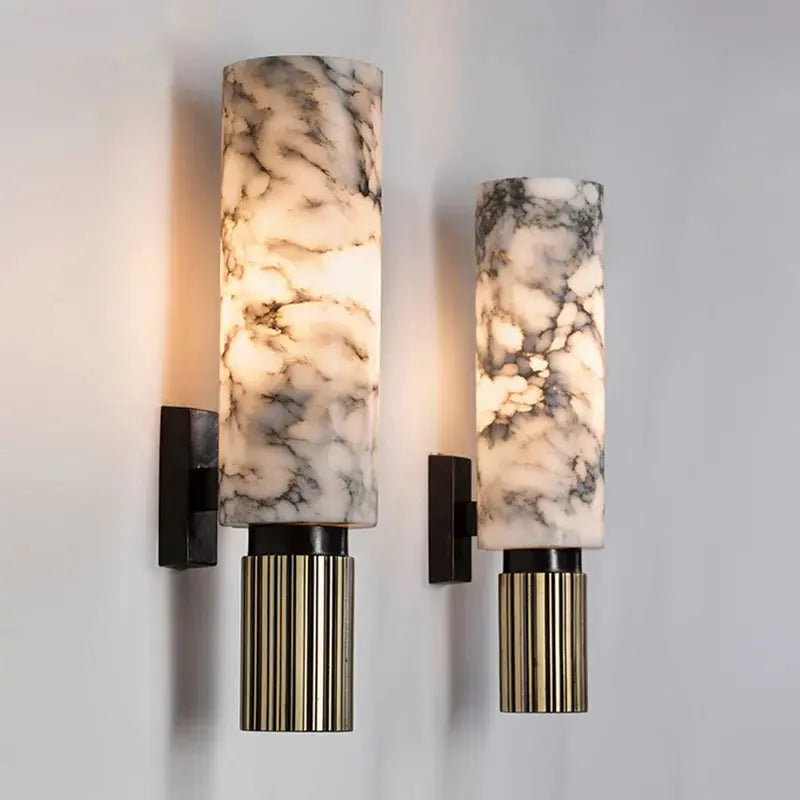
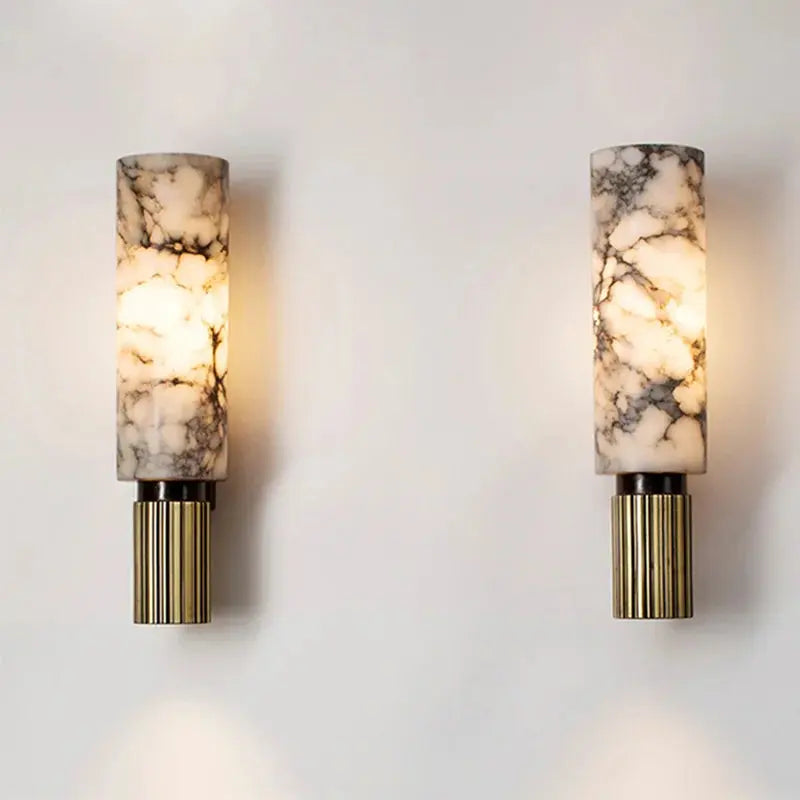
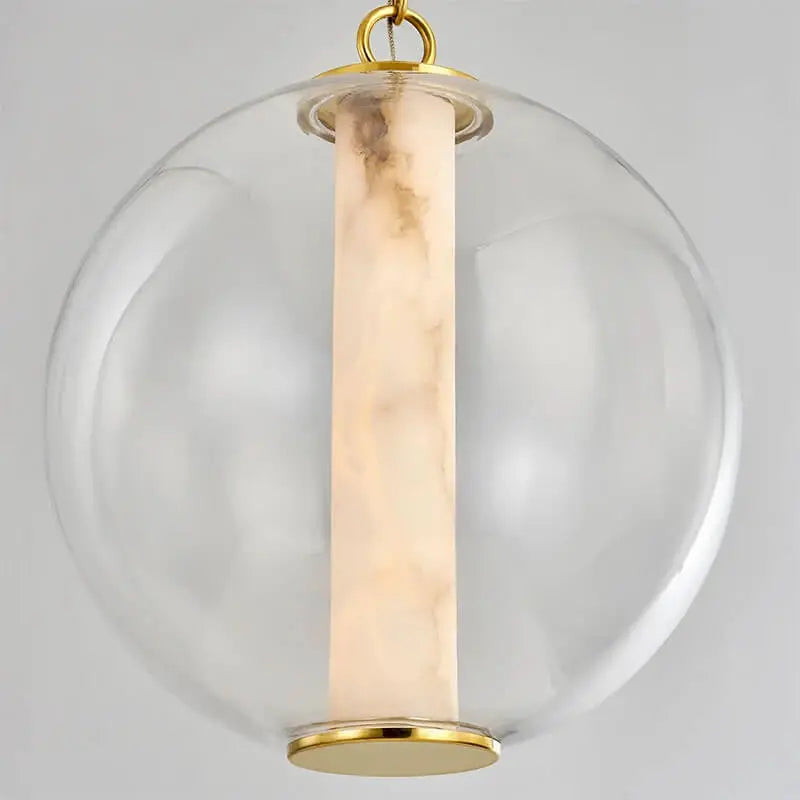
Alabaster is an exceptional choice for a dining room that calls for quiet luxury. Its naturally veined surface turns every fixture into a subtle one-off, and its creamy translucence produces a warm, inviting light. An alabaster chandelier feels substantial without becoming overly ornate, making it suited to both modern interiors and softer, classic schemes.
Natural variation is part of its appeal. Expect gentle changes in tone and veining rather than a perfectly uniform finish. Pair it with brass or bronze details for an elevated, composed look that will not date quickly.
6. Drum-shade chandeliers
A drum-shade chandelier is a sophisticated answer for dining rooms that need visual softness. Fabric, linen or fine metal mesh shades diffuse the light and conceal the bulbs, giving the room a calm, tailored finish. This makes them particularly appealing where the dining room opens into a lounge or is used for long, relaxed evenings.
A pale shade will keep the room airy, while black, charcoal or deep green creates intimacy and contrast. Keep the shade proportionate to the table, as an oversized drum can feel heavy in a low-ceilinged room.
7. Lantern chandeliers
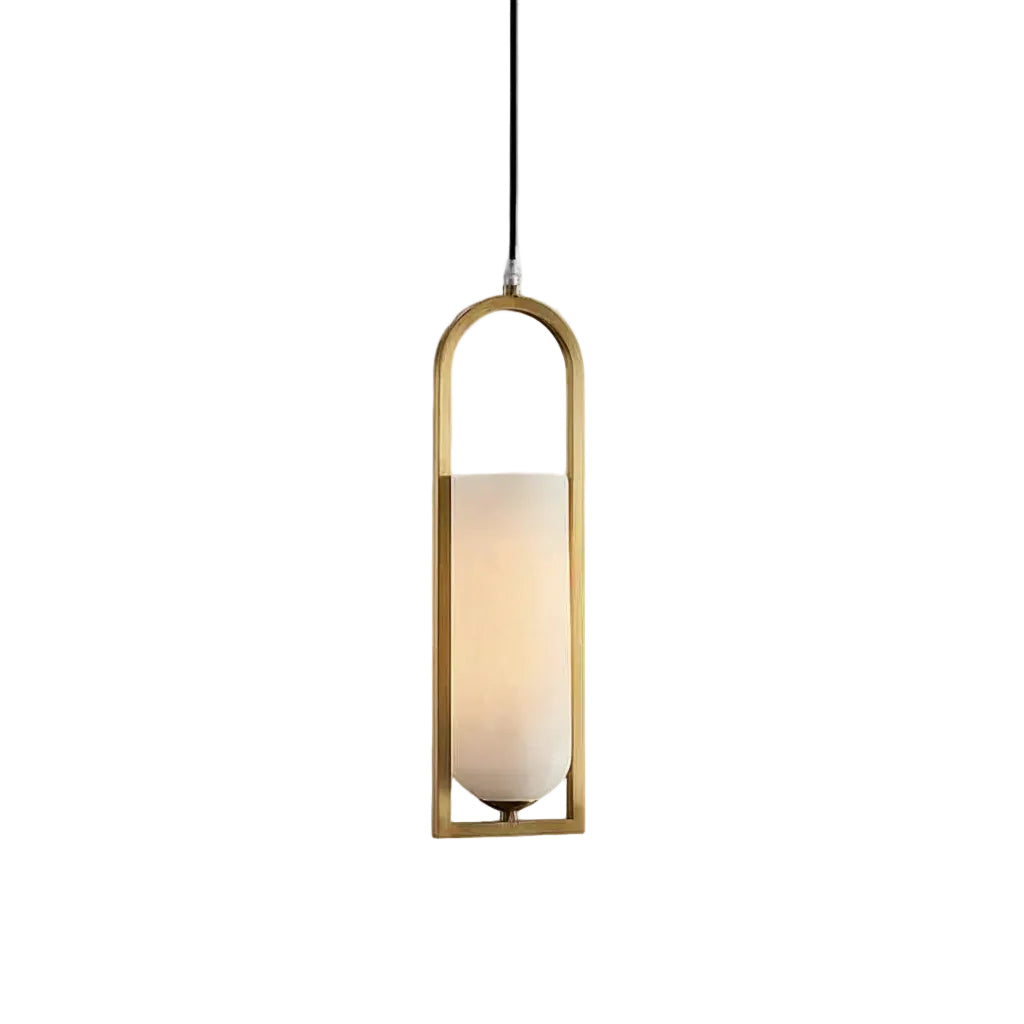
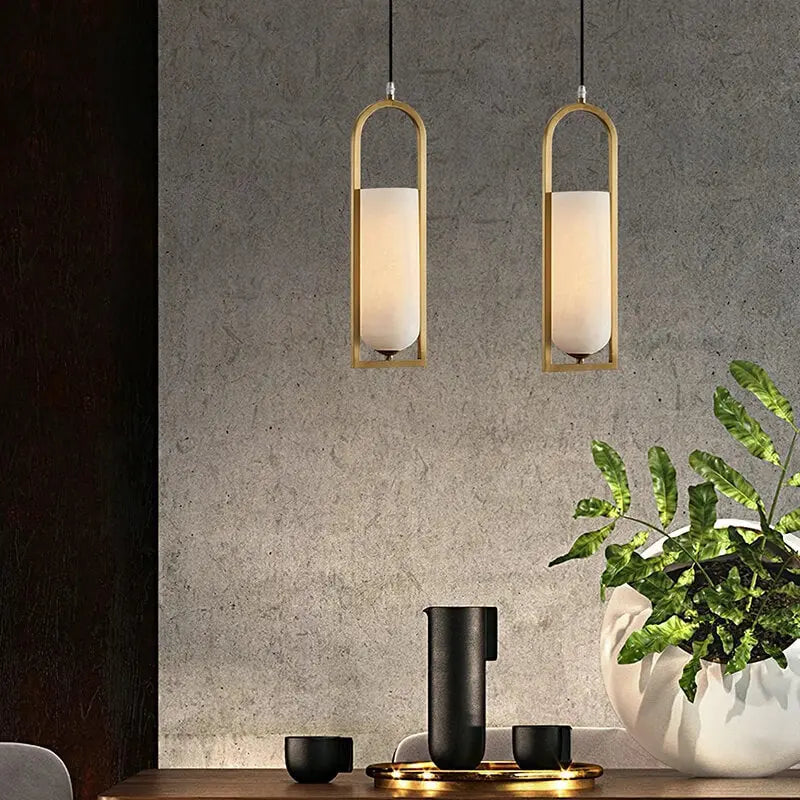
Lantern chandeliers frame light within an open geometric structure, offering a graceful middle ground between traditional and modern design. They work beautifully above farmhouse tables, in dining rooms with high ceilings and in transitional interiors that combine classic pieces with newer finishes.
Open lanterns feel lighter than solid-bodied chandeliers of the same size, which makes them a smart option for rooms that need presence without visual bulk. For a refined result, coordinate the metal finish with nearby hardware, such as cabinet handles, curtain poles or picture frames, without trying to match every detail exactly.
8. Wood and iron chandeliers
For a dining room with warmth and character, wood and iron chandeliers offer a grounded, tactile alternative to polished crystal or glass. Think weathered timber beams, dark metal arms and softly glowing bulbs. This combination suits rustic, country and modern farmhouse spaces, particularly when balanced with cleaner elements such as upholstered dining chairs or contemporary artwork.
Material quality matters here. A chandelier should look intentionally crafted, not overly distressed or theme-led. Choose a design with restrained detailing if you want a more timeless interpretation of this relaxed style.
9. Sputnik chandeliers
Sputnik chandeliers are made for homeowners who see lighting as functional sculpture. Their radiating arms instantly draw the eye upwards, making them excellent for dining rooms with plain ceilings or minimal architectural detail. A brass Sputnik design adds mid-century warmth, while black or chrome creates a bolder contemporary statement.
Because this style has a wide visual spread, check both its diameter and the reach of the arms before ordering. It needs enough breathing room above and around the table to look intentional rather than crowded.
10. Organic statement chandeliers
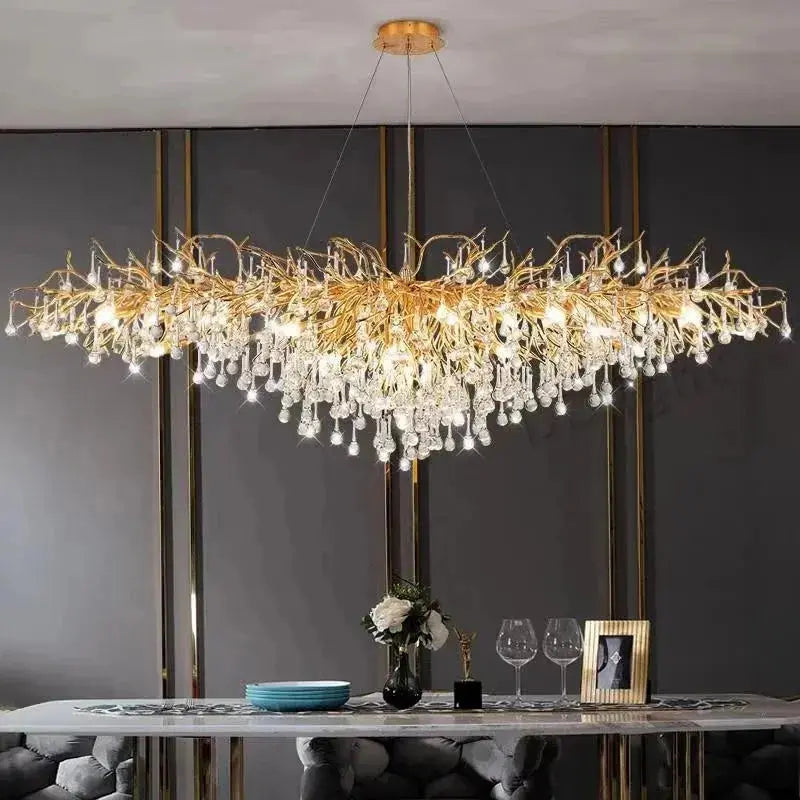
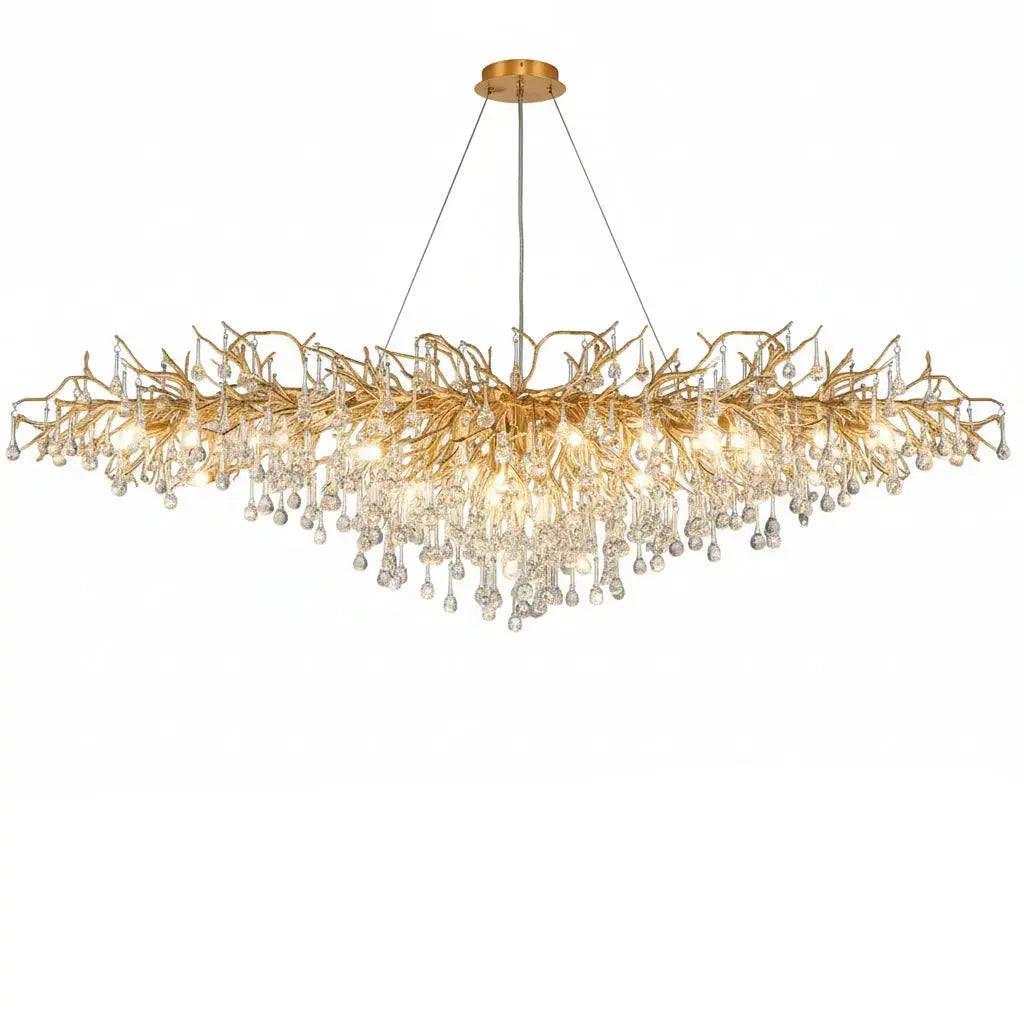
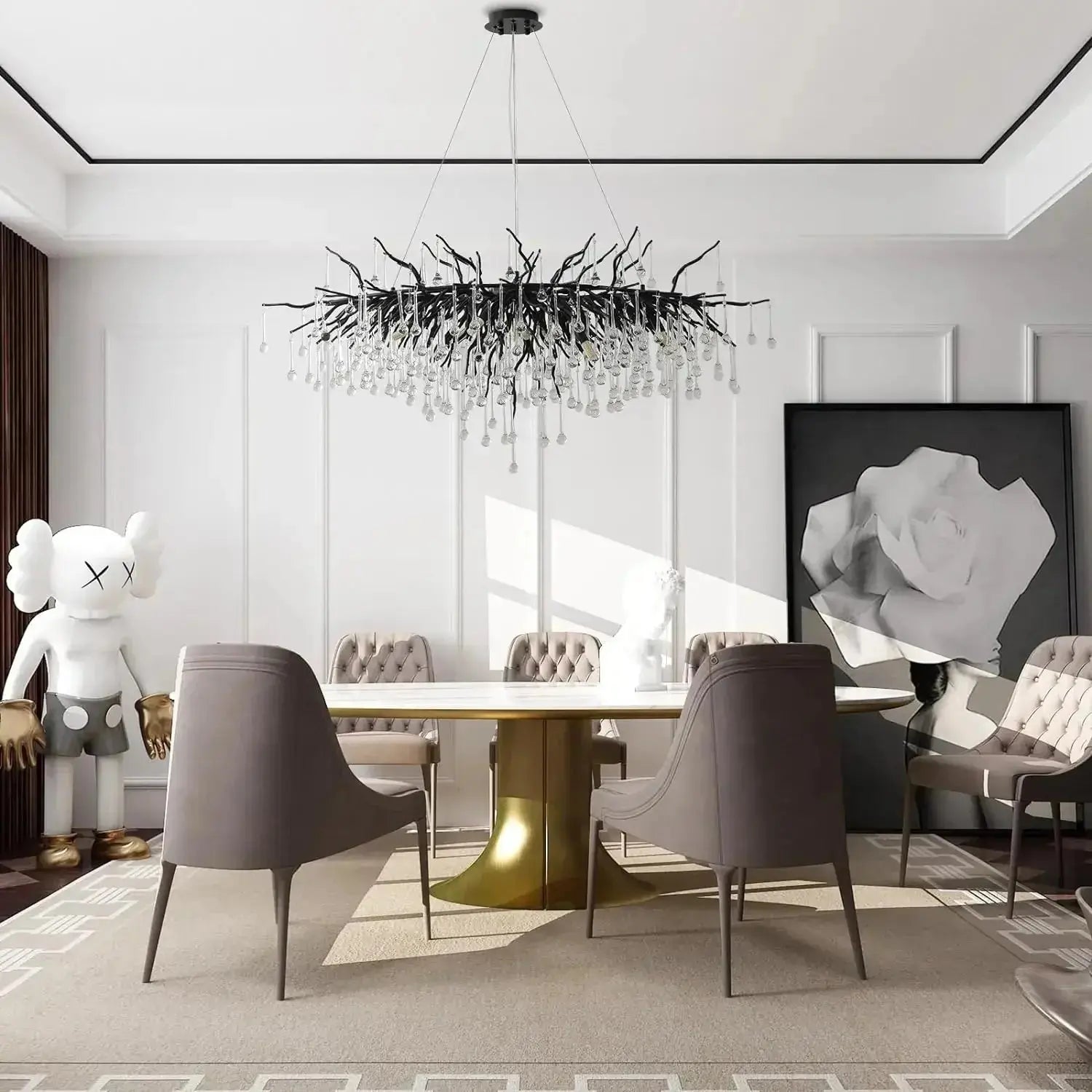
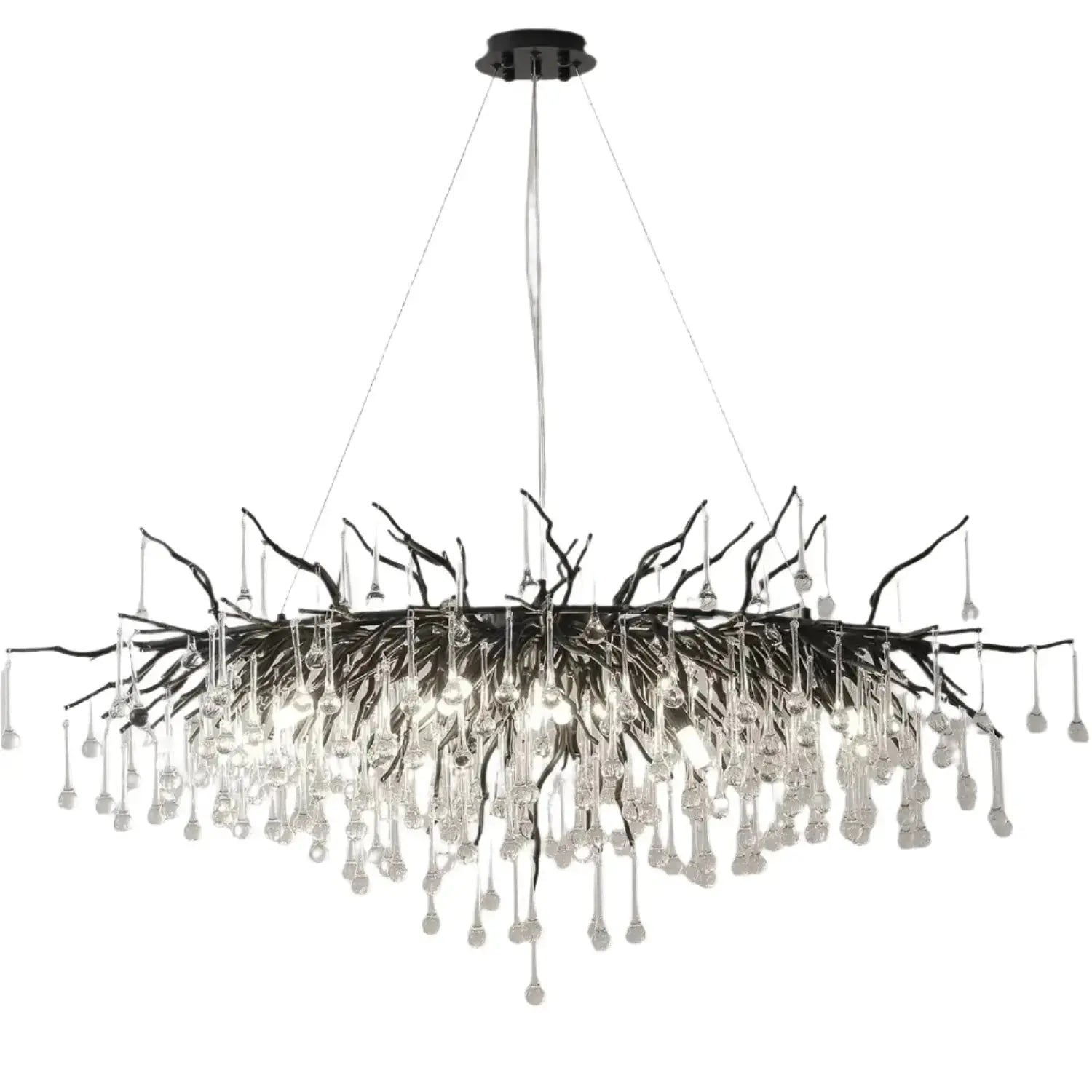
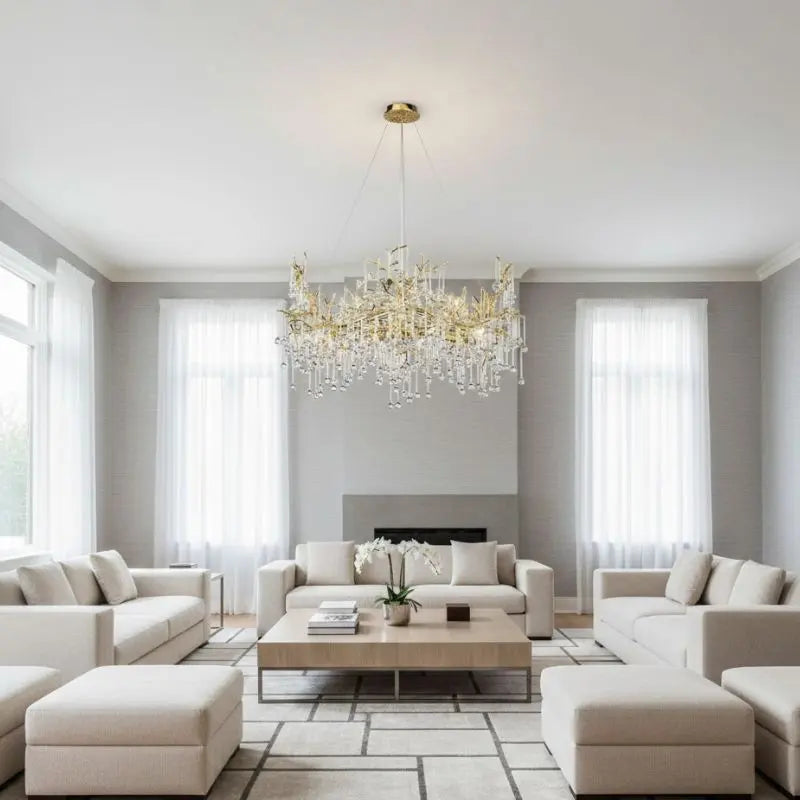
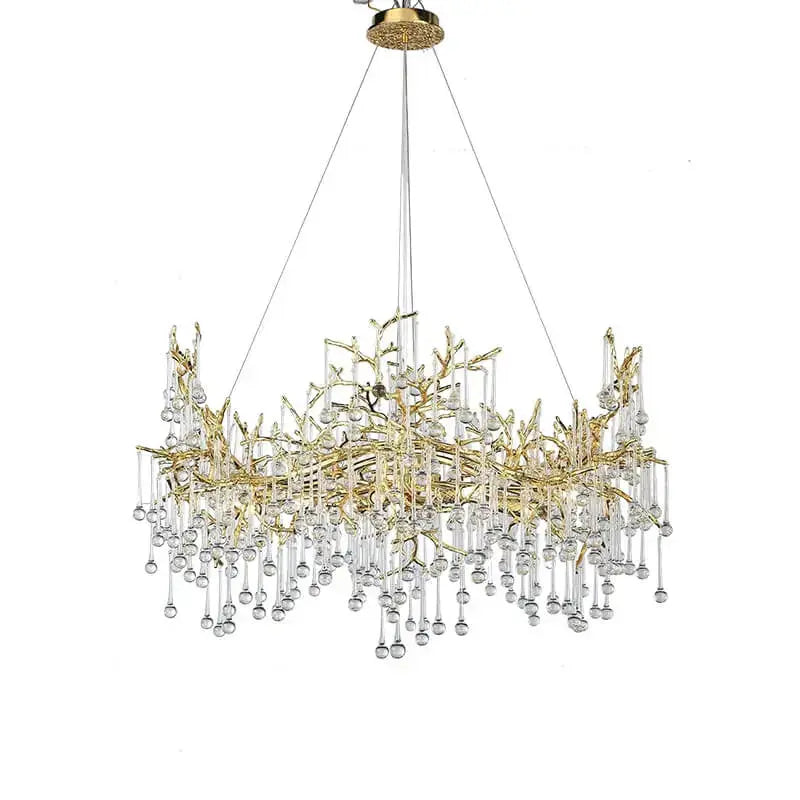
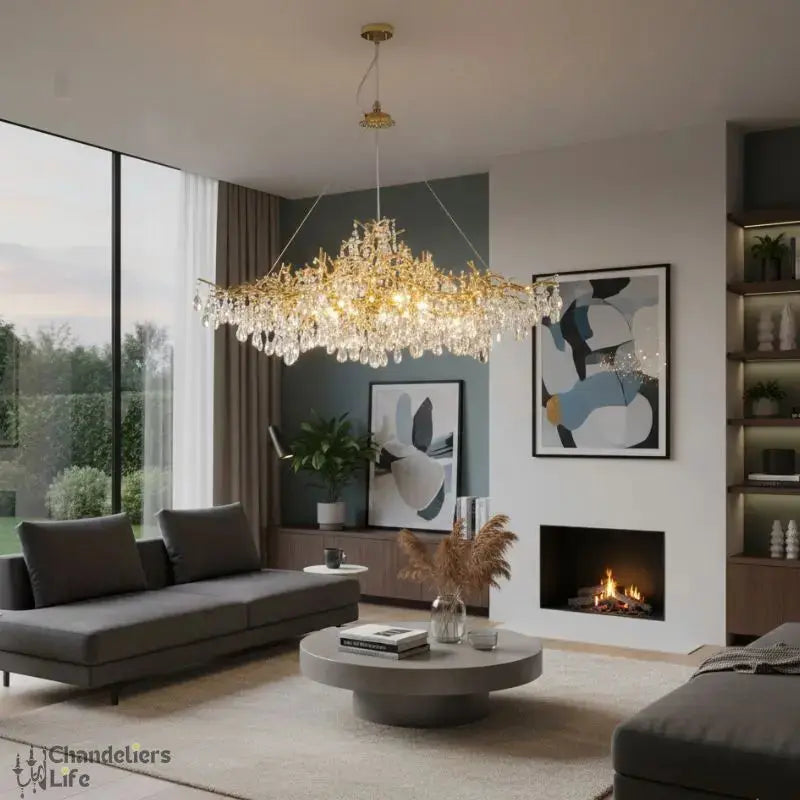
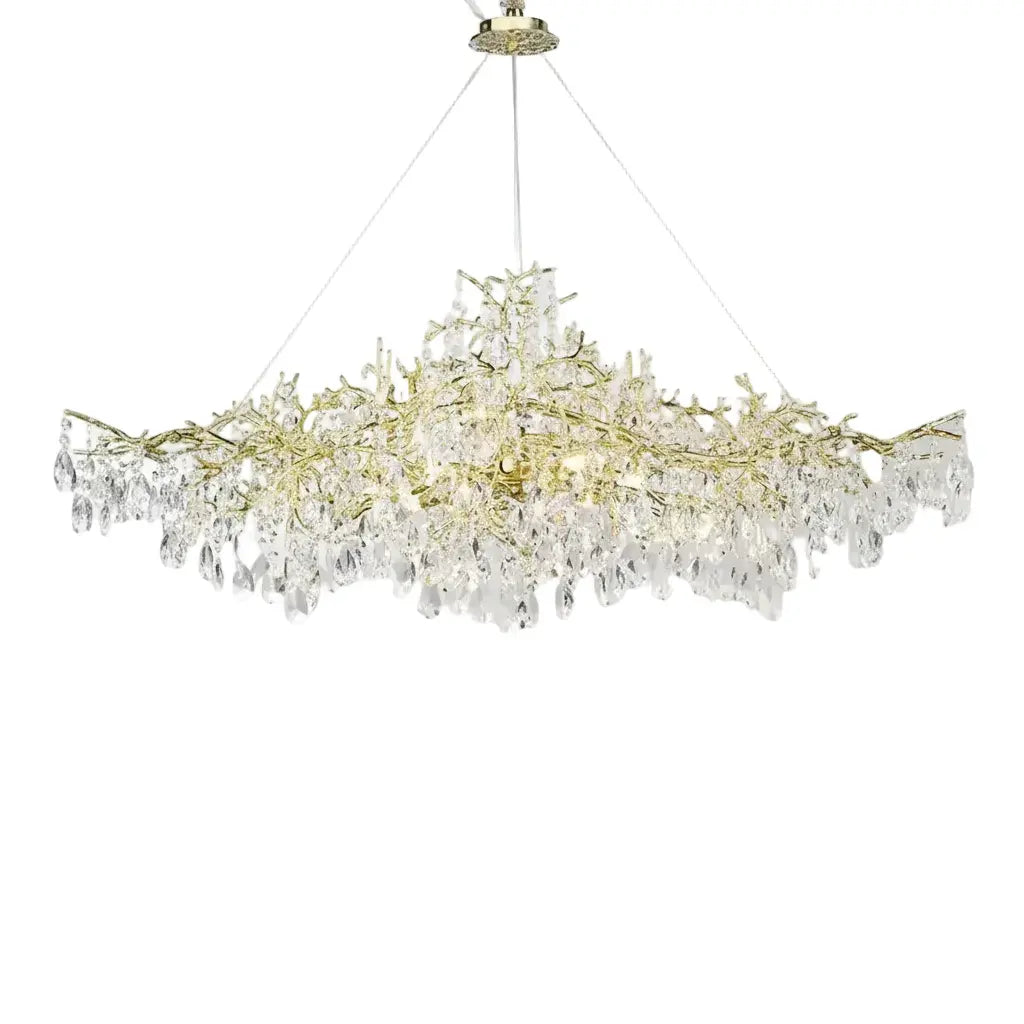
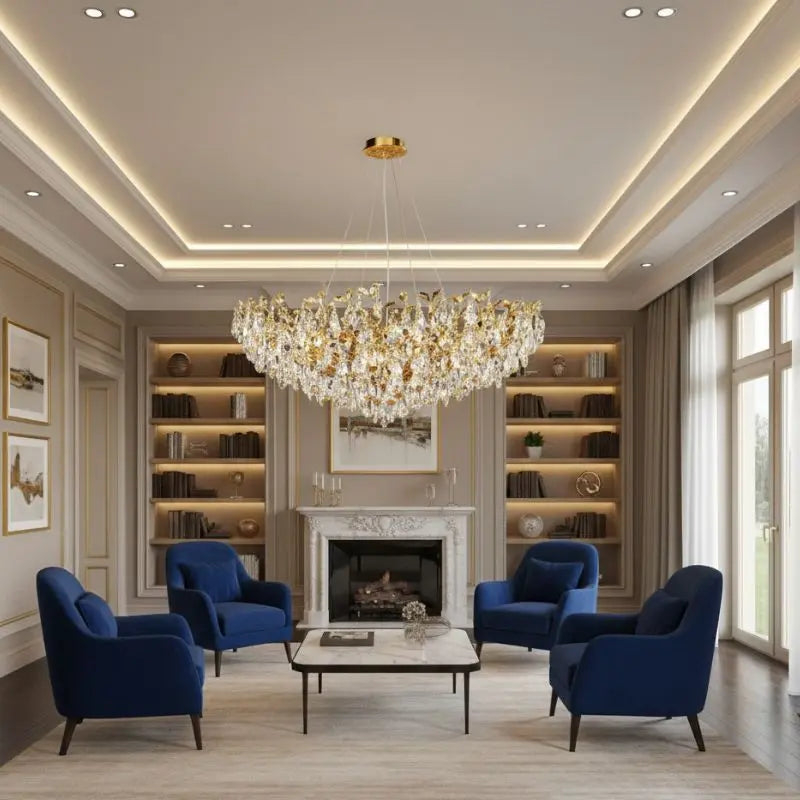
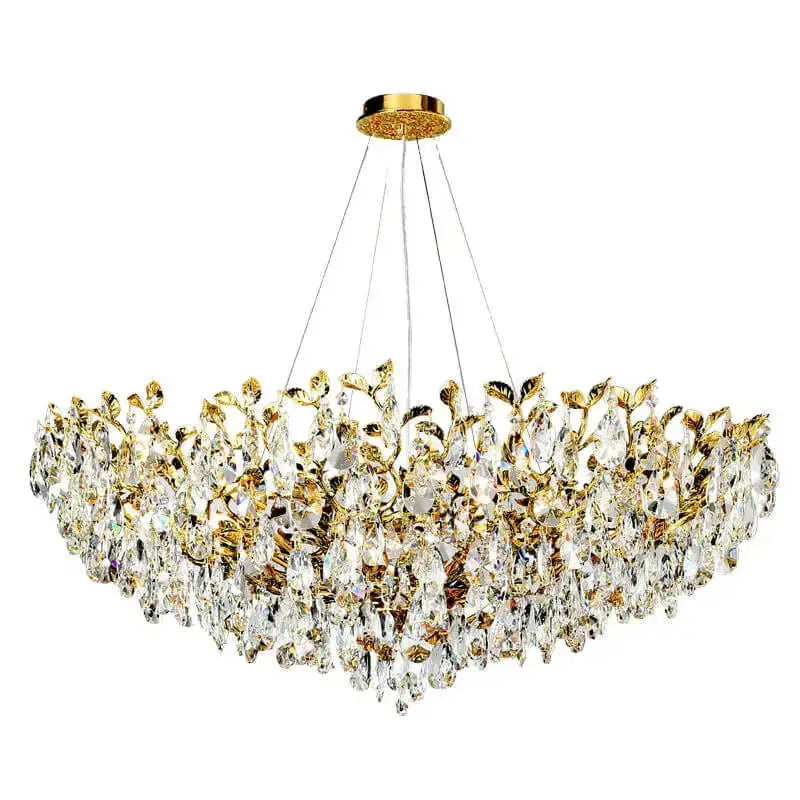
Fixtures inspired by branches, leaves, petals or flowing forms bring a more artistic sense of movement to the dining room. They can soften a sleek marble table, add contrast to a structured interior or become the single expressive piece in an otherwise restrained scheme. Glass leaves, hand-finished metal branches and delicate floral silhouettes all create a memorable focal point.
This is a style-led choice, so restraint elsewhere is helpful. Let the chandelier be the feature and keep table décor, ceiling treatments and adjacent pendants comparatively simple.
Choose light that works after sunset
A dining chandelier should be beautiful when switched off and flattering when lit. Warm white light around 2700K is usually the most inviting choice, enhancing wood grains, textiles and skin tones without making the room feel yellow. A dimmer is equally valuable: brighter light suits weekday meals and serving, while a lower setting creates the intimate glow people remember.
Consider the chandelier’s bulbs and construction before making a final decision. Integrated LED fixtures offer a clean, contemporary profile and excellent efficiency, while replaceable bulbs provide flexibility when you want to adjust the warmth or brightness later. Neither is automatically better; the right option depends on whether you value a minimal silhouette or long-term customisation.
Let the chandelier lead the room
The most successful dining rooms do not treat lighting as a finishing touch. They use it as the element that draws the furniture, finishes and mood into one considered composition. Whether you are drawn to luminous crystal, sculptural alabaster or a confident modern linear form, choose a piece that feels generous in scale and unmistakably yours. A well-chosen chandelier will make the table beneath it feel like the best seat in the house.