A vaulted ceiling gives a room something few decorating choices can match: volume, light and an immediate sense of occasion. Yet that extra height can leave the floor below feeling oddly dim or a beautiful fixture looking far too small. If you are asking what lighting suits vaulted ceilings, the answer is rarely one ceiling fitting alone. The most successful schemes pair a statement piece with carefully placed layers of light, all chosen for the room’s scale and the ceiling’s slope.
What lighting suits vaulted ceilings best?
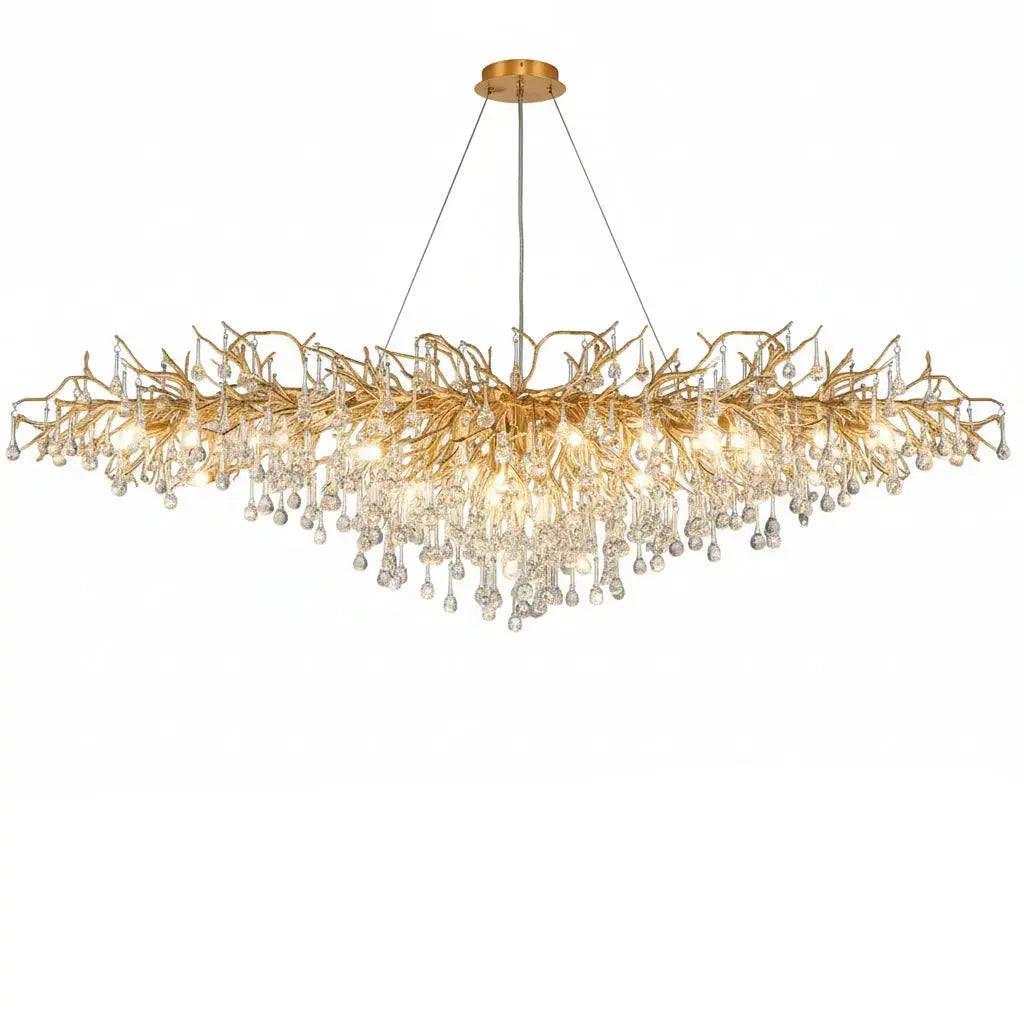
Chandeliers, large pendants and linear suspension lights are usually the natural starting point. They occupy the generous vertical space rather than disappearing into it, drawing the eye upwards and giving the room a clear decorative focal point. Their scale should feel intentional: a small semi-flush fitting mounted high on a vaulted ceiling can make even an elegant room feel unfinished.
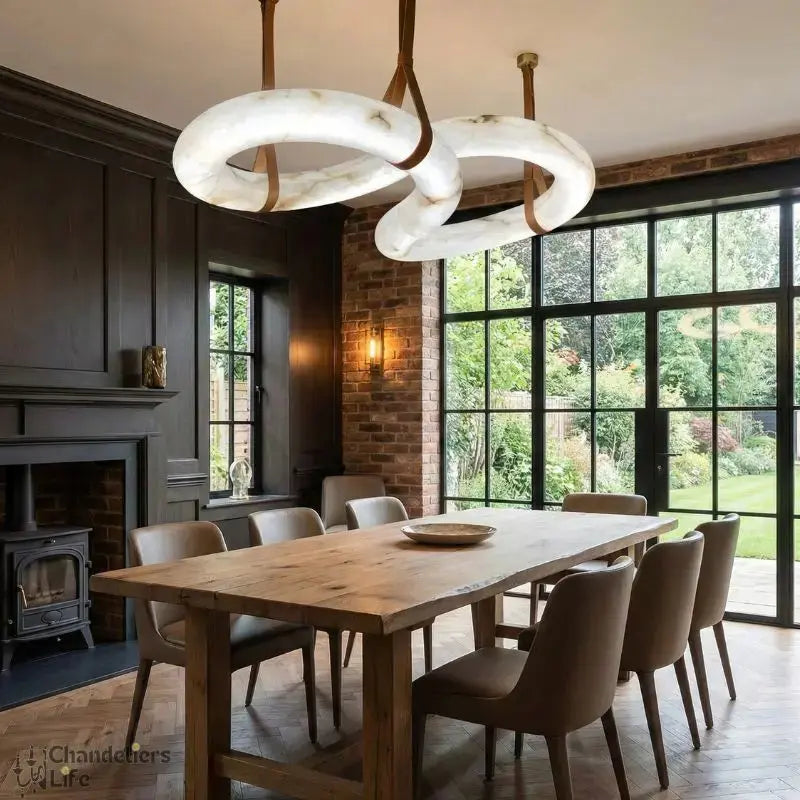
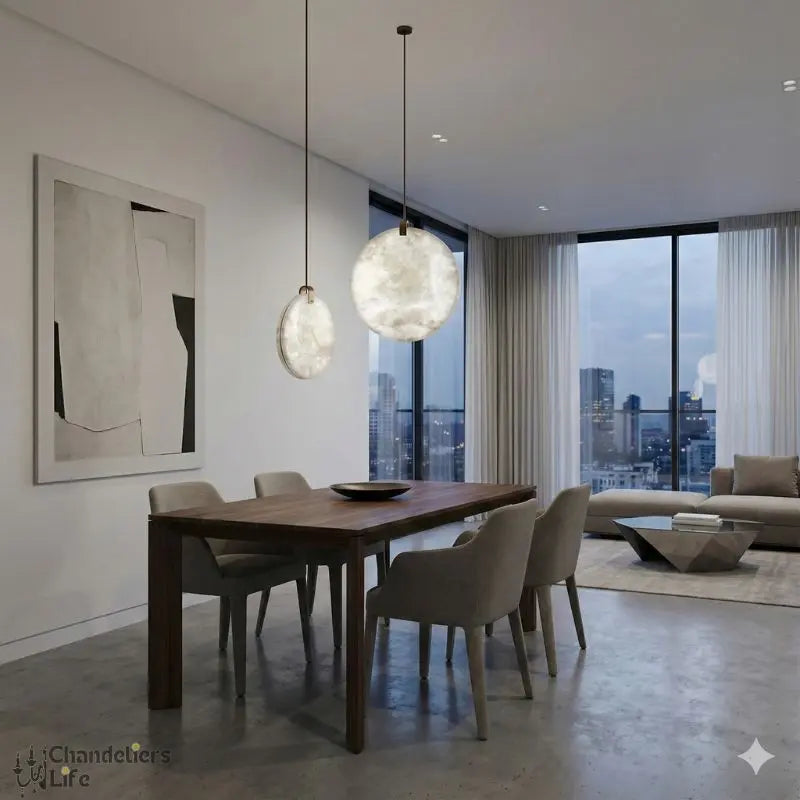
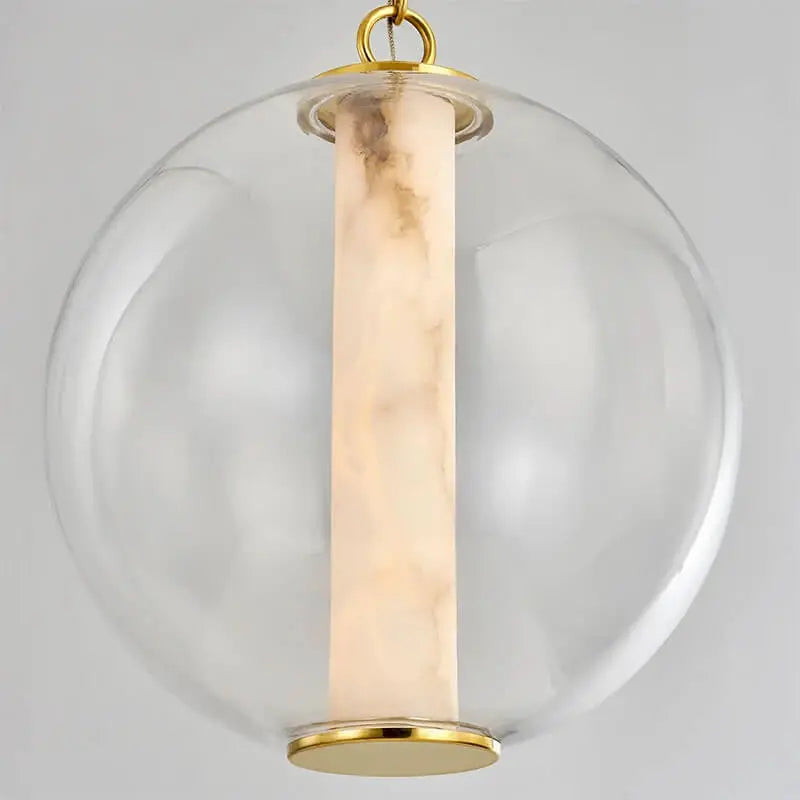
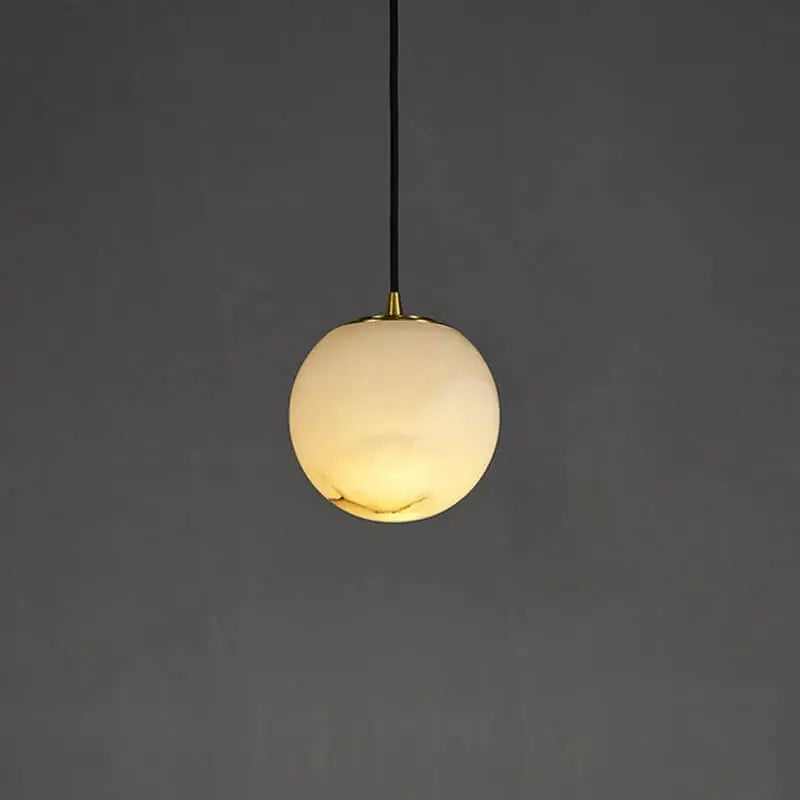
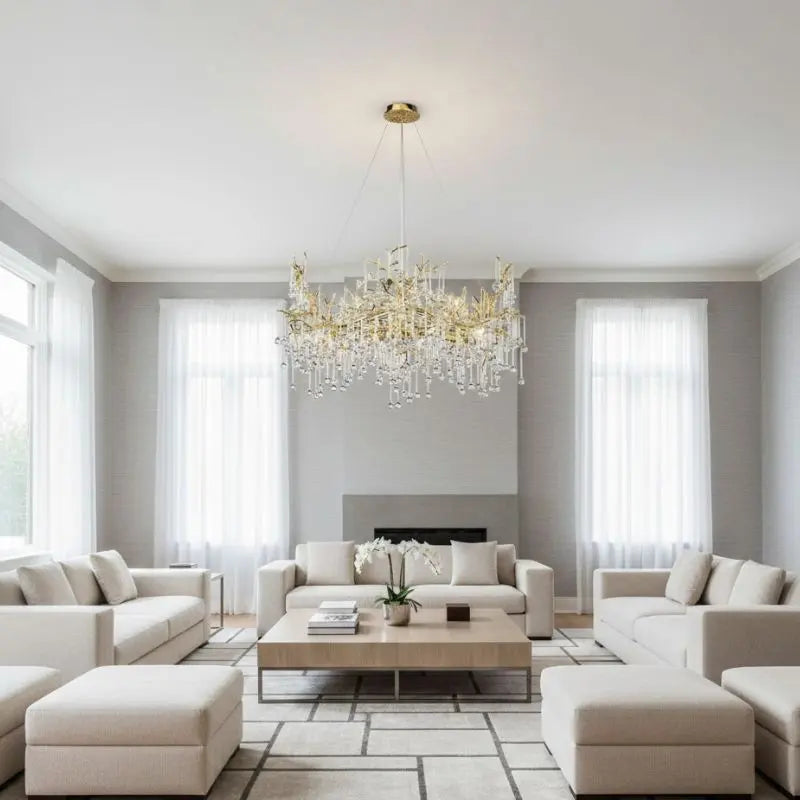
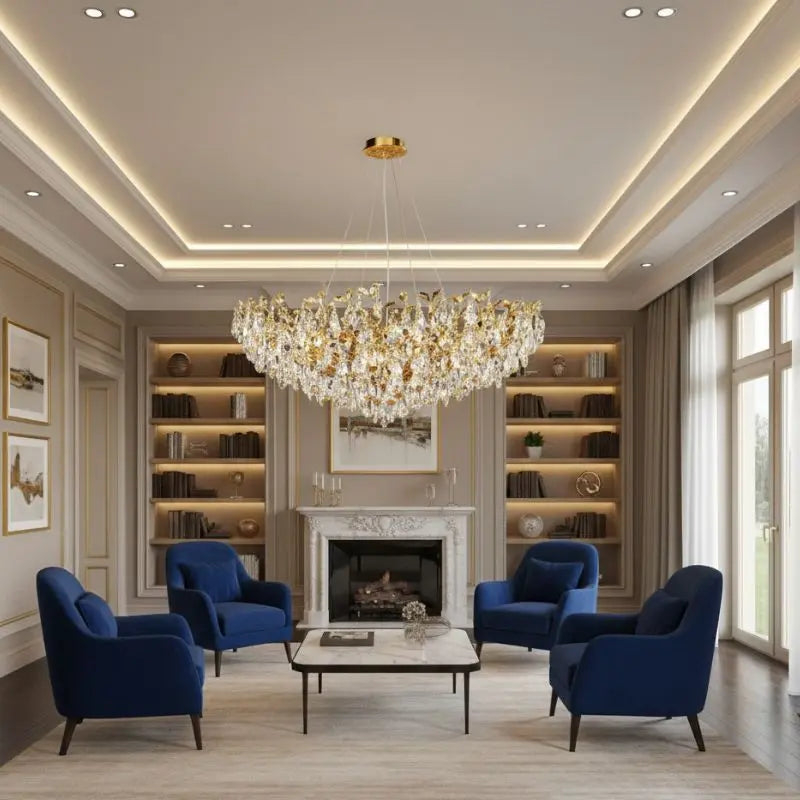
That said, the right fixture depends on the room beneath it. A crystal chandelier can bring timeless elegance to a double-height entrance or formal dining area, while an alabaster pendant creates a softer, more contemporary luxury in a living room. Over a kitchen island, a sequence of pendants or a refined linear chandelier gives purposeful task light without losing the architectural drama of the ceiling.
The key is to treat the ceiling as part of the composition. A vaulted ceiling is not simply higher than average; it creates angled planes, shadows and sightlines that deserve lighting with presence.
Start with proportion, not just ceiling height
Before choosing a design, consider the width and length of the room, where people will stand, and what will sit beneath the fitting. Ceiling height matters, but it is only one part of the decision.
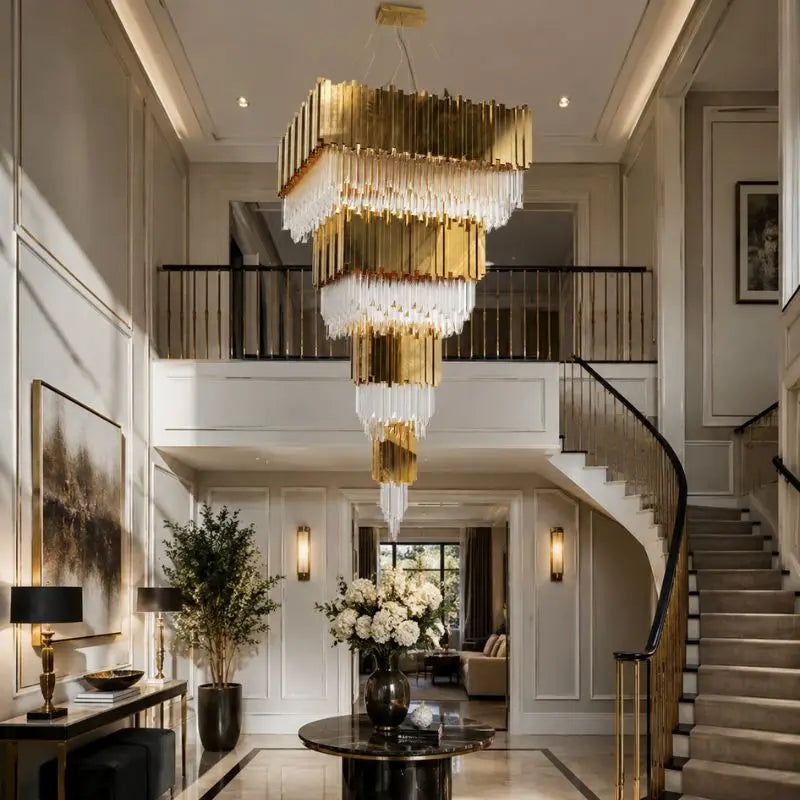
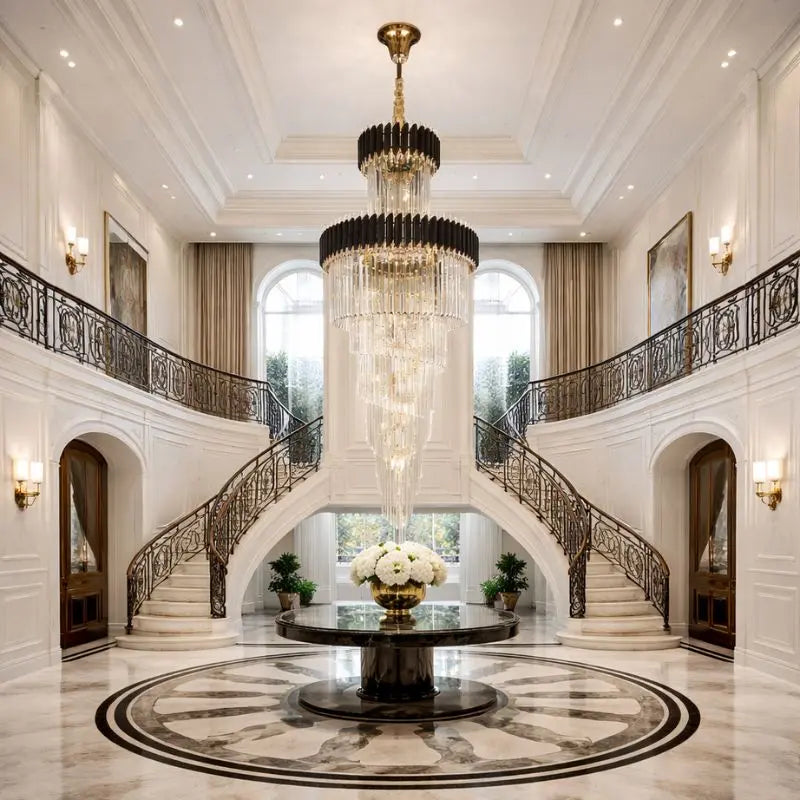
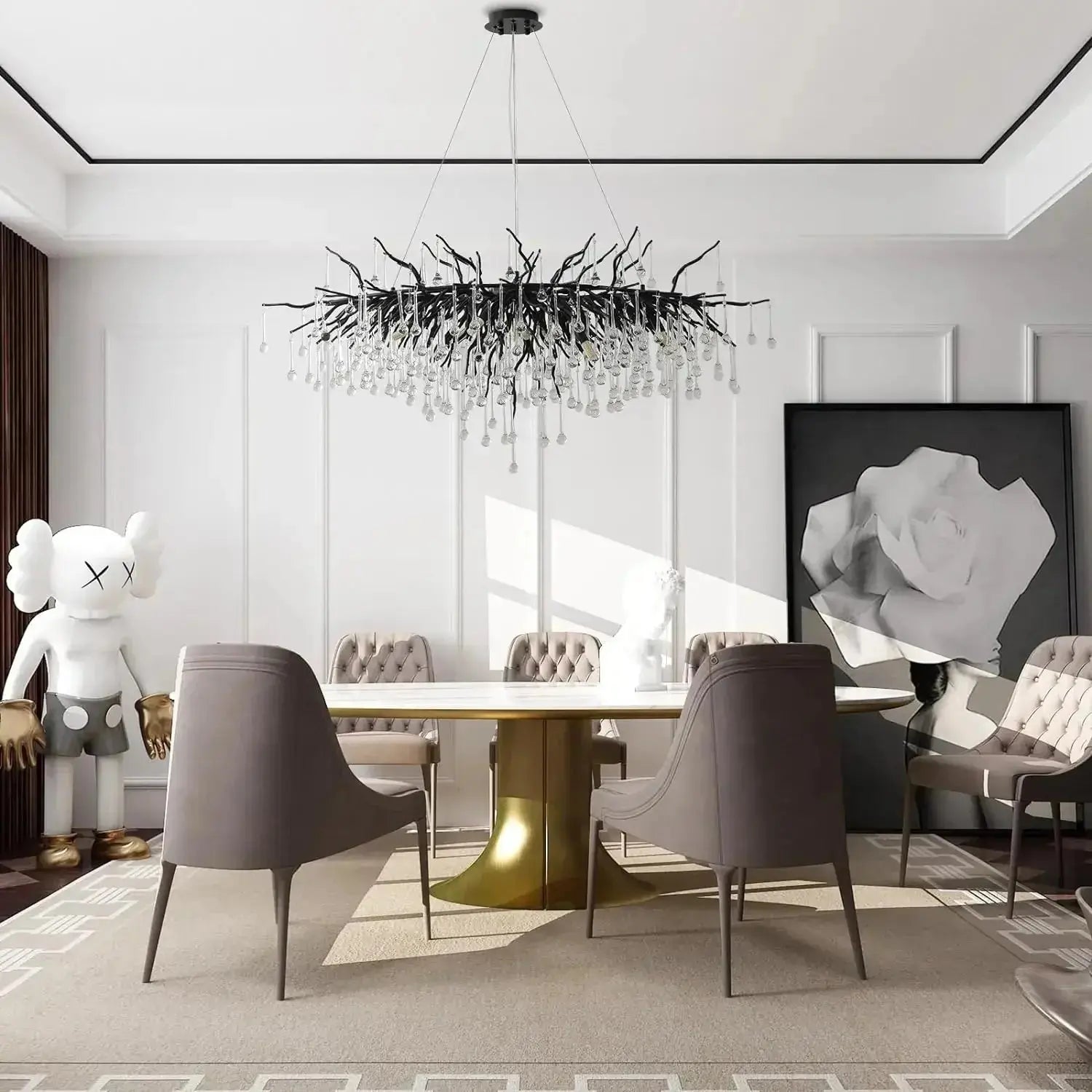
In a foyer or stairwell, a generously scaled chandelier can hang through the open volume and be appreciated from several levels. In a dining room, the fixture should relate first to the table. A chandelier or pendant is generally most comfortable when its lower edge sits around 76 to 91 cm above the tabletop, even if this means using a long chain or suspension rod. This keeps the light visually connected to the dining setting rather than stranded near the rafters.
For a living room with no central table, a statement pendant should hang high enough to preserve clear movement underneath. As a practical guide, allow at least 2.1 metres between the floor and the lowest part of the fitting in a walkway. If the ceiling rises dramatically, choose a larger fixture or one with a tall, layered silhouette instead of simply placing a small fitting on an extra-long drop.
A grand fitting is not always the answer. In a compact room, an oversized chandelier can feel oppressive once installed. Look for designs with visual openness - slender arms, clear crystal, open metalwork or softly glowing alabaster - to achieve scale without heaviness.
Choose a fixture that works with the slope
Many vaulted ceilings are sloped, and this changes the installation requirements. A pendant or chandelier needs to hang vertically, not at an awkward angle. Look for a vaulted-ceiling canopy, a swivel mount or an adjustable chain system designed to accommodate the pitch. This small detail makes a significant difference to the finished look.
A chandelier with a chain is particularly versatile because the chain naturally adjusts to a sloping canopy and allows the drop to be tailored. Stem-mounted pendants can be equally striking, but they may require an angled-ceiling adaptor. Check this before falling in love with a particular design, especially where beams, exposed timber or a steep pitch limit the available mounting position.
The central point of the vaulted ceiling is not automatically the best place for the fixture. In a room with a fireplace, large windows or an island, place the main light over the activity zone or visual anchor. Symmetry is beautiful, but a well-planned scheme should serve the way the room is actually used.
Chandeliers for foyers, living rooms and dining rooms
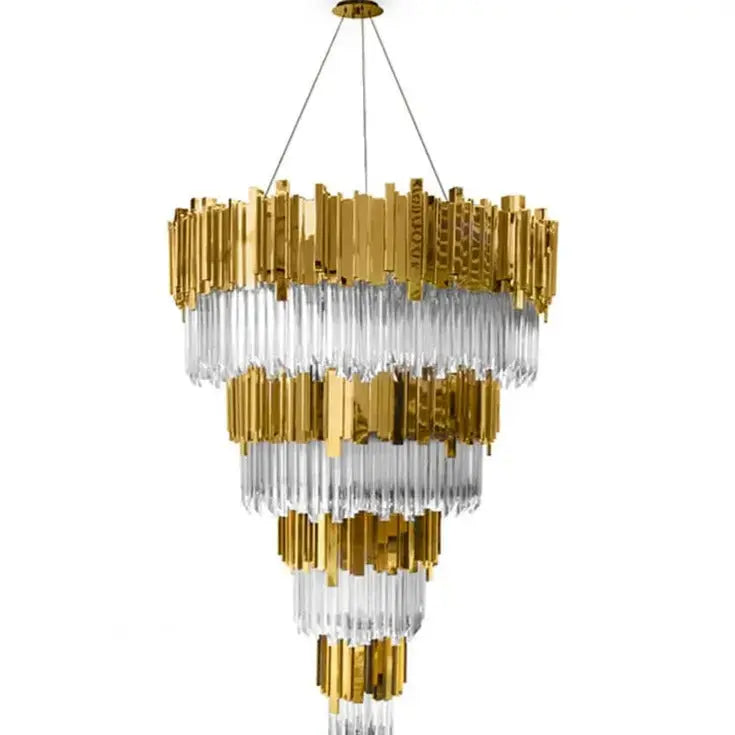
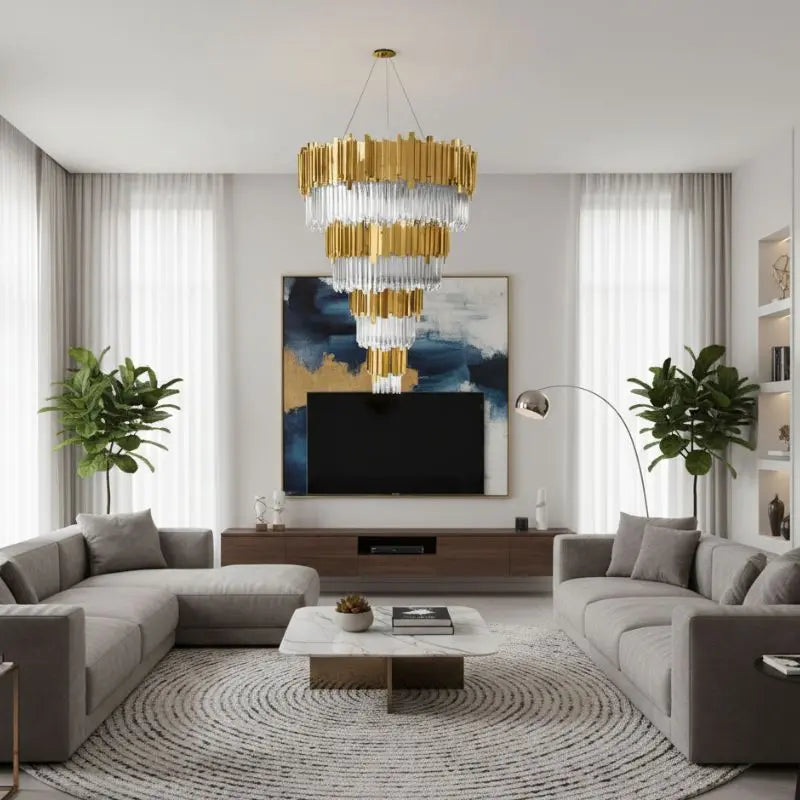
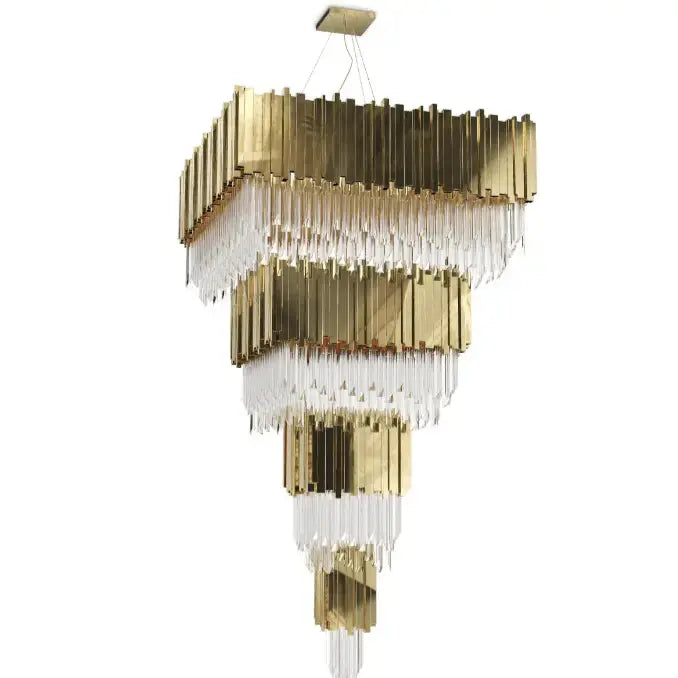
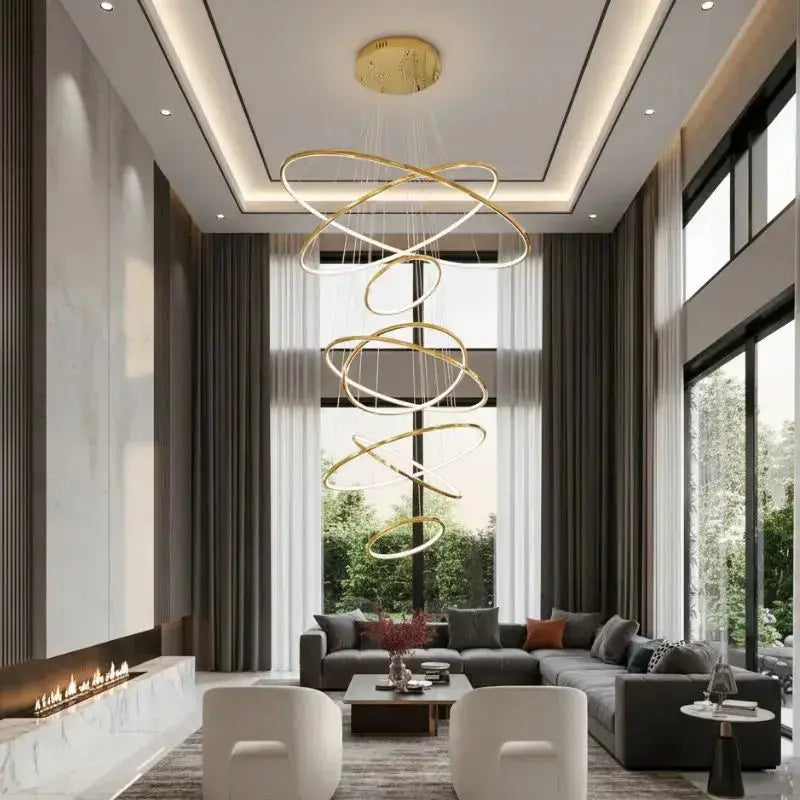
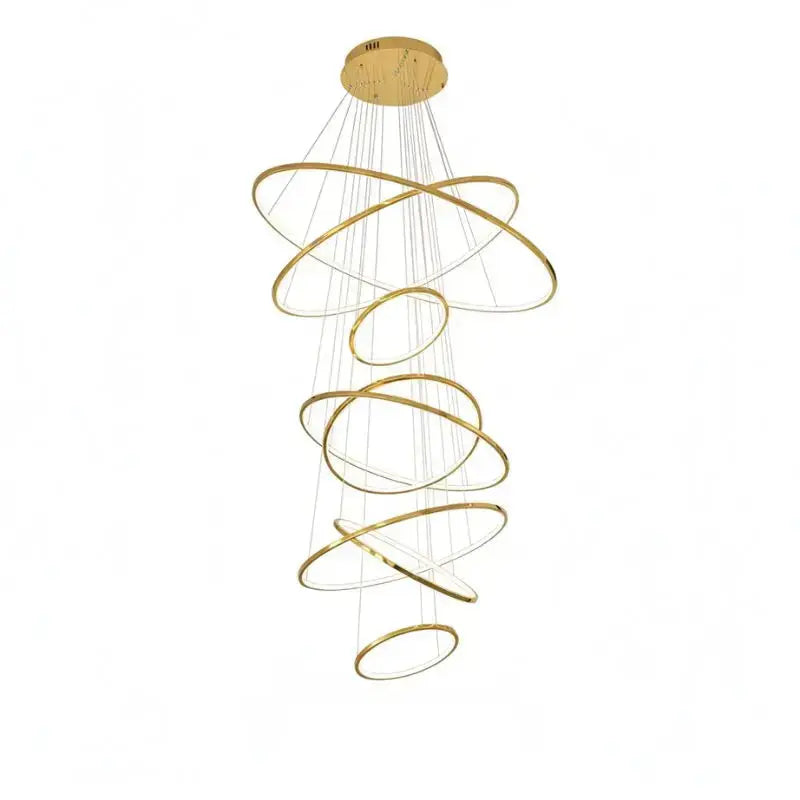
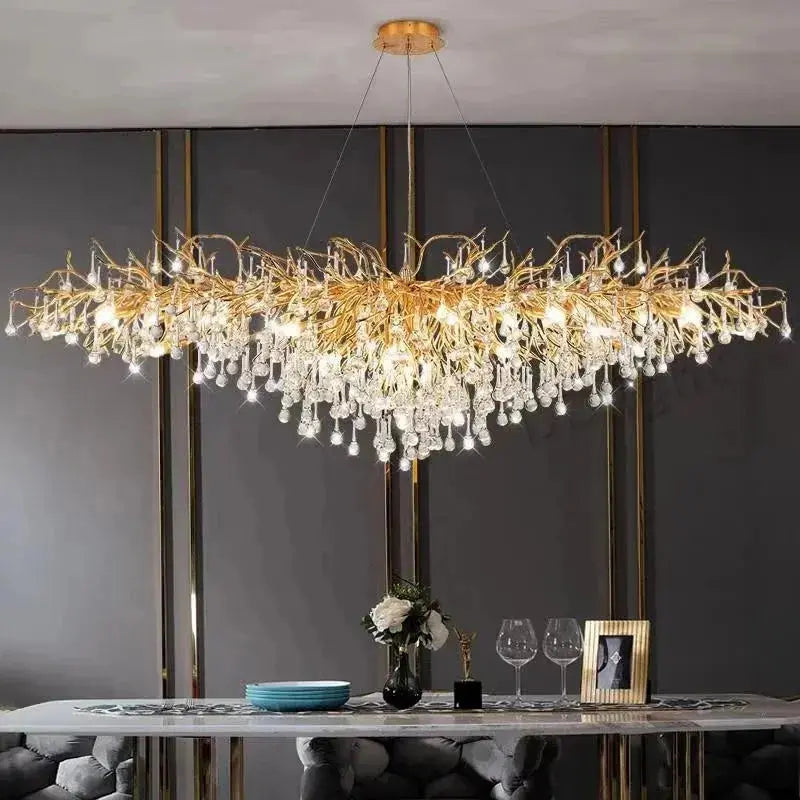
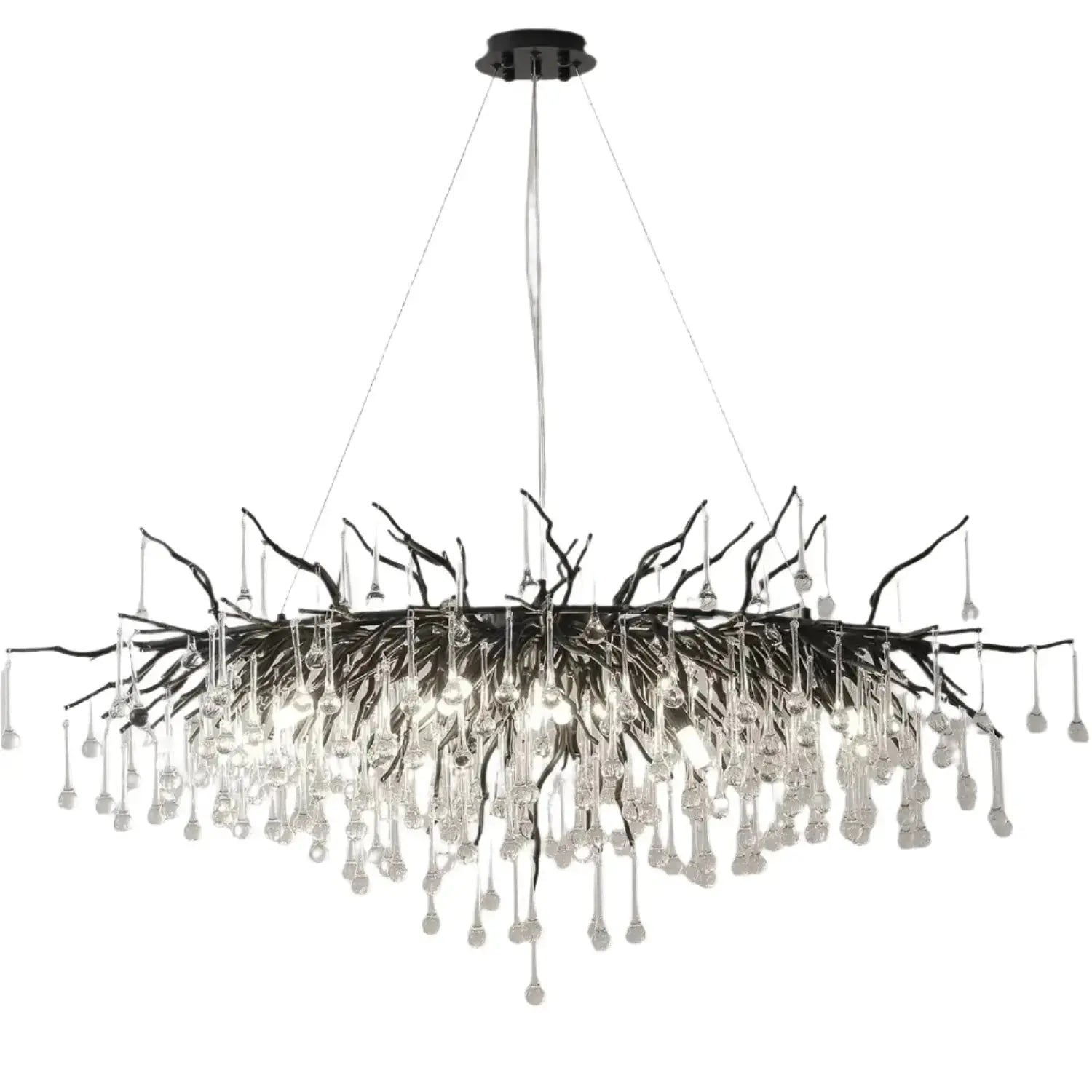
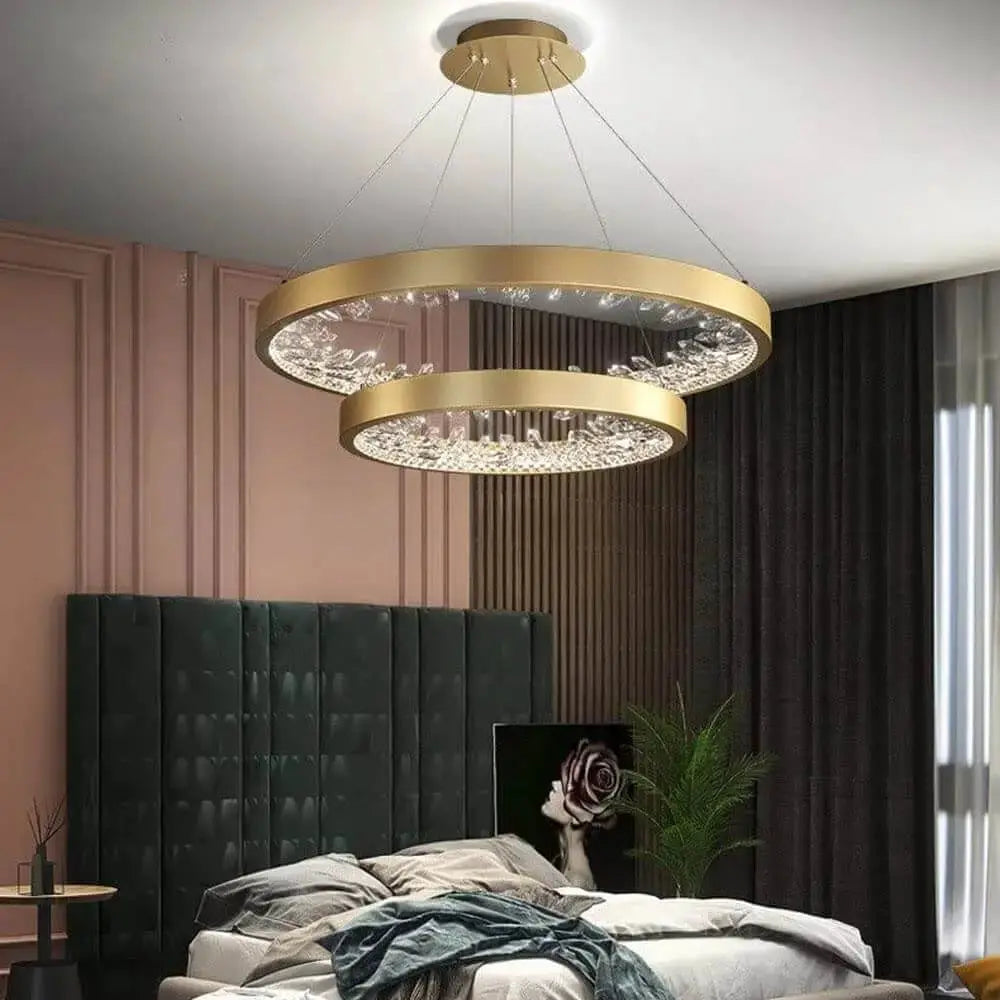
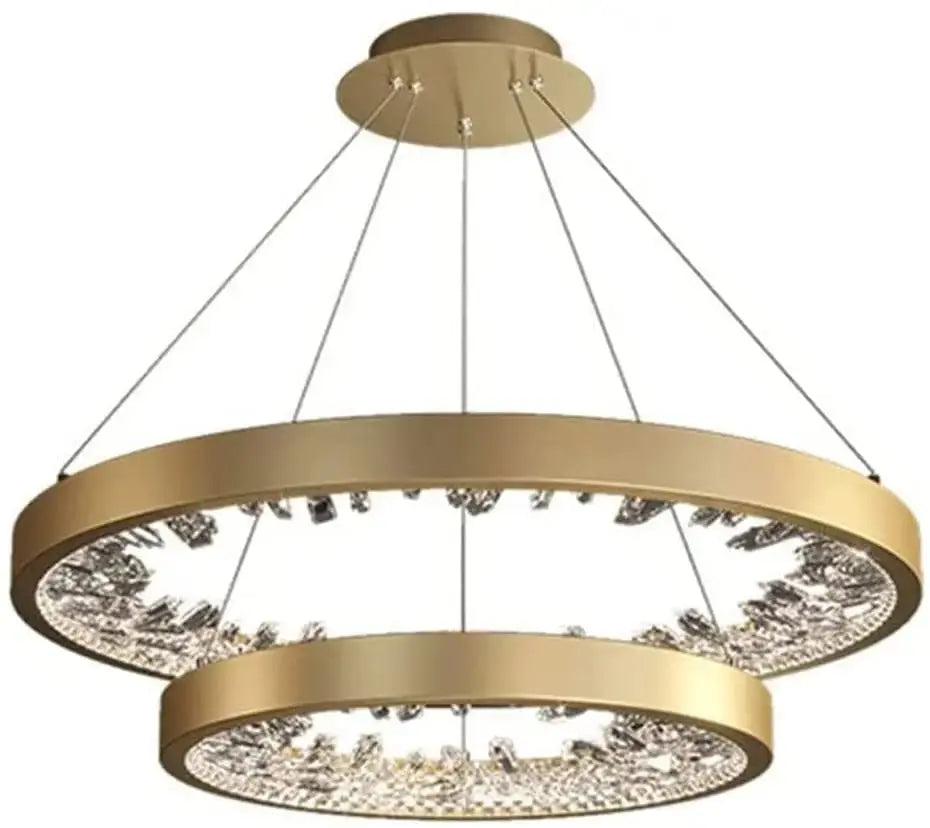
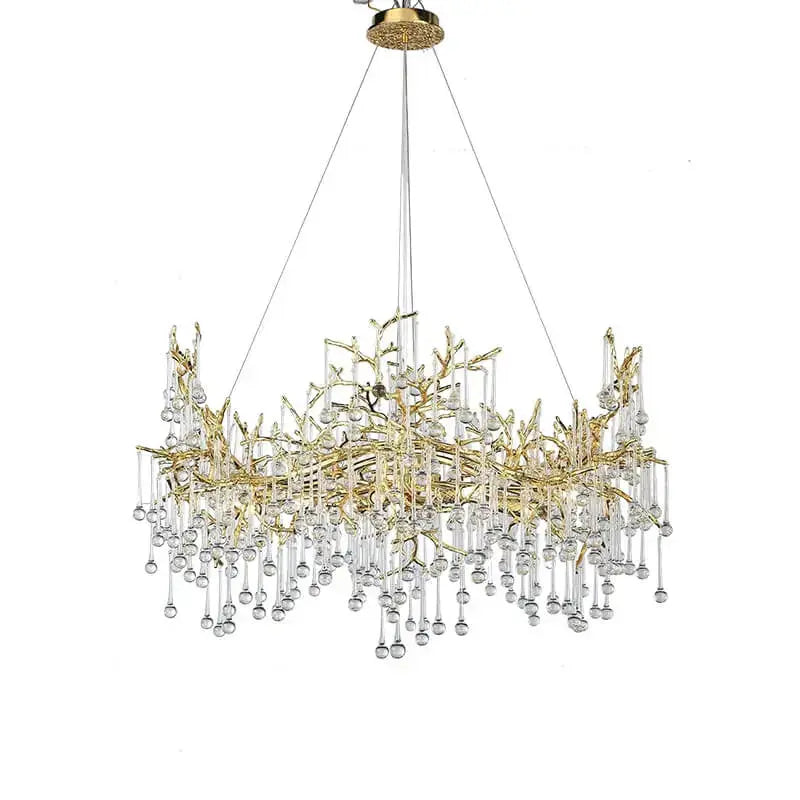
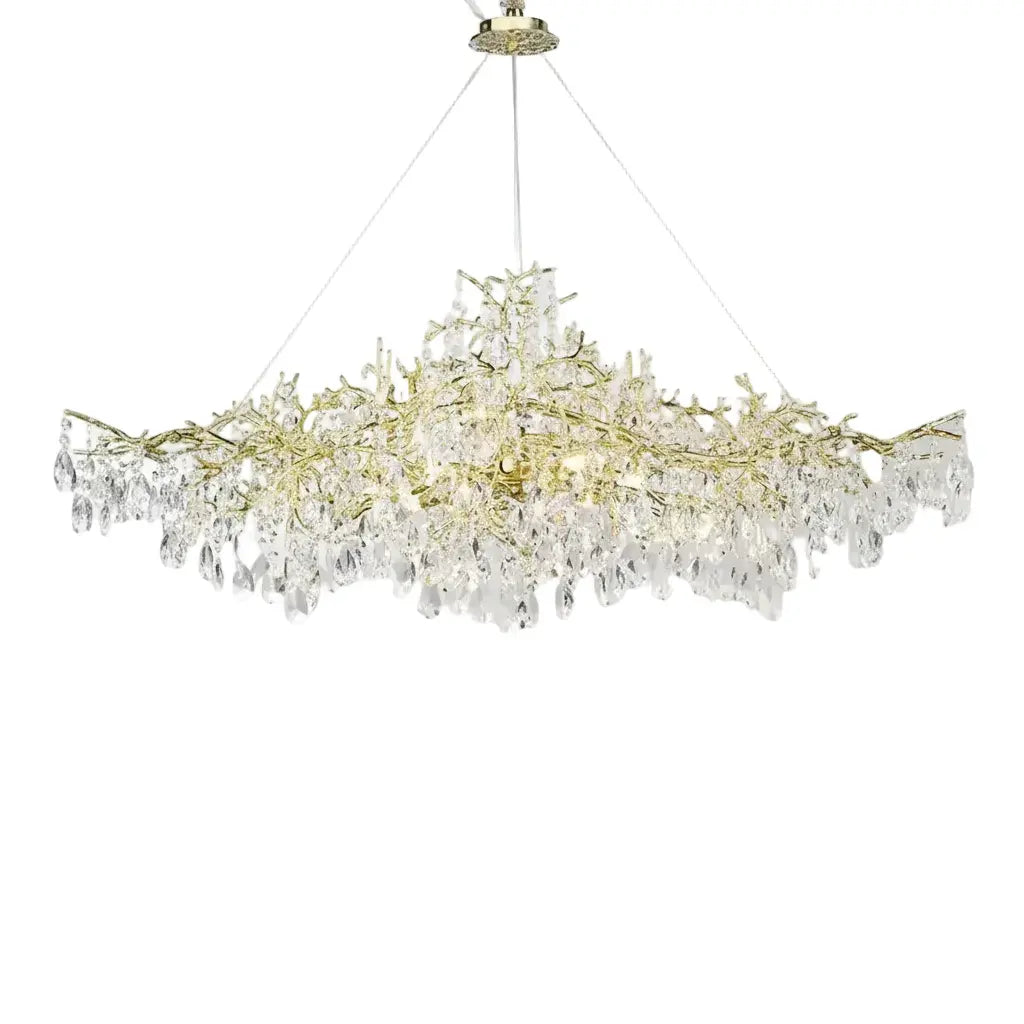
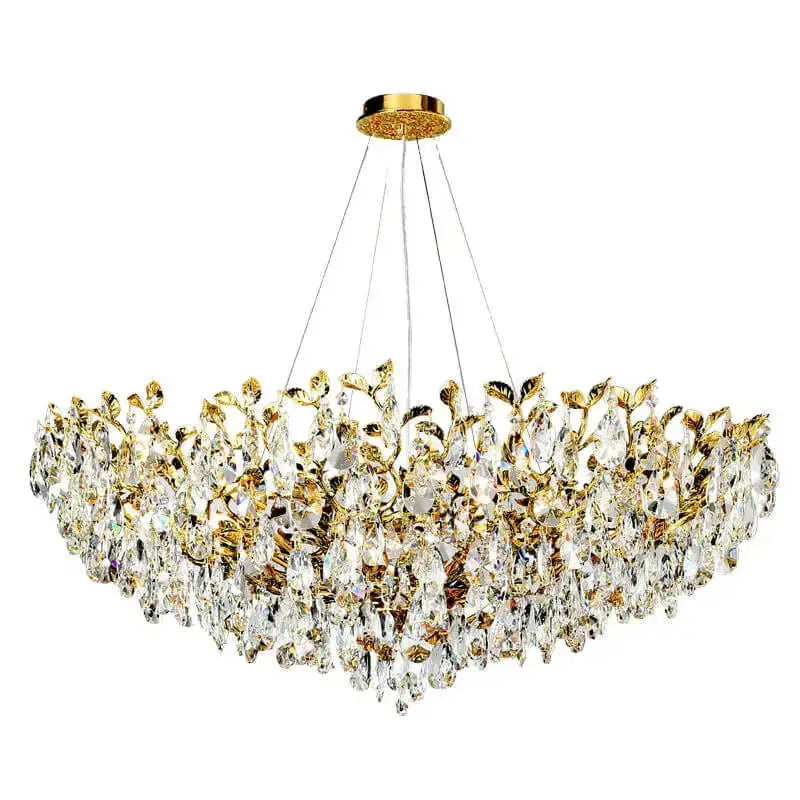
Chandeliers are made for vaulted spaces where you want a memorable centrepiece. Crystal designs catch daylight and add sparkle after dark, making them especially effective in entrances and dining rooms. Contemporary chandeliers with sculptural rings, branching forms or vertical tiers can complement cleaner architectural interiors without feeling overly formal.
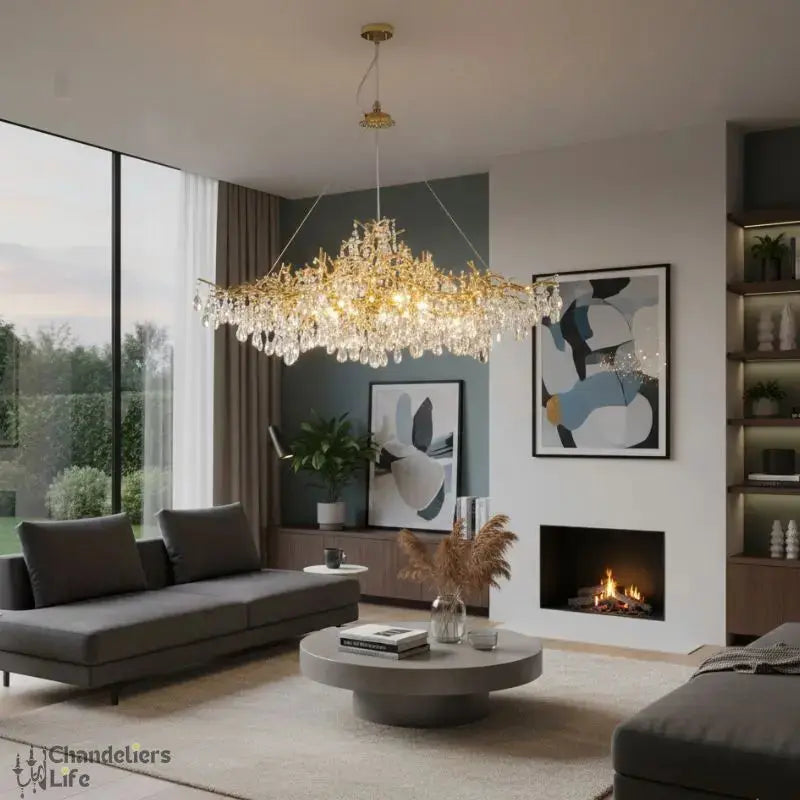
For a double-height foyer, select a fixture that fills enough of the open space to be visible from the entrance, landing and staircase. A multi-tier chandelier often suits this setting because it creates a strong vertical line. In a vaulted living room, consider a wider, more open silhouette that spreads its presence across the room rather than concentrating all the detail in one compact cluster.
Pendants for a more relaxed luxury
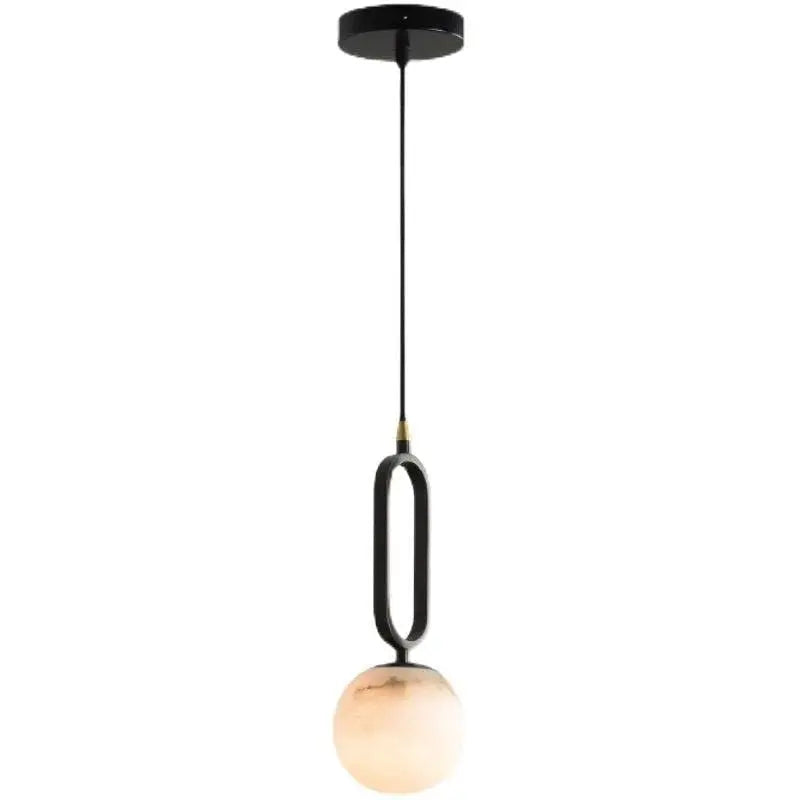
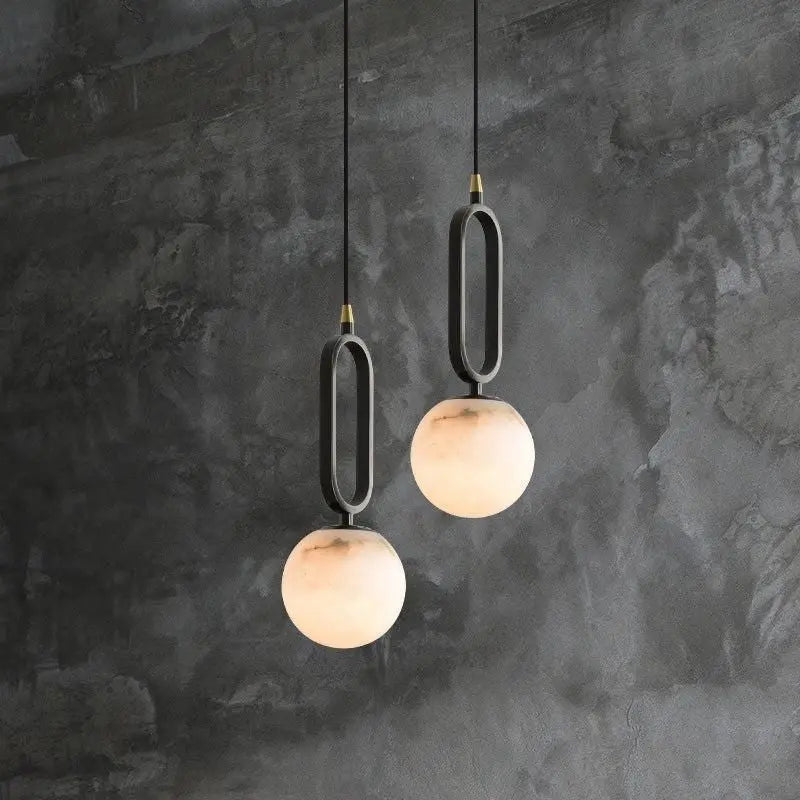
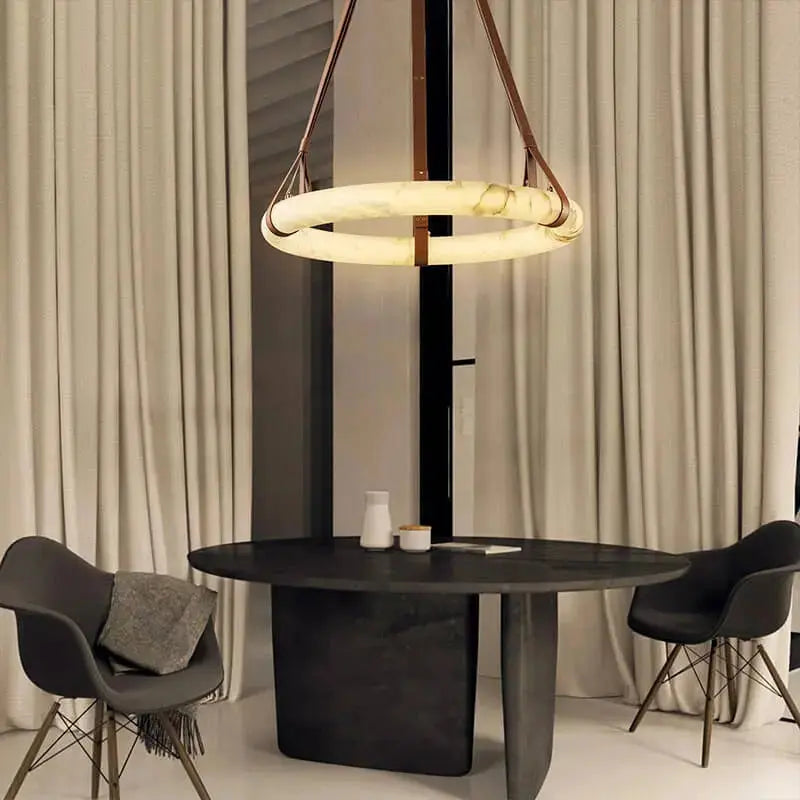
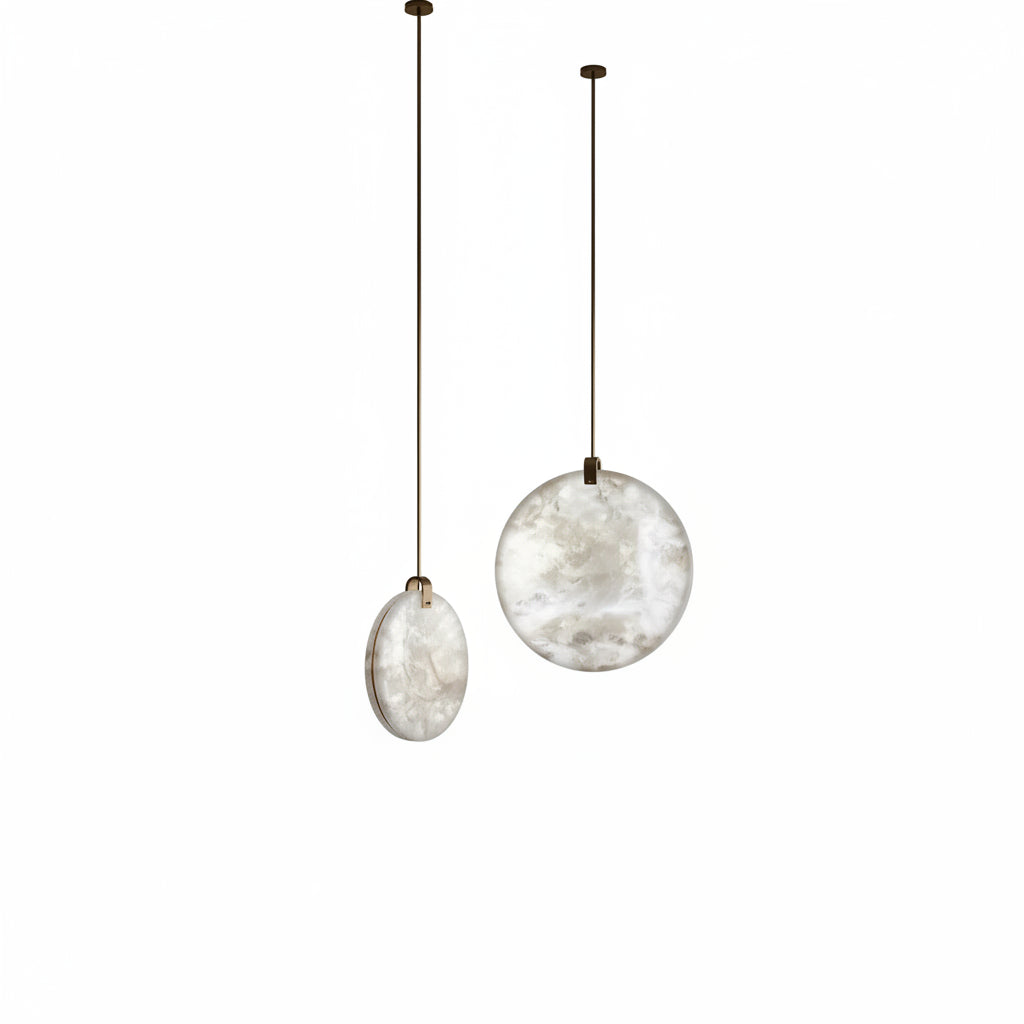
A statement pendant offers a calmer, more edited alternative to a chandelier. Oversized glass, metal or alabaster pendants bring warmth and dimension to vaulted bedrooms, breakfast areas and relaxed living spaces. Their simple forms allow the ceiling architecture to remain visible while still providing a distinct focal point.
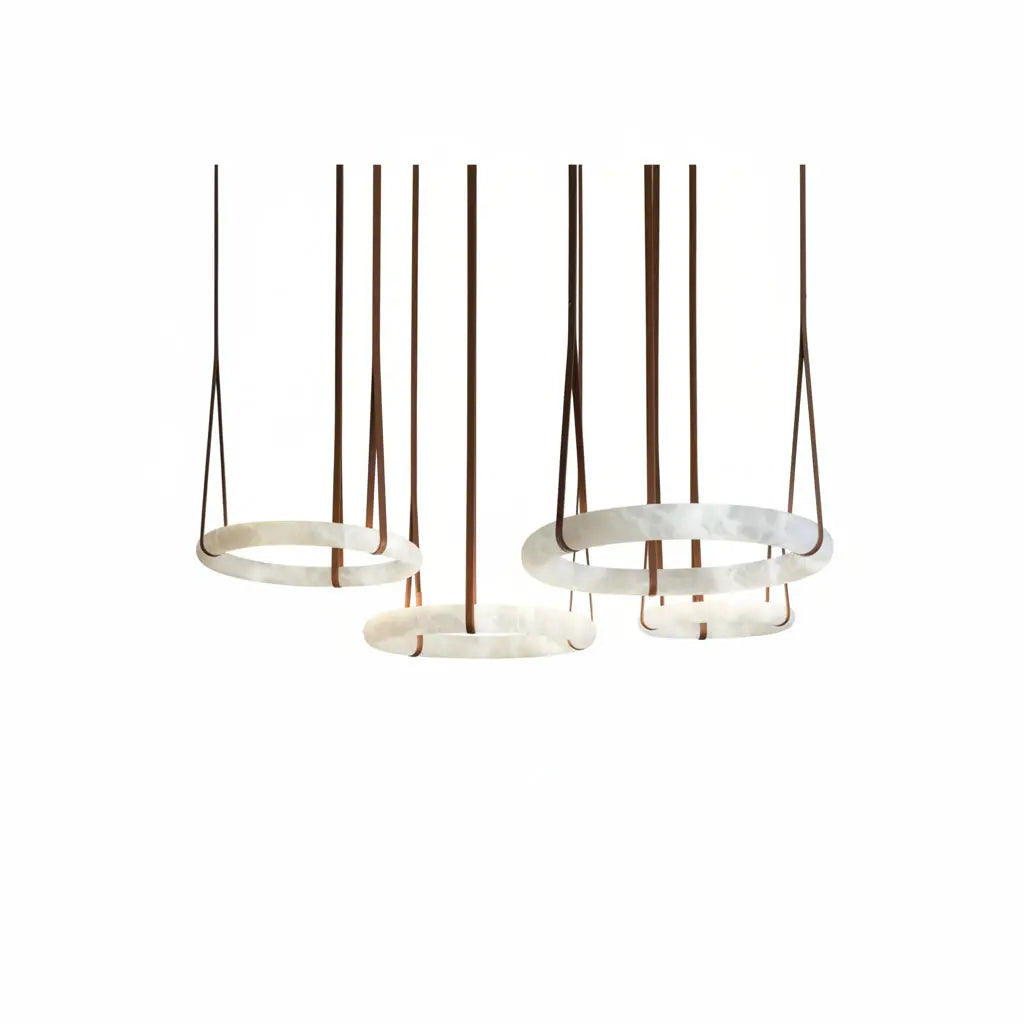
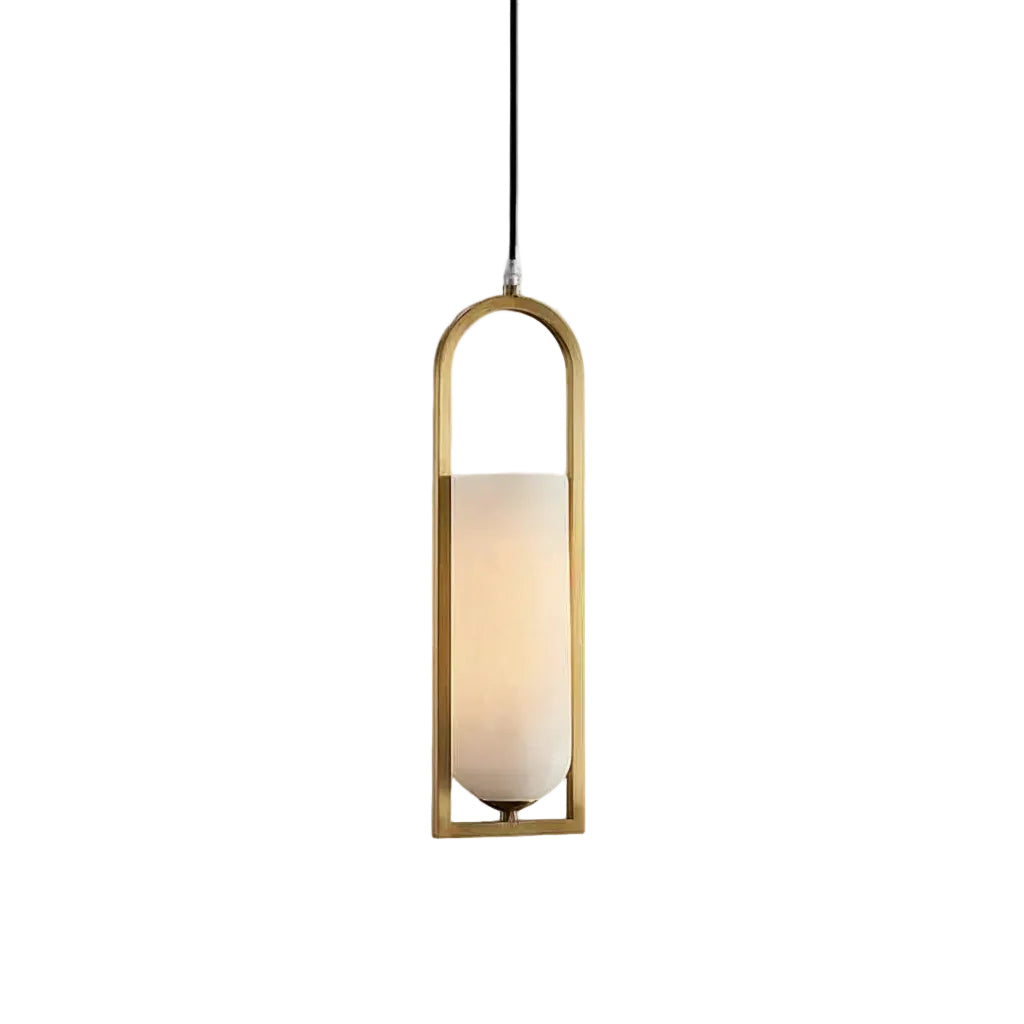
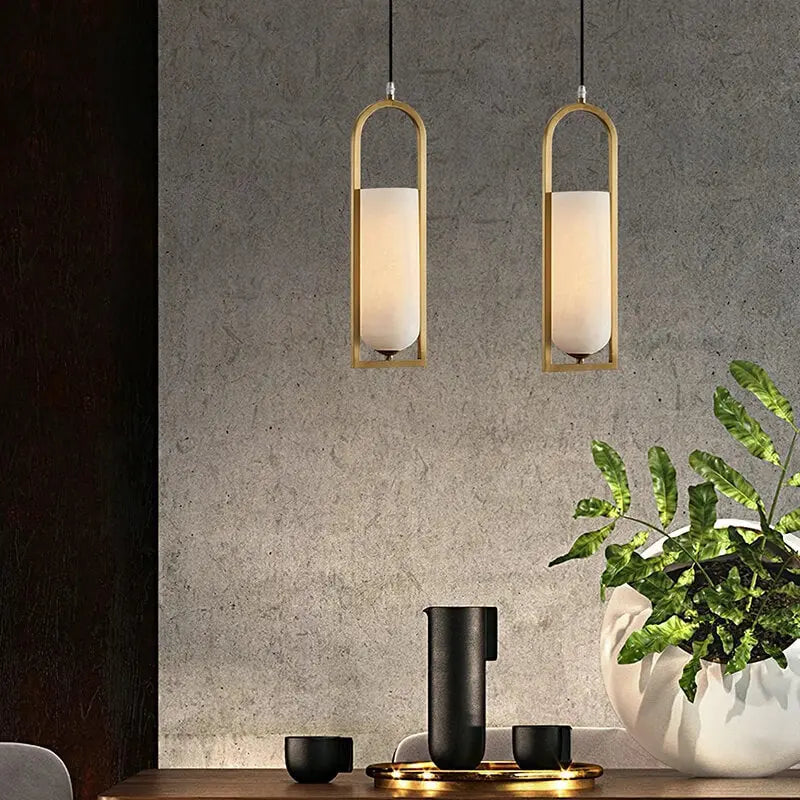
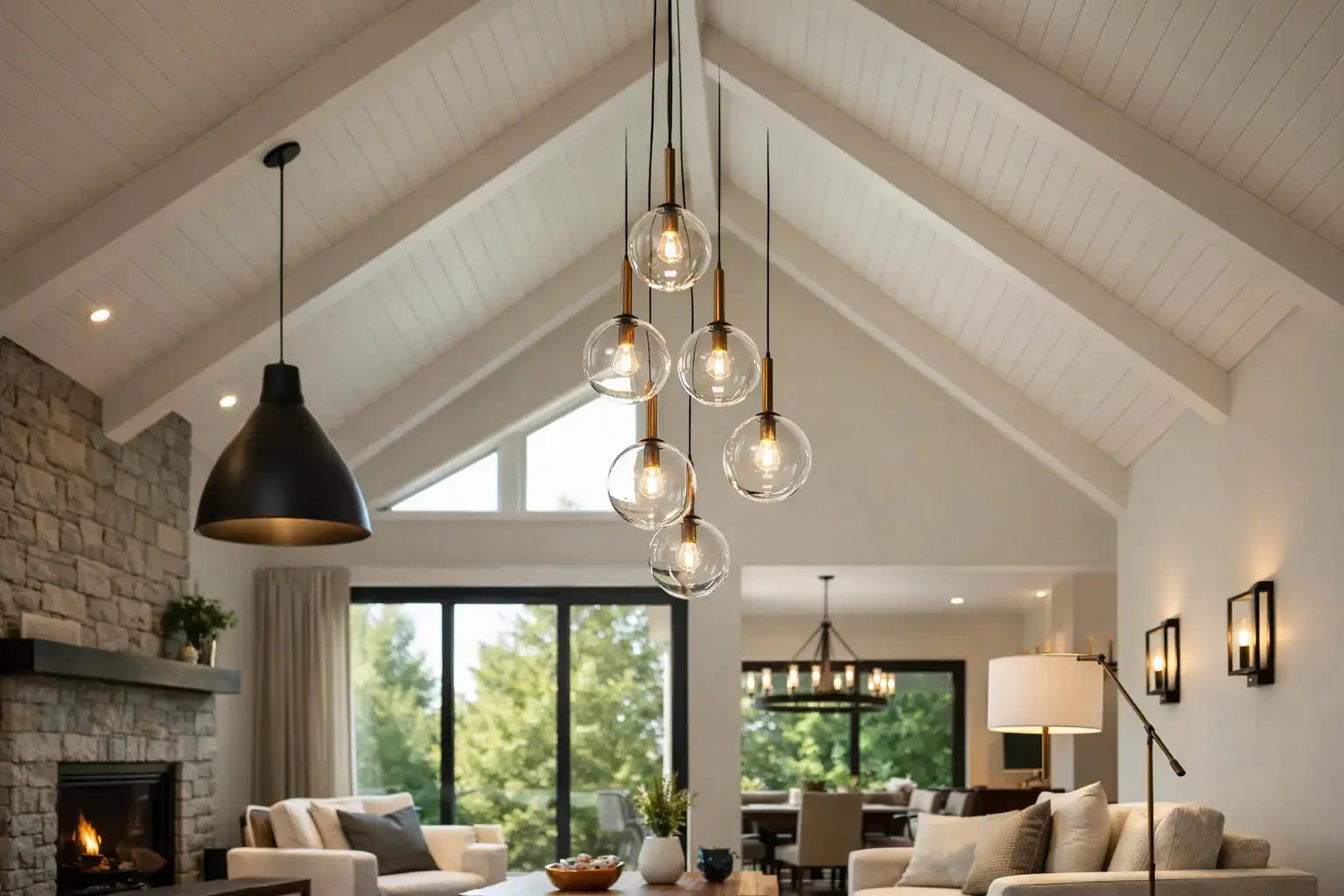
Grouped pendants work beautifully over long kitchen islands and stairwells. Keep the spacing consistent and vary the drop lengths only when there is enough vertical room for the arrangement to read as deliberate. A cluster can look exquisite in a tall space, but too many small pendants may create visual clutter.
Layer the lighting so the room feels lived in
A decorative ceiling fitting creates atmosphere, but it should not carry the entire lighting plan. The taller the ceiling, the more likely you are to need lower-level lighting for comfort. Without it, the top of the room may glow while seating areas, artwork and kitchen worktops remain underlit.
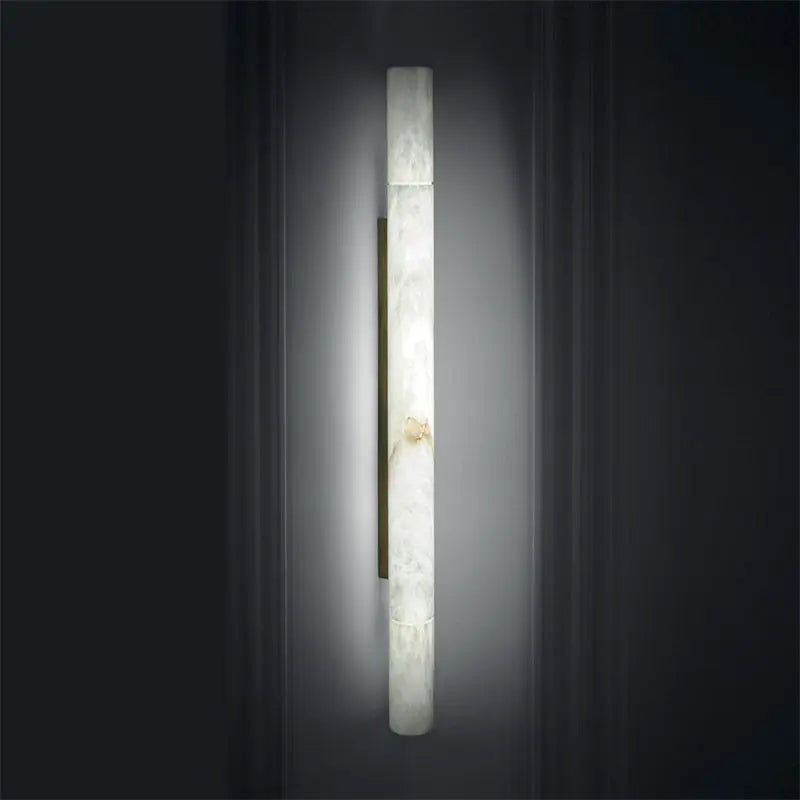
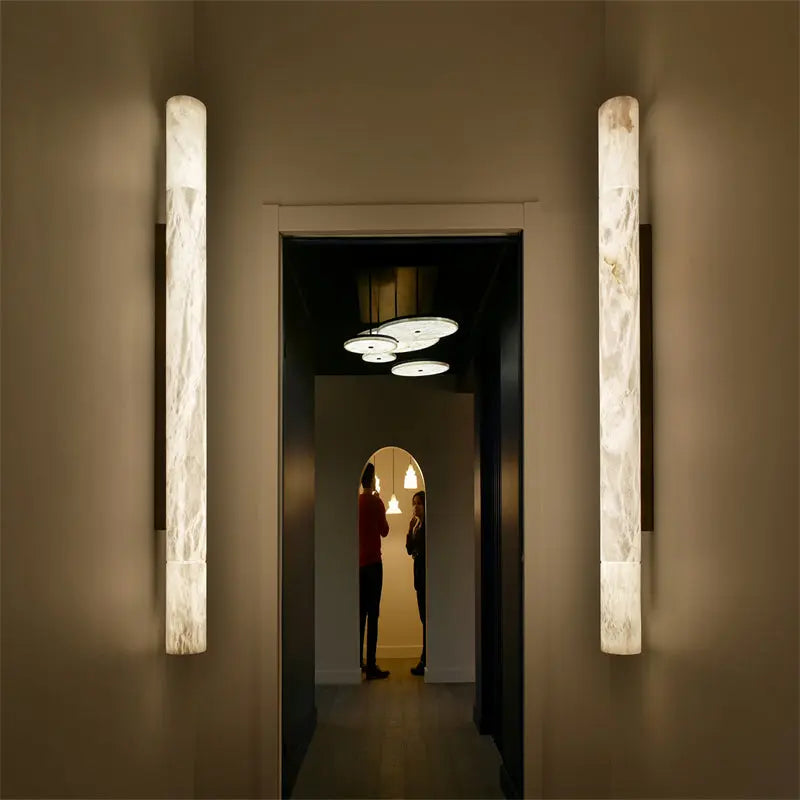
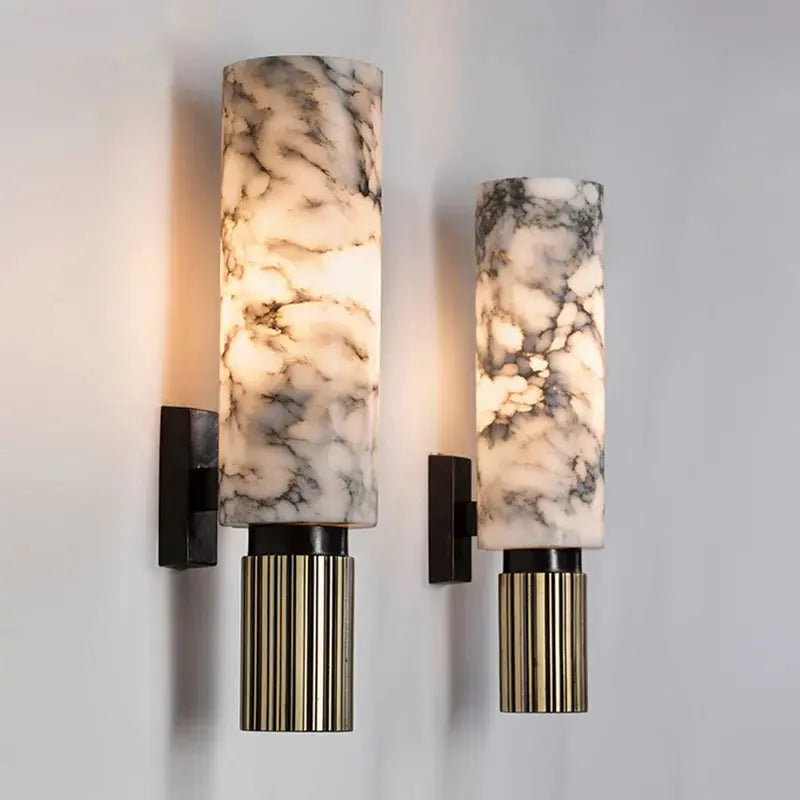
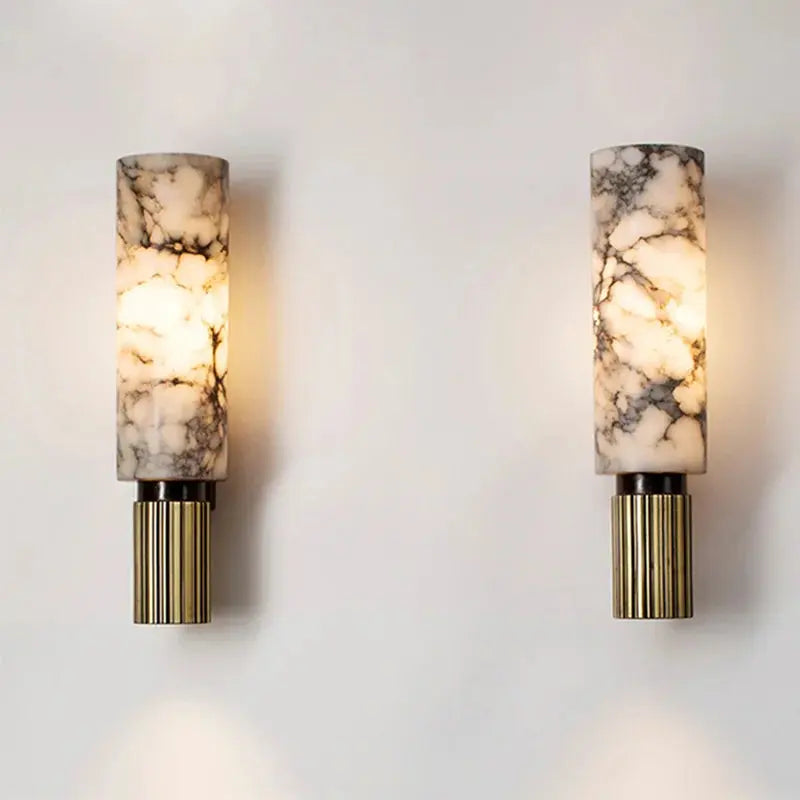
Wall lights are a particularly elegant partner for vaulted ceilings. Installed at a lower level, they bring illumination back to eye height, soften tall walls and make a large room feel more intimate after sunset. In living rooms, table lamps and floor lamps add pools of warm light around sofas and reading chairs. In dining spaces, a dimmable chandelier paired with wall lights offers flexibility from everyday suppers to evening entertaining.
Recessed downlights can be useful, especially in kitchens or rooms requiring practical coverage, but they should be chosen carefully. Too many can create a harsh, dotted effect across a sloped ceiling and compete with the feature fitting. Use them selectively to illuminate darker edges, work areas or architectural details, then let the chandelier or pendant remain the visual star.
For a vaulted ceiling with exposed beams, discreet uplighting can also be beautiful. Light grazing across timber adds depth and highlights the craftsmanship of the structure. This is atmospheric rather than task-focused, so it works best as one layer within a broader scheme.
Get the light quality right
The fixture may be the showpiece, but the bulb choice determines how the room feels at night. For living rooms, bedrooms and dining areas, warm white light around 2700K tends to flatter natural materials, timber and soft furnishings. It gives crystal and alabaster a welcoming glow rather than a cold glare.
Kitchens and utility-led areas can benefit from slightly crisper light, around 3000K, particularly when paired with focused task lighting over preparation spaces. Choose dimmable bulbs and compatible dimmer controls wherever possible. Vaulted rooms often shift from bright daylight to deep shadows, and dimming gives you control over that transition.
Pay attention to bulb visibility. Clear bulbs in an open chandelier can look decorative, while frosted bulbs are often preferable where the light source sits at eye level or is exposed beneath a pendant. If a fixture is installed high above, brightness can be more pronounced than expected, so avoid selecting bulbs solely by wattage equivalent. Consider the total light output and the other layers in the room.
Think about access before installation
A dramatic chandelier at the peak of a vaulted ceiling needs occasional cleaning and bulb replacement. This is not a reason to avoid a showpiece, but it is a reason to plan sensibly. Consider LED-compatible fixtures with long-life bulbs, and ask an electrician about safe access for future maintenance.
Motorised lift systems can be worthwhile for very high foyers, particularly with substantial crystal chandeliers. For less extreme heights, a design with easily replaceable bulbs and a finish that does not show dust quickly may be the more practical choice. A beautiful fitting should remain enjoyable long after installation day.
Let the room, not the ceiling, set the mood
Vaulted ceilings invite bold lighting, but they do not demand the same answer in every home. A grand staircase may call for cascading crystal, a modern kitchen may suit a disciplined line of pendants, and a peaceful bedroom may need only one softly luminous alabaster fixture supported by bedside lamps. ChandeliersLife collections are designed around these room-specific moments, making it easier to find a piece that feels considered rather than merely large.
Choose a fitting with enough presence to honour the height, then bring warmth back down to the level where life happens. When light reaches the table, the sofa, the artwork and the faces gathered in the room, a vaulted ceiling stops feeling distant and starts feeling exceptional.