The right chandelier changes the entire mood of a dining room before a single plate reaches the table. The best dining room chandelier ideas do more than brighten the space - they frame the table, soften the room’s proportions and give everyday meals a more considered, elevated feel.
For some homes, that means a crystal statement piece with unmistakable glamour. For others, it is a clean-lined modern fixture in aged brass, matte black or sculptural glass. The strongest choice is rarely about following one trend. It is about matching scale, shape and finish to the way your room actually looks and lives.
How to choose among dining room chandelier ideas
Start with the table, not the ceiling. In most dining rooms, the chandelier should feel visually connected to the table beneath it, because that is the true focal point of the room. A fixture that is too small tends to look hesitant, while one that is too large can dominate the setting and make the room feel top-heavy.
As a general guide, aim for a chandelier that is around half to two-thirds the width of your dining table. If your table is long and rectangular, a linear chandelier or a pair of smaller fixtures often looks more intentional than a single centred piece. Round tables are typically more forgiving and suit circular, tiered or clustered designs particularly well.
Height matters just as much. In most homes, hanging the chandelier around 75 to 90 centimetres above the tabletop creates a flattering pool of light without interrupting sightlines too harshly. If you have especially high ceilings, you may have a little more room to play with drop length, but the fixture should still feel anchored to the dining zone rather than drifting above it.
Dining room chandelier ideas by style
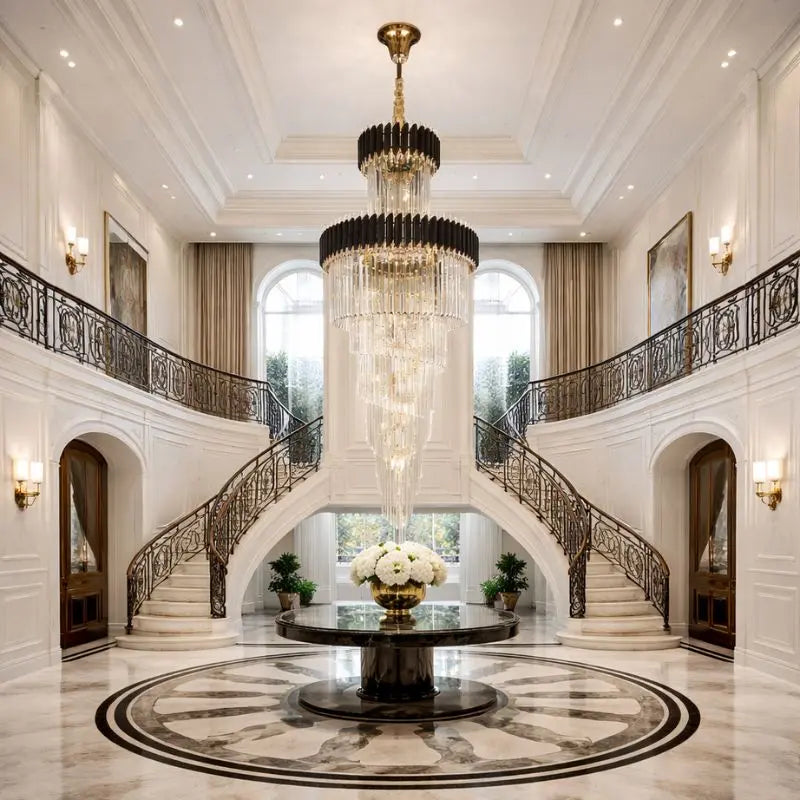
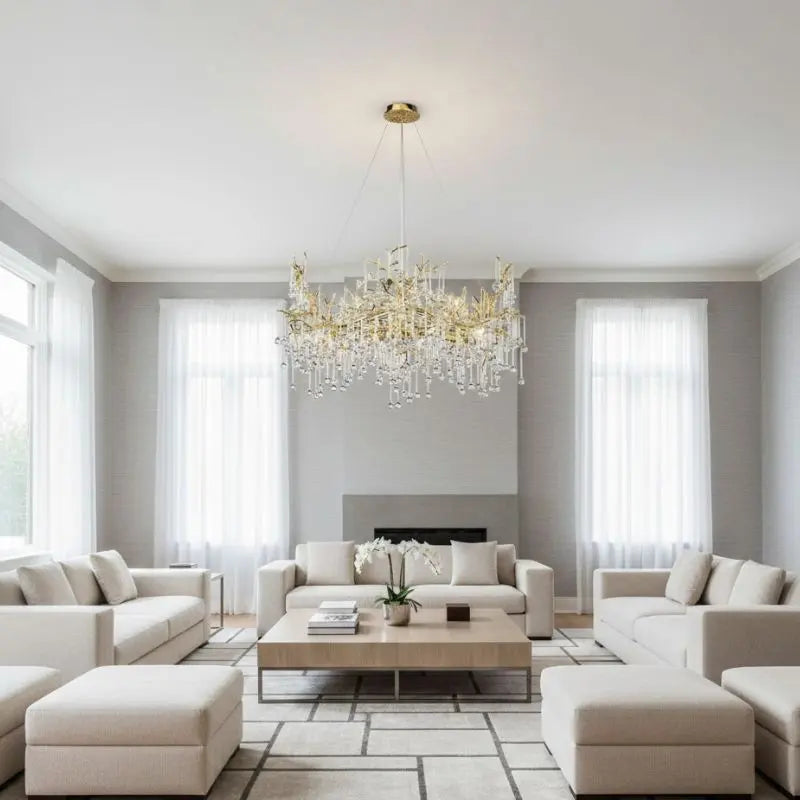
1. Crystal chandeliers for classic drama
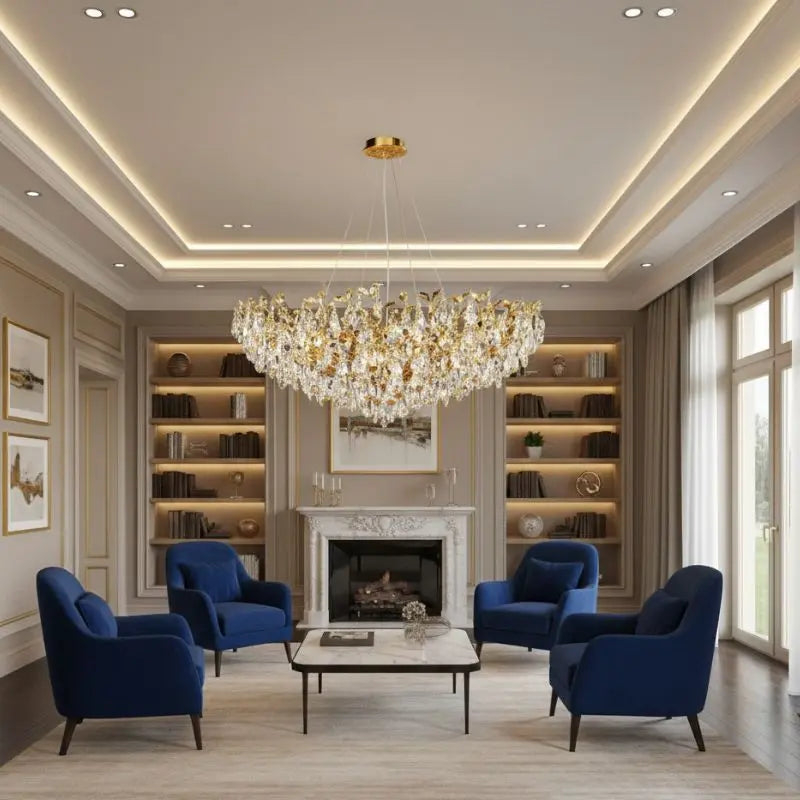
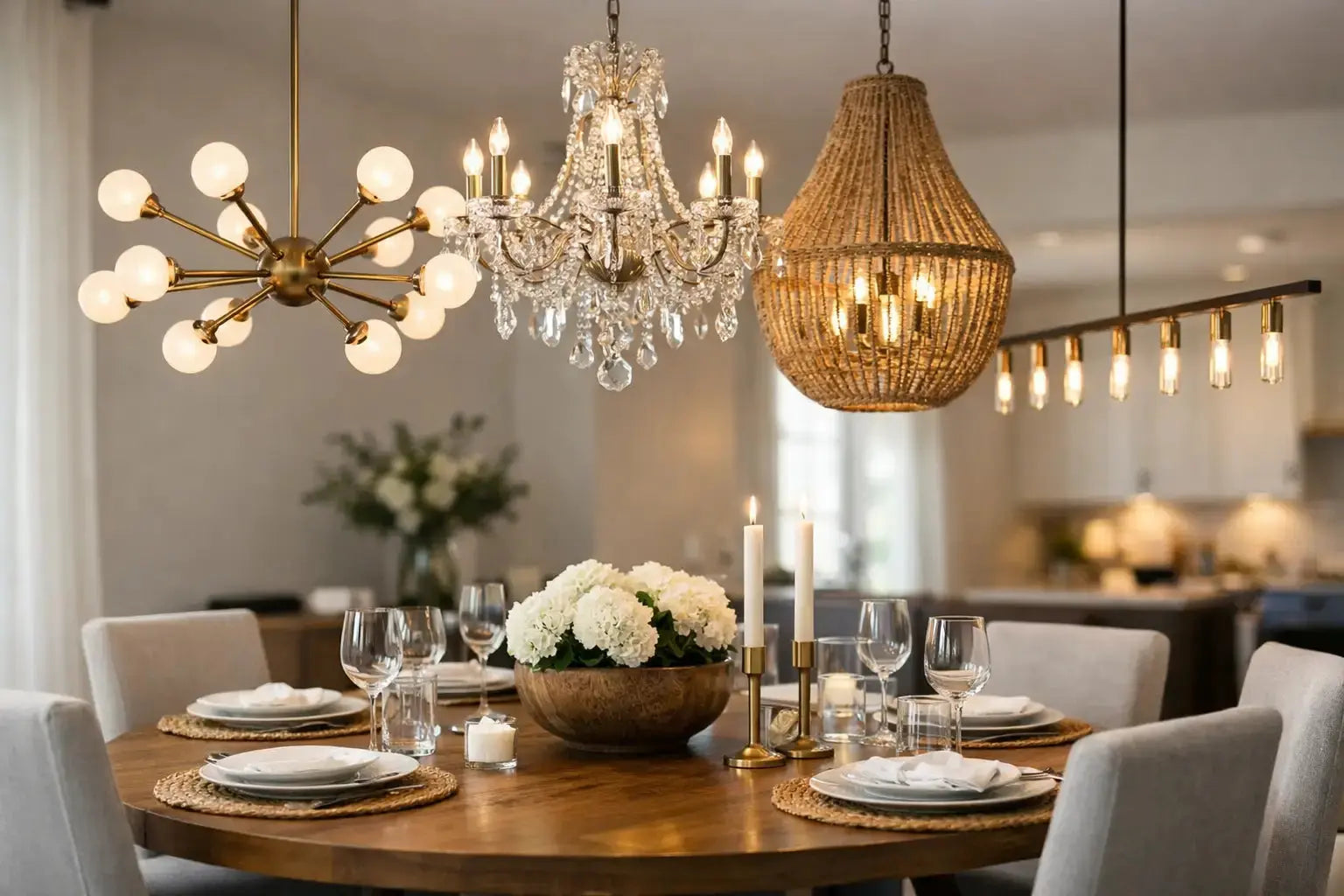
If your dining room leans formal or you want one striking feature to carry the room, crystal remains hard to beat. It reflects light beautifully, adds movement and instantly introduces a more dressed atmosphere. This works especially well in homes with panelled walls, rich timber tones, velvet dining chairs or polished stone surfaces.
The trade-off is that crystal asks for visual balance. In a very small room, an overly ornate fixture can feel heavy. If you love the look but want something fresher, choose a crystal silhouette with a simpler frame, perhaps in polished nickel or antique brass, so the effect feels refined rather than overly traditional.
2. Modern linear chandeliers for rectangular tables
A long dining table often looks best with a fixture that echoes its shape. Linear chandeliers bring order to open-plan spaces and can make a room feel architecturally sharper. Designs with slim bars, globe shades or evenly spaced pendants are particularly effective when the room already has contemporary furniture and clean lines.
This is one of the most practical options too. Because the light source stretches across more of the table, you avoid that bright-centre, dark-edges effect that a small single chandelier can create. If your dining room doubles as a work surface or gathering spot, that even spread of light is worth paying attention to.
3. Candle-style chandeliers for timeless elegance
There is a reason candle-inspired chandeliers continue to appear in beautifully finished dining rooms. They have an easy, balanced grace that bridges traditional and modern interiors better than many people expect. In aged brass, bronze or black iron, they feel classic. In lighter finishes with more minimal arms, they can feel surprisingly current.
They are also a smart choice if you want presence without visual clutter. Open-frame candle designs keep sightlines relatively airy, which helps in rooms where you want the chandelier to stand out but not close the space in.
4. Glass chandeliers for a lighter look
If your dining room is compact, has limited natural light or already includes strong materials such as dark wood or patterned wallpaper, glass can be the answer. Clear or smoked glass shades give the room detail and polish without the density of a more solid fixture.
This category suits many decorating directions. Ribbed glass can introduce a subtle vintage note, while opal globes feel softer and more contemporary. The key is to think about the atmosphere you want in the evening. Clear glass tends to feel brighter and crisper, while frosted or opal finishes usually create a gentler glow.
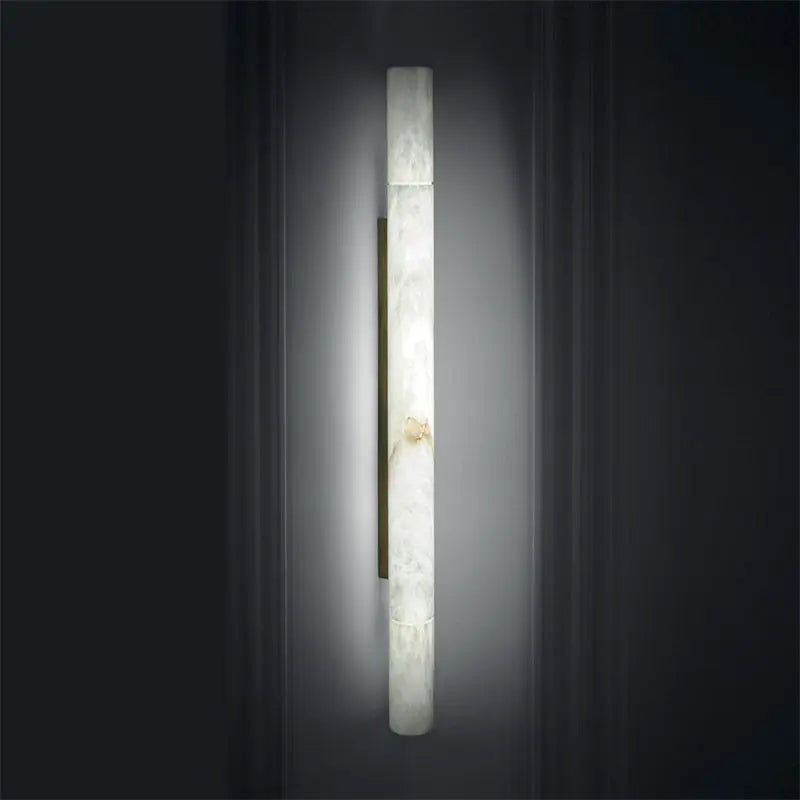
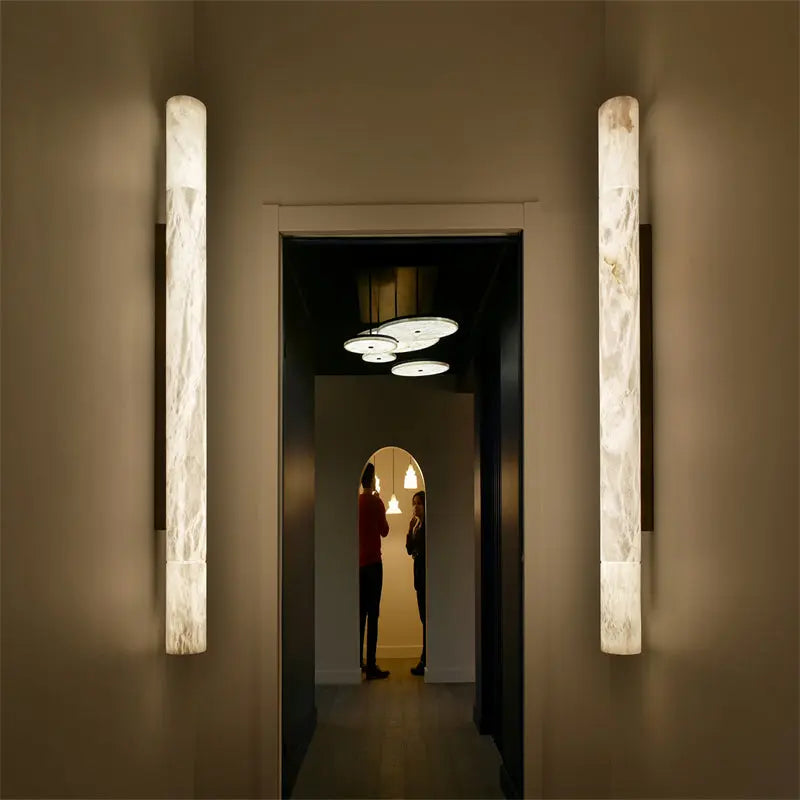
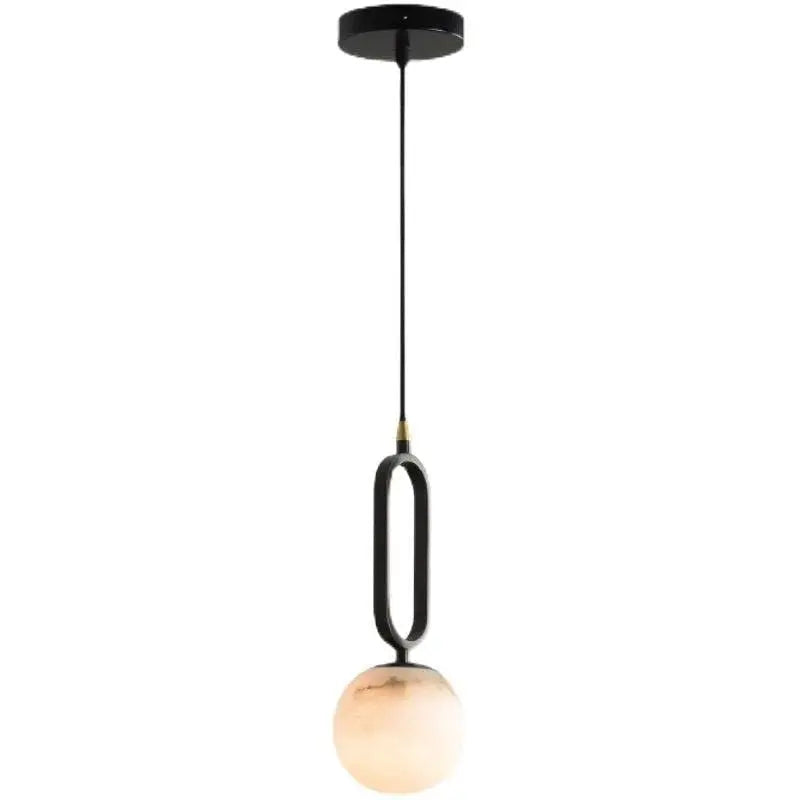
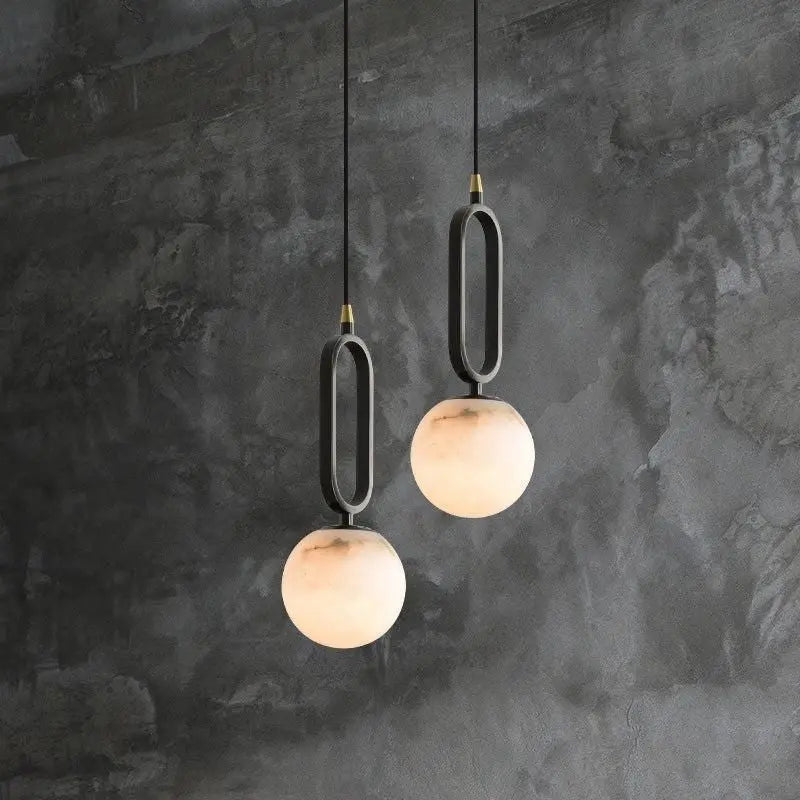
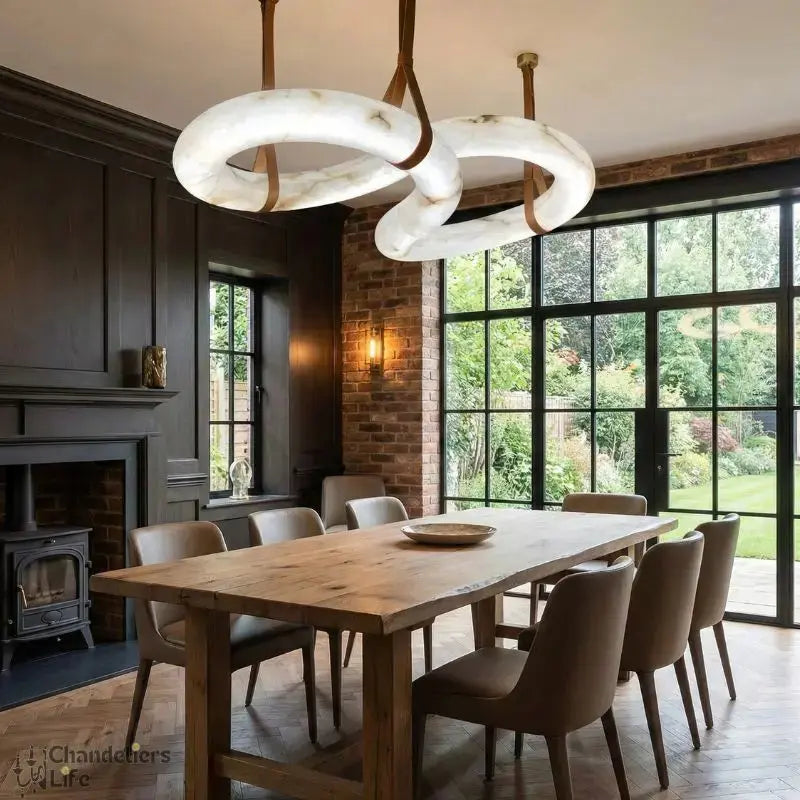
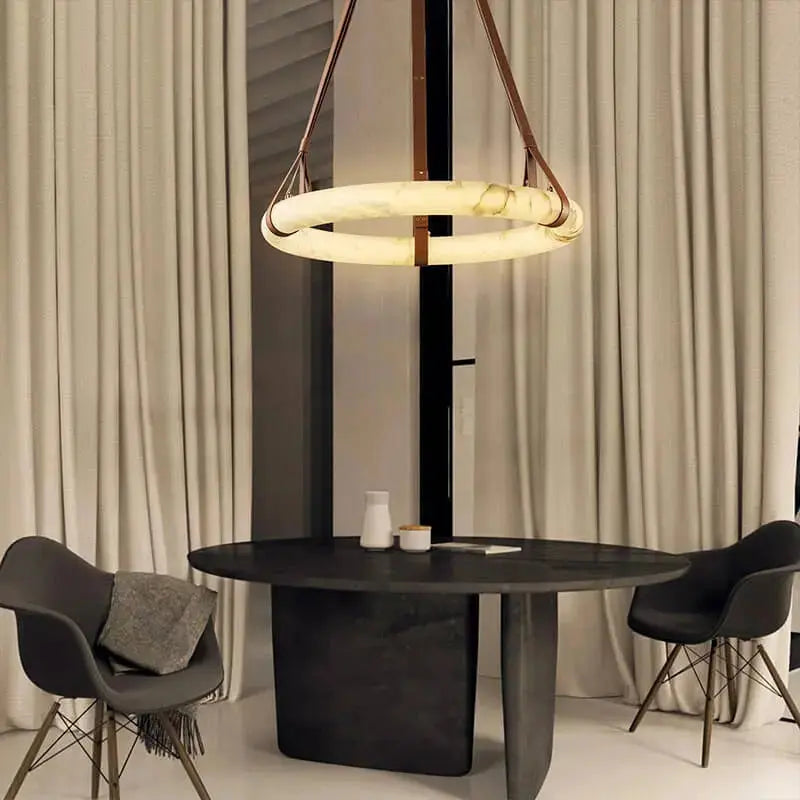
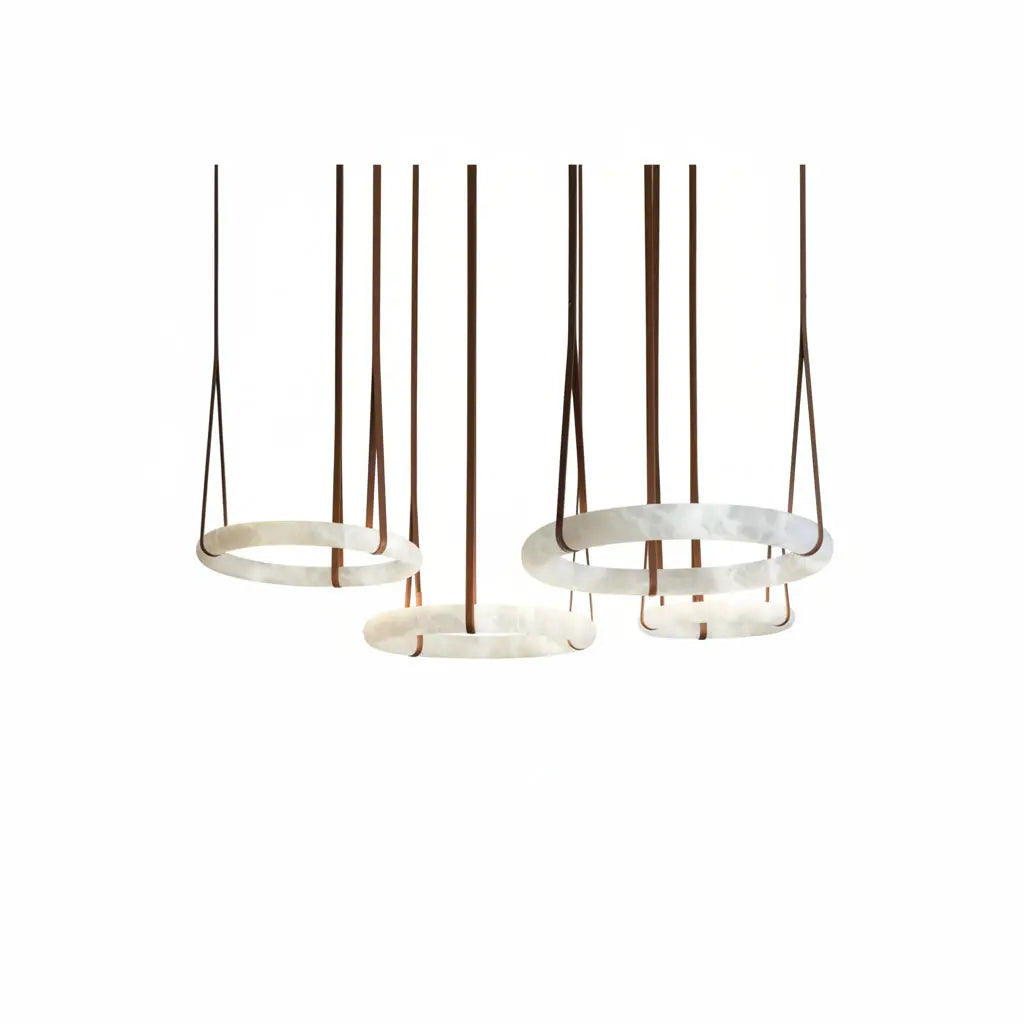
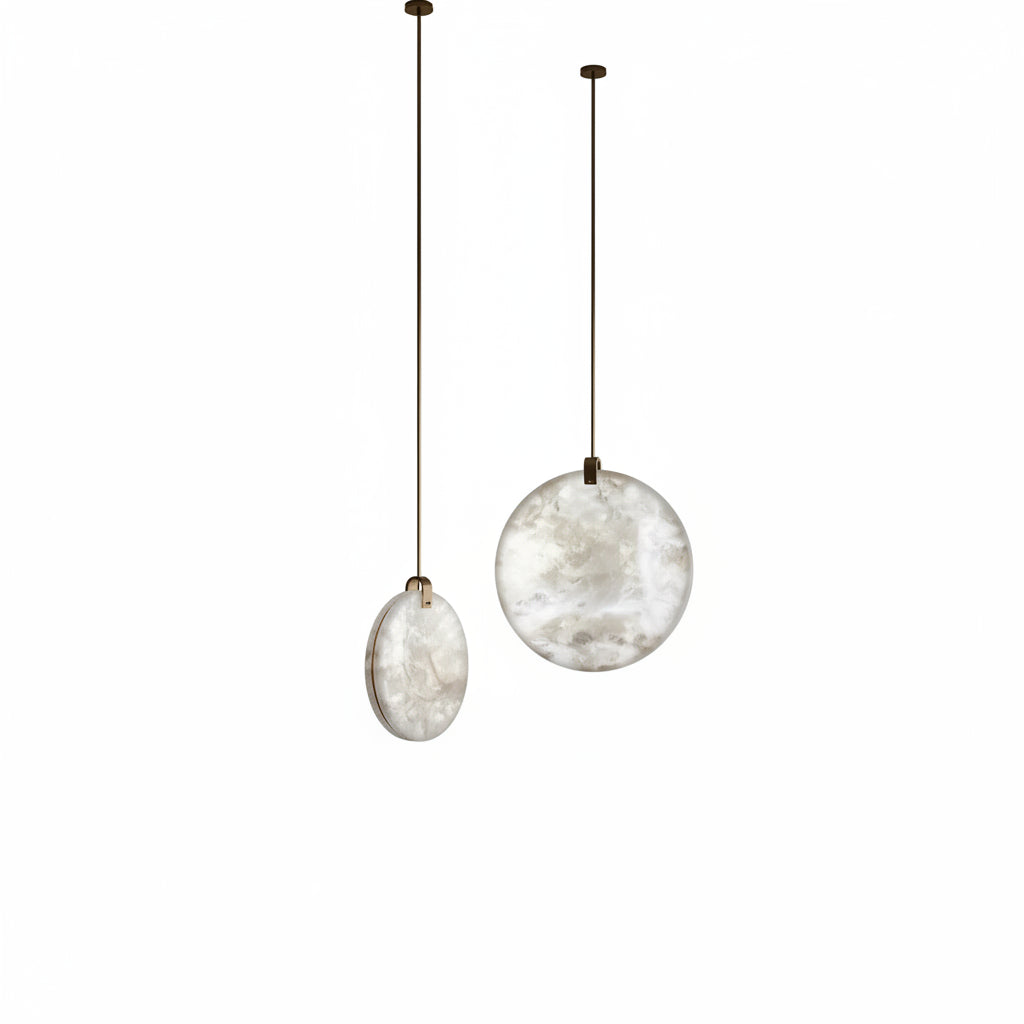
5. Alabaster-inspired pieces for quiet luxury
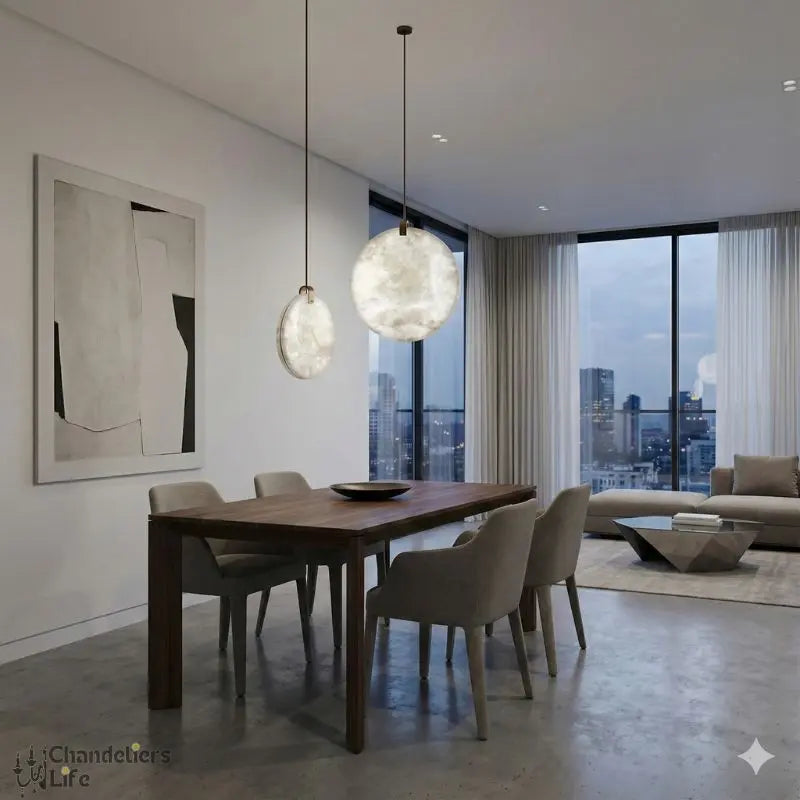
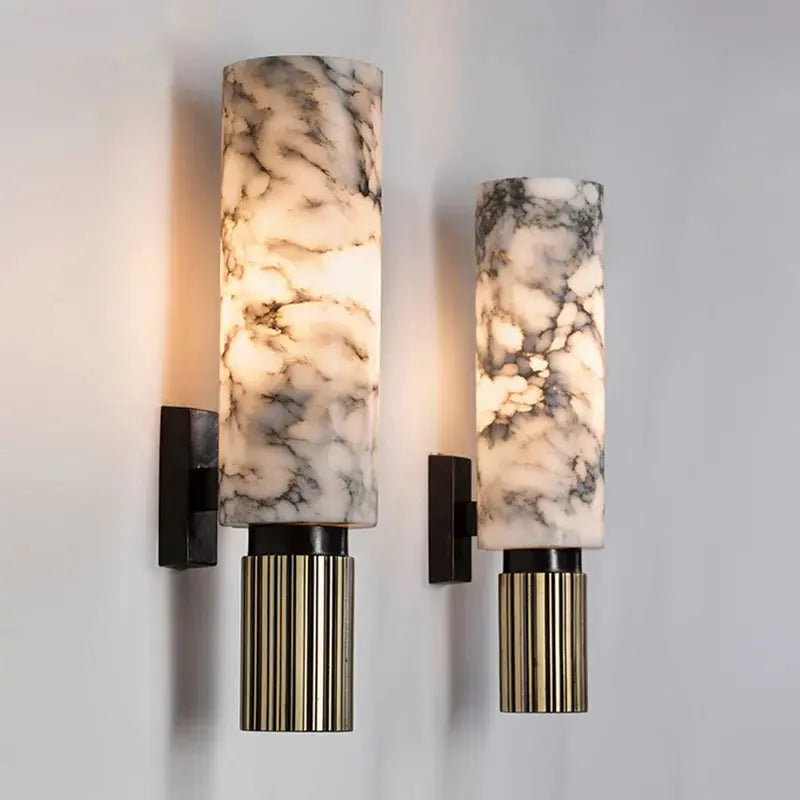
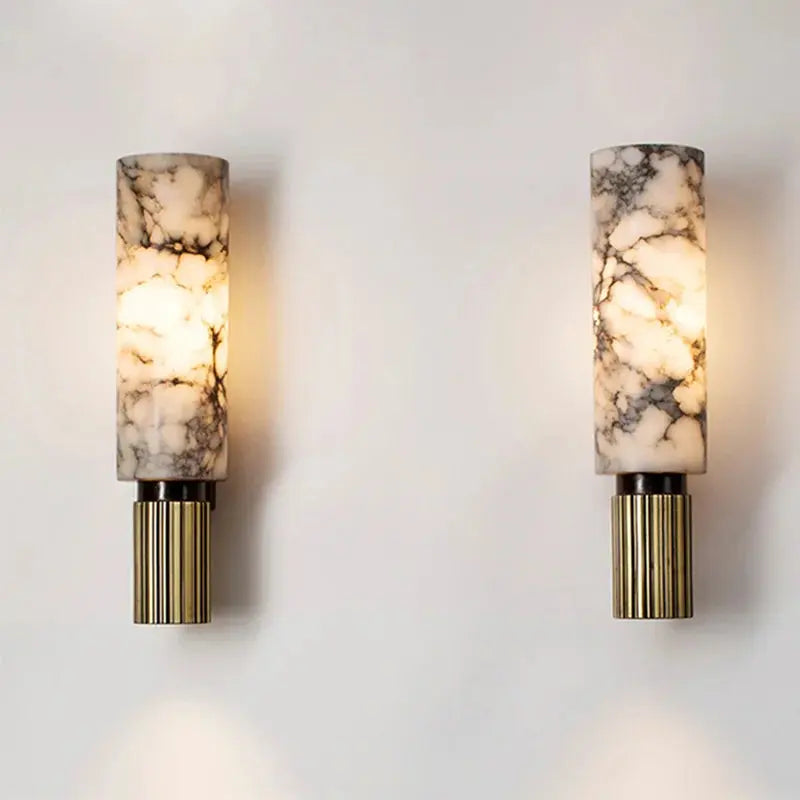
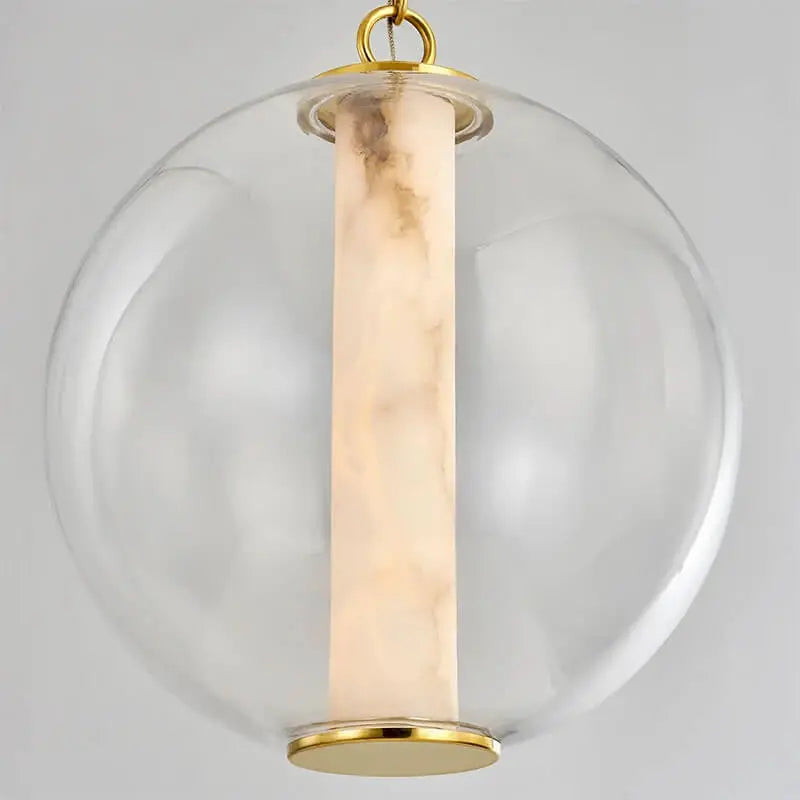
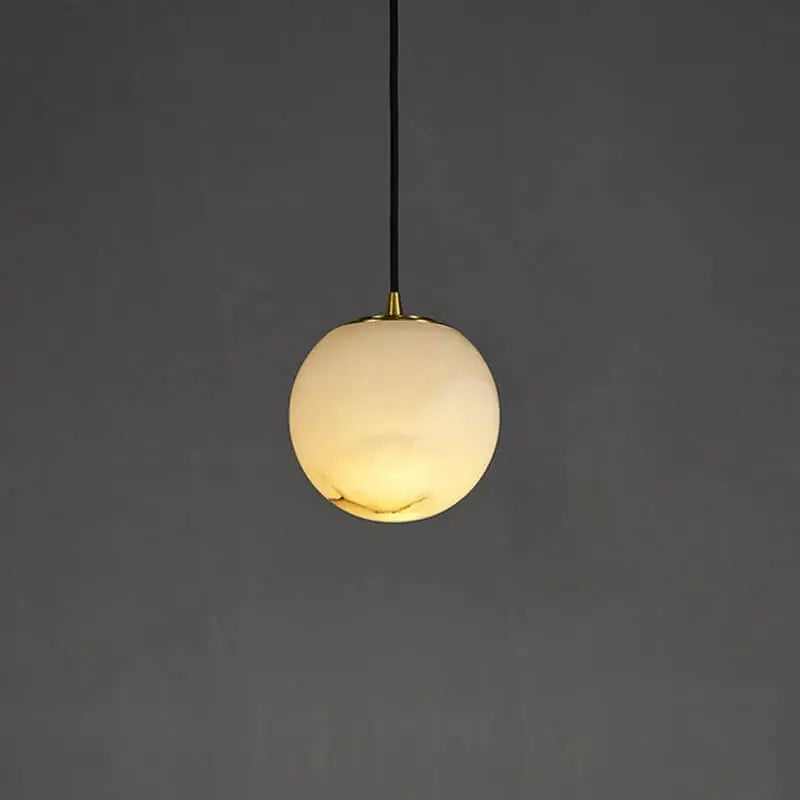
Some dining room chandelier ideas are less about sparkle and more about softness. Alabaster-inspired chandeliers bring a creamy, diffused light that feels expensive in a quieter way. They pair beautifully with warm neutrals, curved furniture, brushed metallics and interiors that favour texture over ornament.
This is a strong route for homeowners who want a luxury finish without anything too showy. The look is sophisticated and current, but it also ages well because it is rooted in material quality rather than novelty.
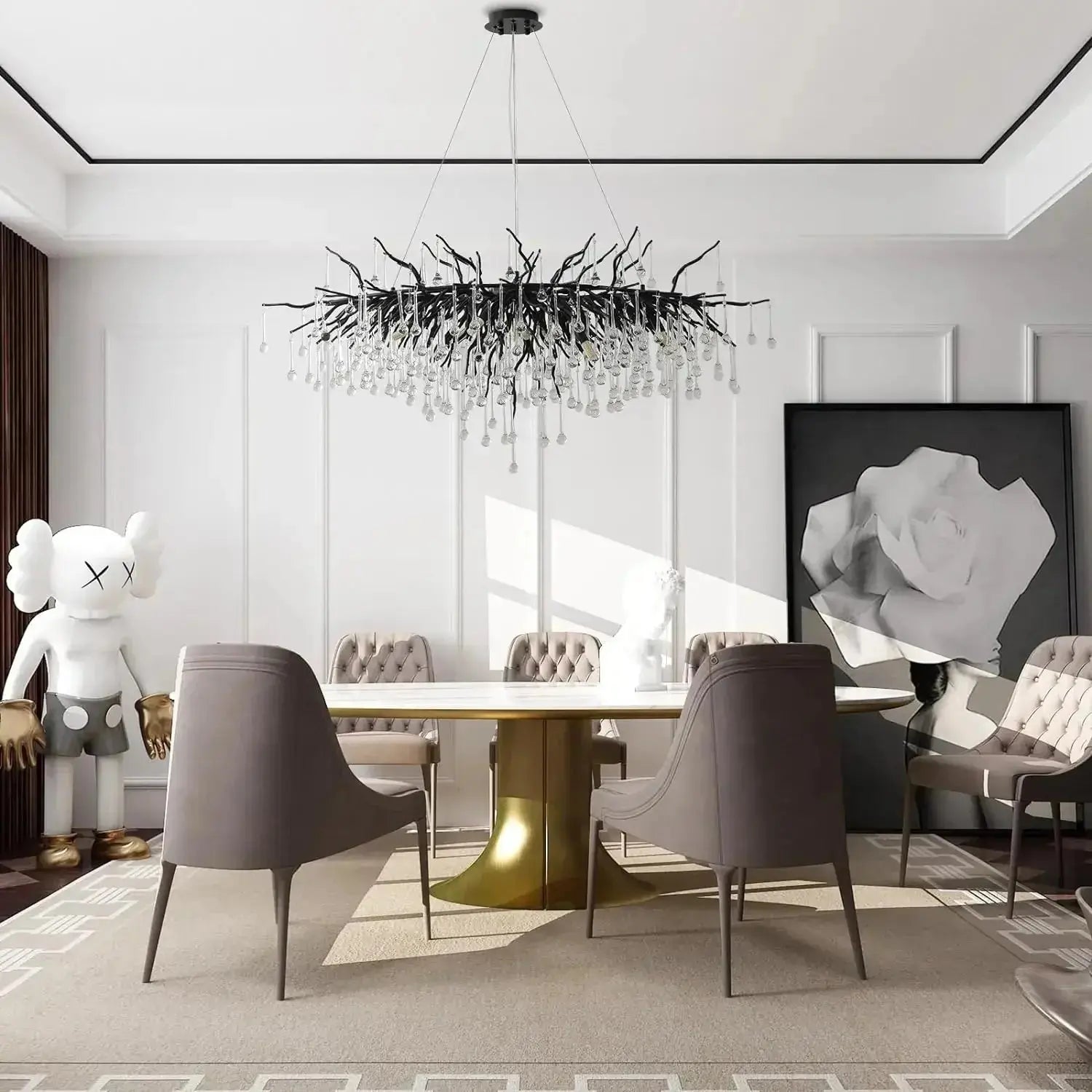
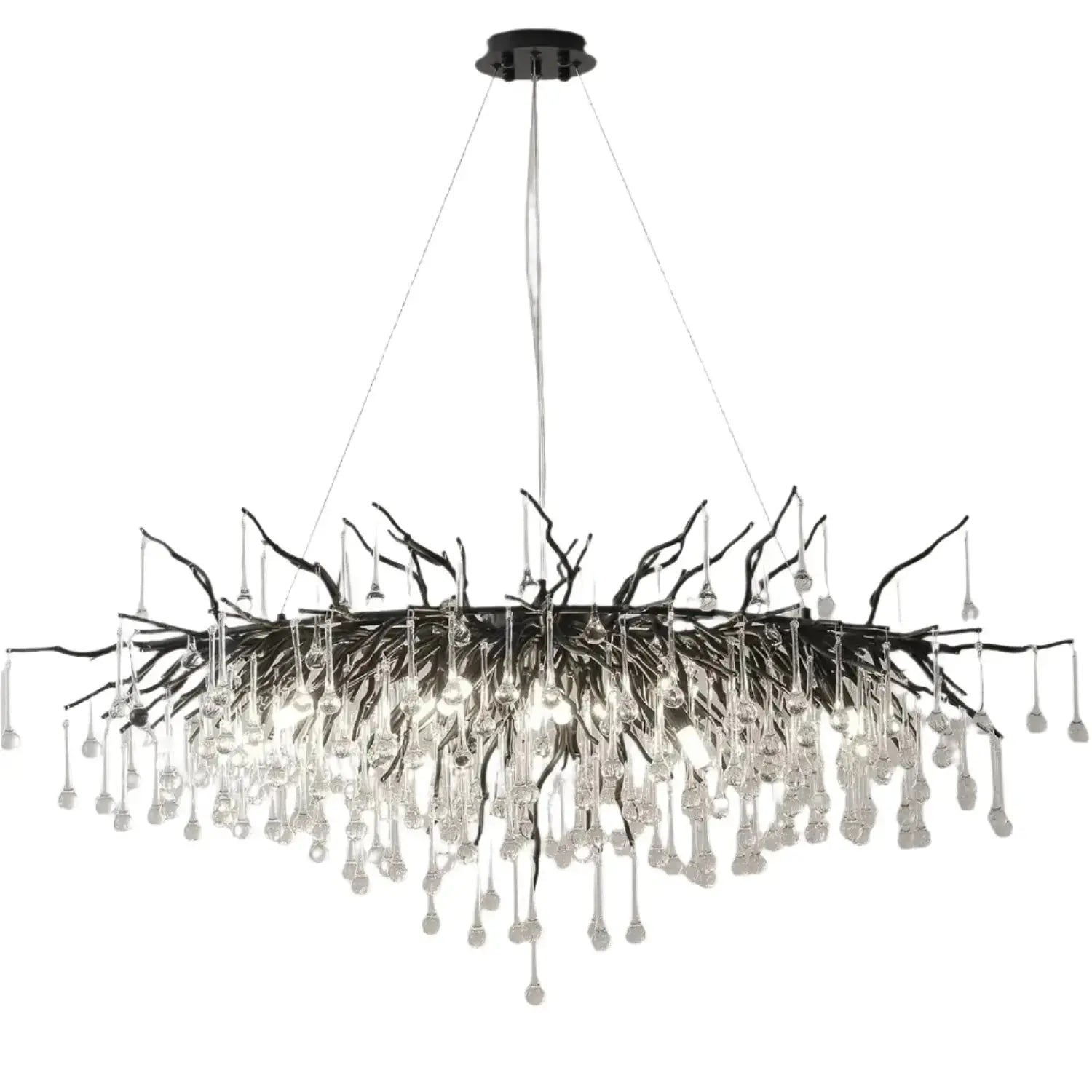
6. Black chandeliers for contrast
A black chandelier adds definition. In pale dining rooms, it can act like punctuation, grounding the space and giving lighter walls and furnishings more structure. This works especially well in modern farmhouse, industrial-inspired and monochrome schemes, but black can also sharpen a more classic room when the shape is elegant enough.
The caveat is weight. In a room with dark flooring, dark furniture and low ceilings, a heavy black fixture may feel oppressive. In that case, choose an open silhouette or add brass, glass or crystal detailing to keep the overall effect lighter.
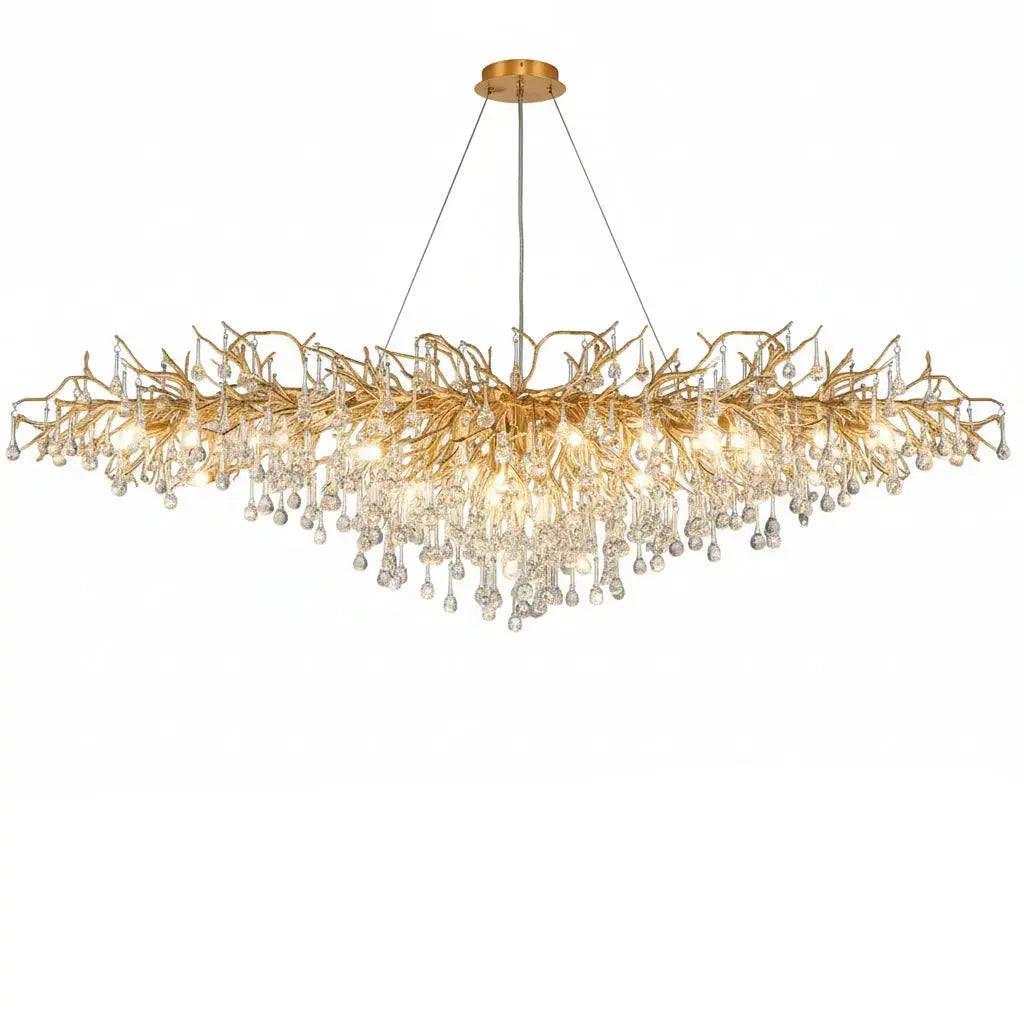
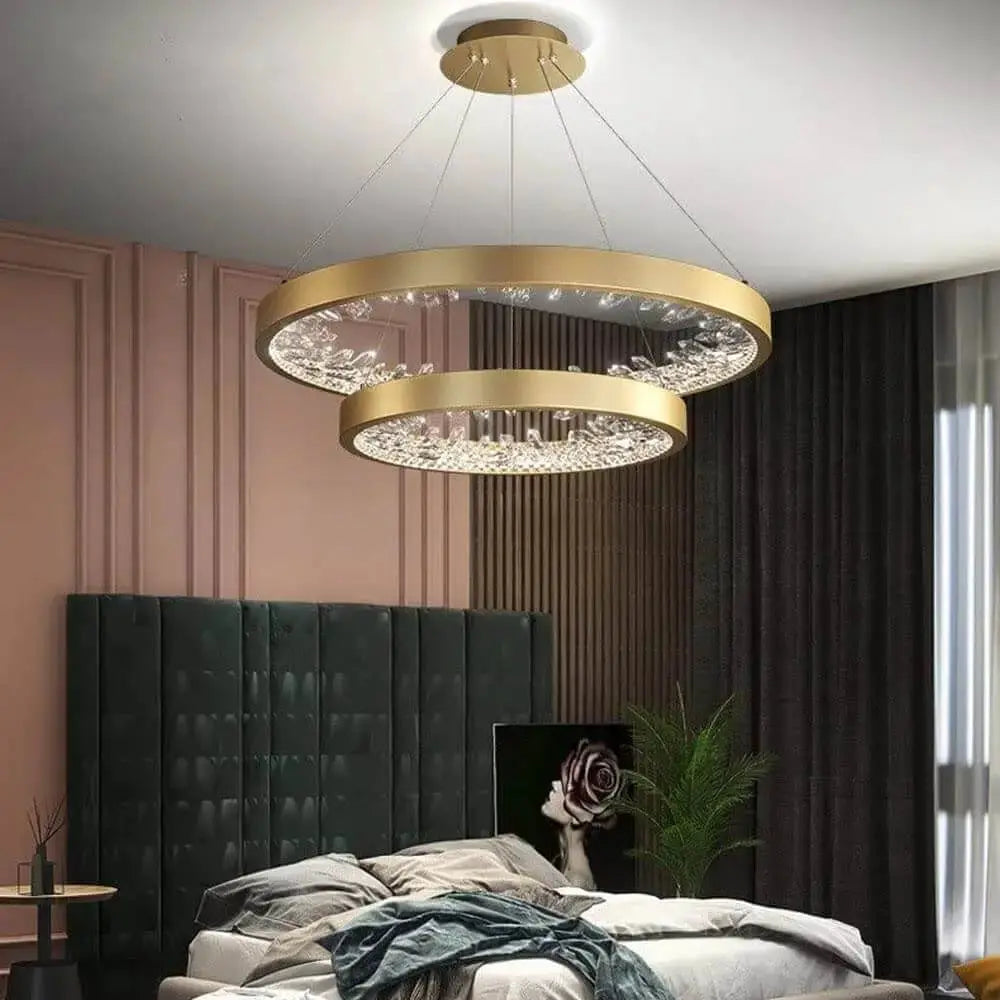
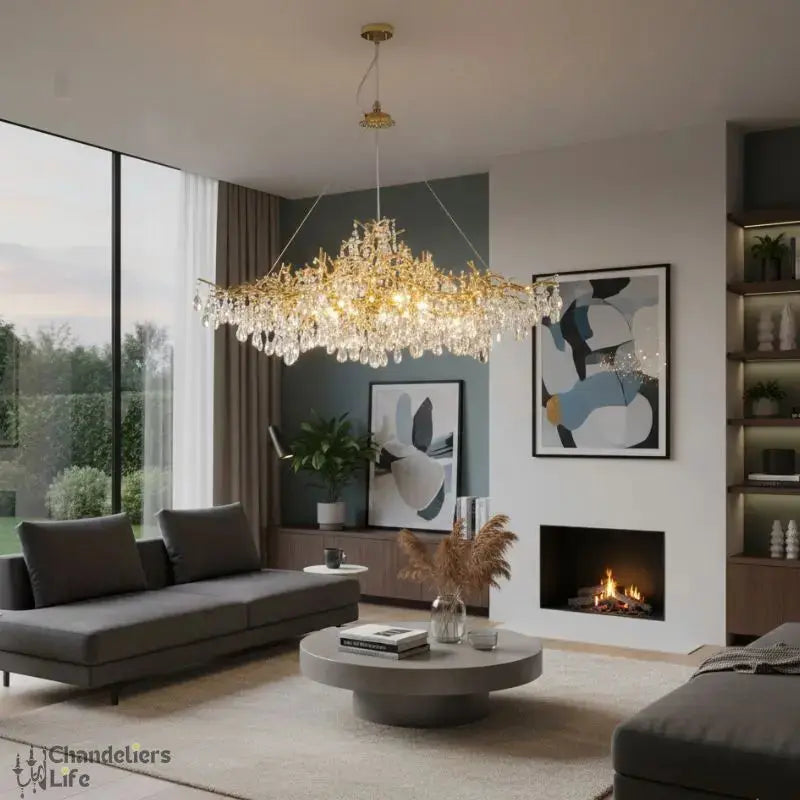
7. Brass and gold finishes for warmth
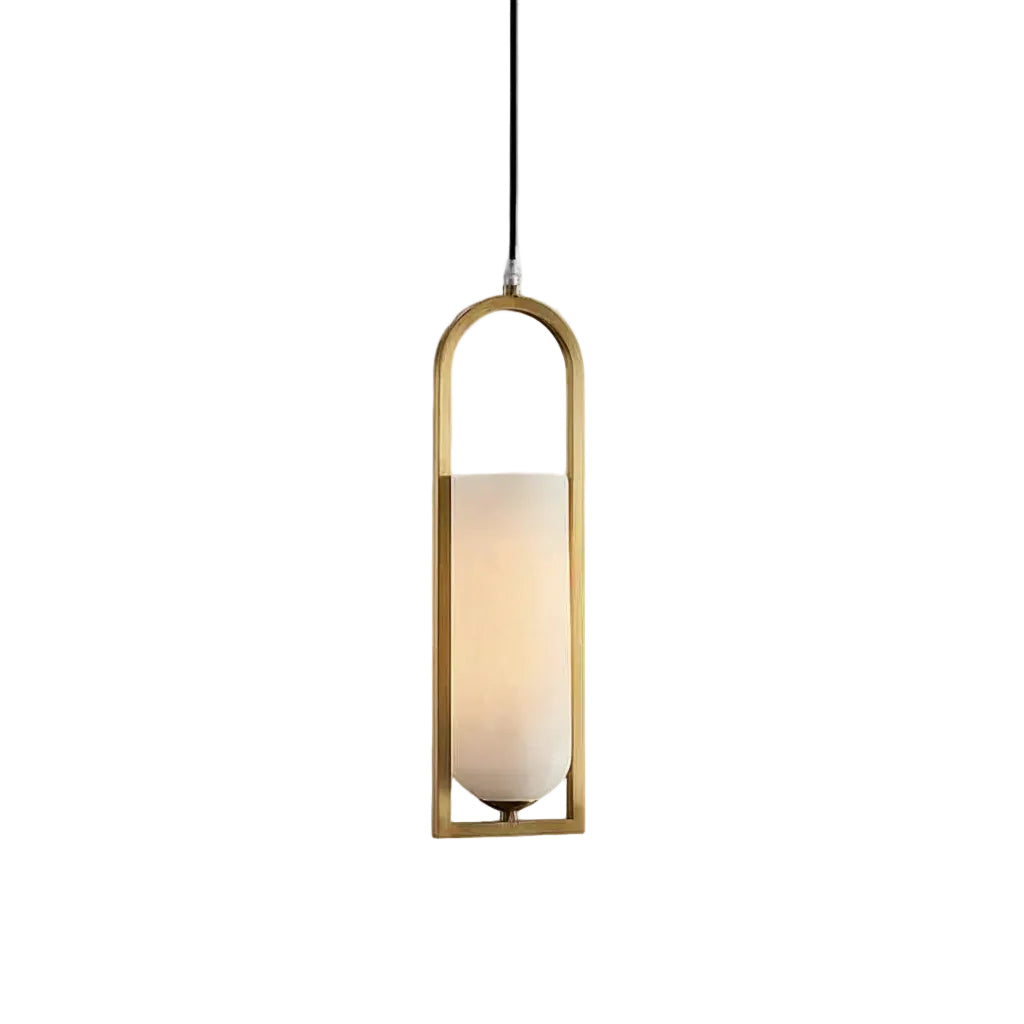
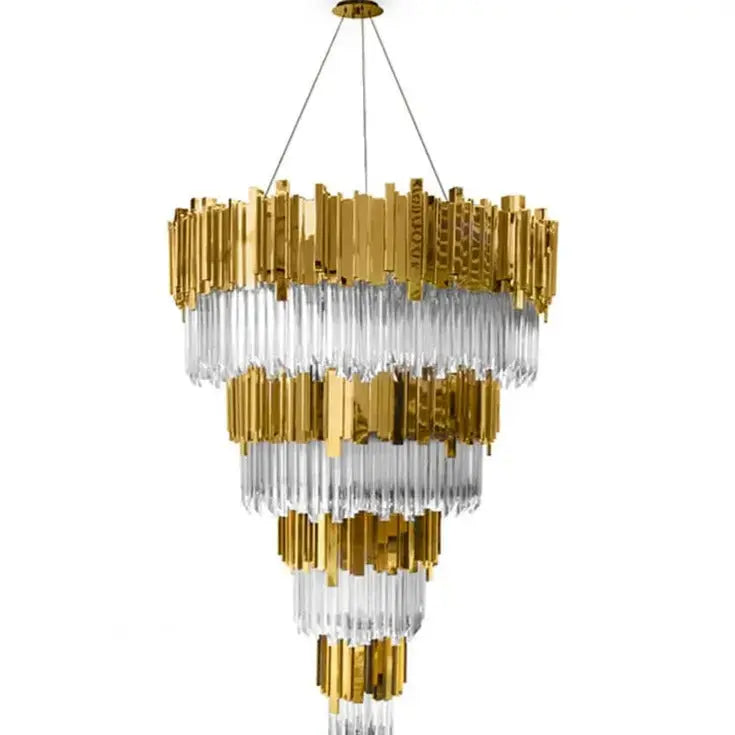
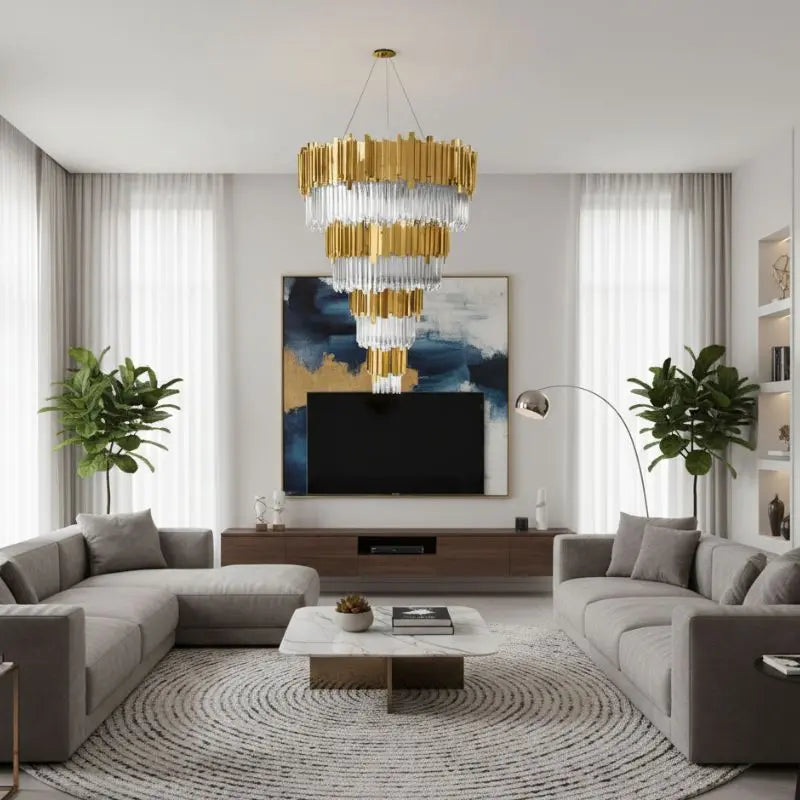
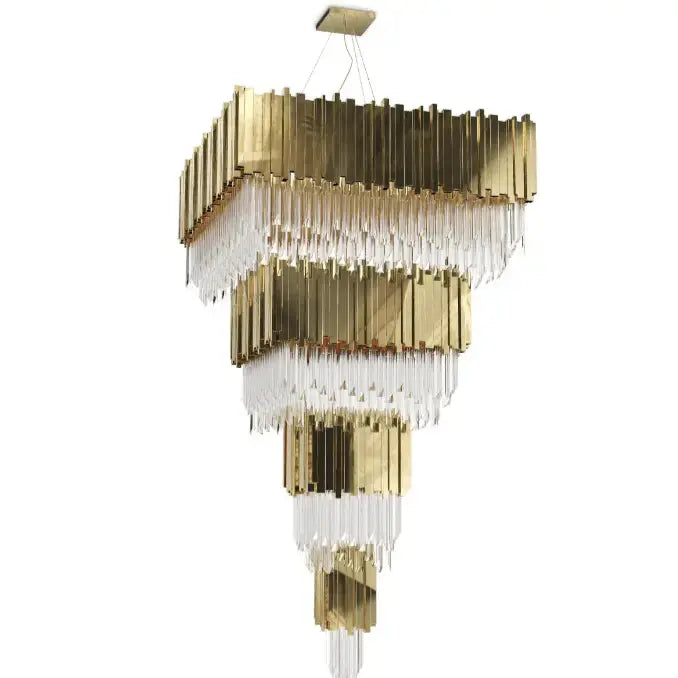
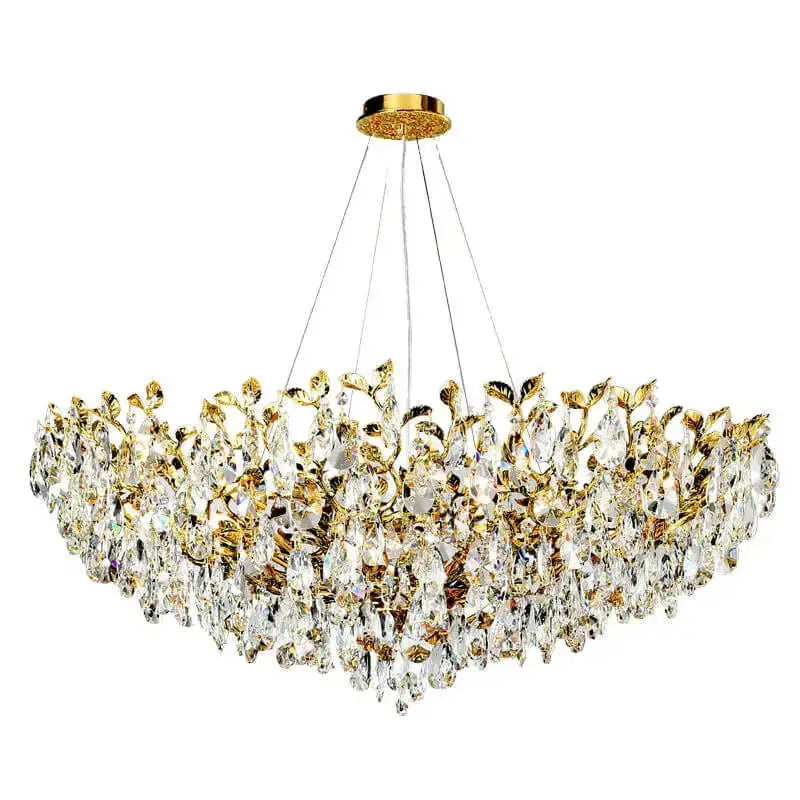
Warm metallics continue to resonate because they flatter both interiors and people. A brass or gold-toned chandelier adds richness to the dining room and tends to sit beautifully with wood tables, cream upholstery and layered neutral palettes. It is one of the easiest ways to make a room feel more luxurious without redesigning everything around it.
Finish matters here. Bright polished gold can feel glamorous and decorative, whereas brushed brass or antique gold is often easier to live with long term. If your room already has warm undertones, this choice usually feels natural rather than forced.
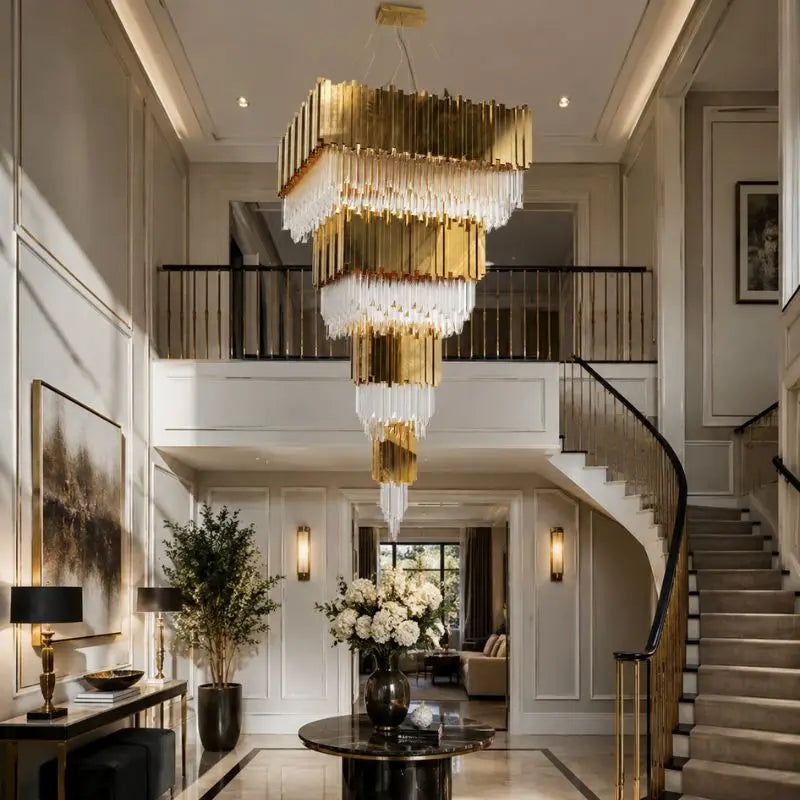
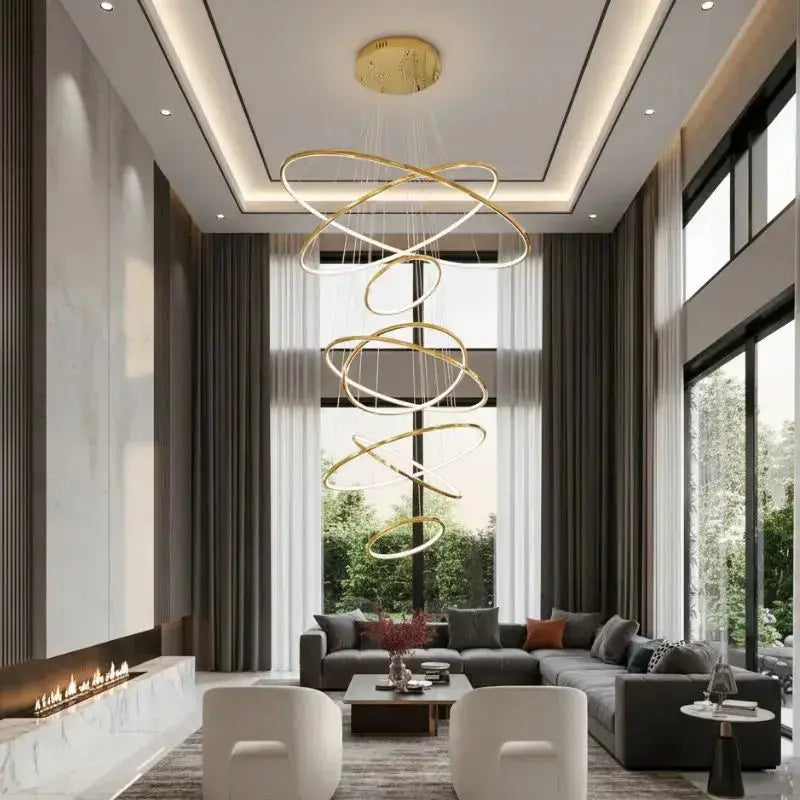
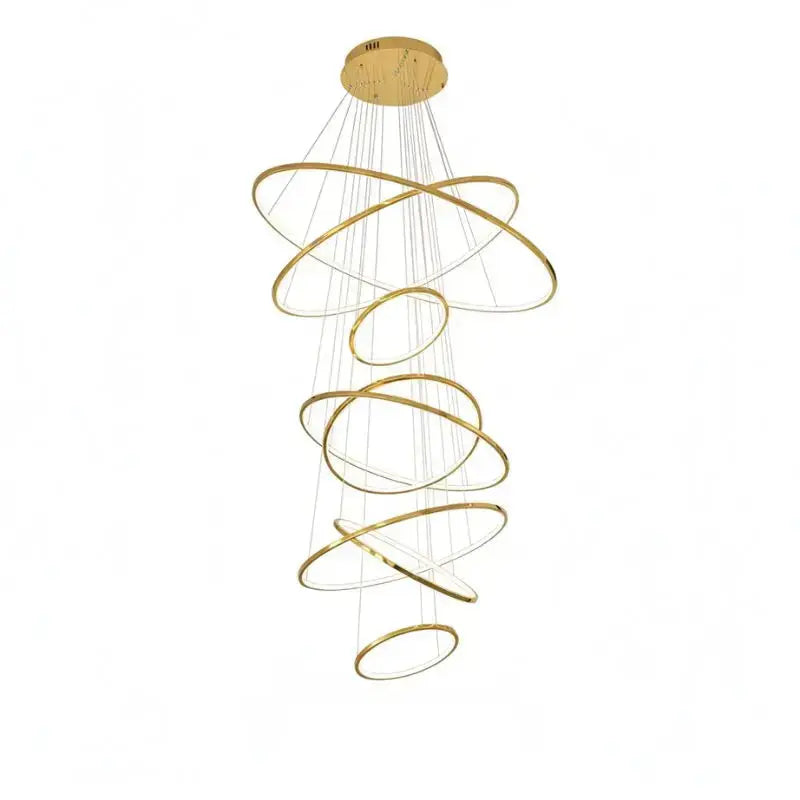
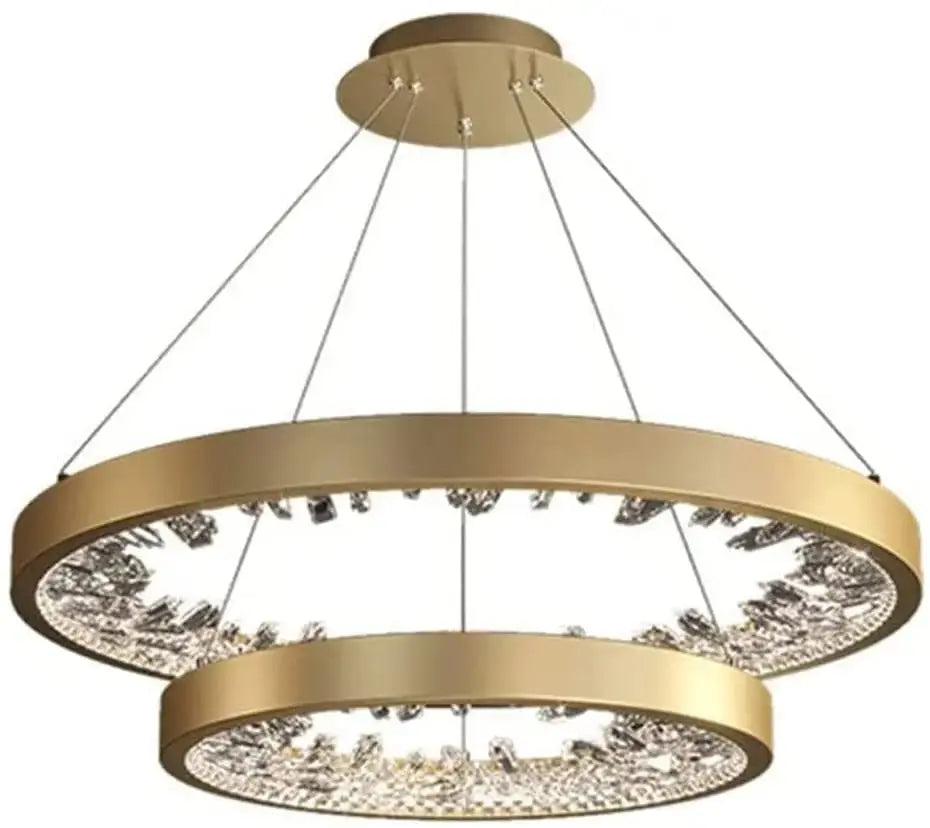
8. Tiered chandeliers for tall ceilings
If your dining room has generous ceiling height, use it. Tiered chandeliers bring scale and theatre to the room and help fill vertical space elegantly. They are particularly compelling in double-height dining areas or homes where the dining room opens into a grander plan.
In standard-height rooms, however, a tiered design can be too much unless the proportions are carefully controlled. It depends on diameter, drop and openness of the frame. The more intricate the piece, the more breathing room it usually needs.
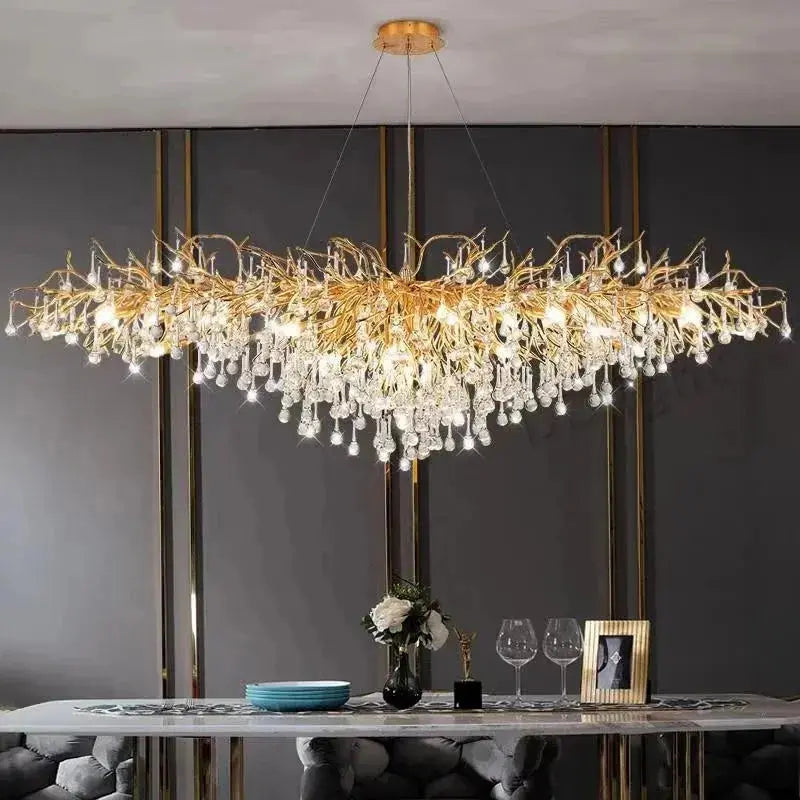
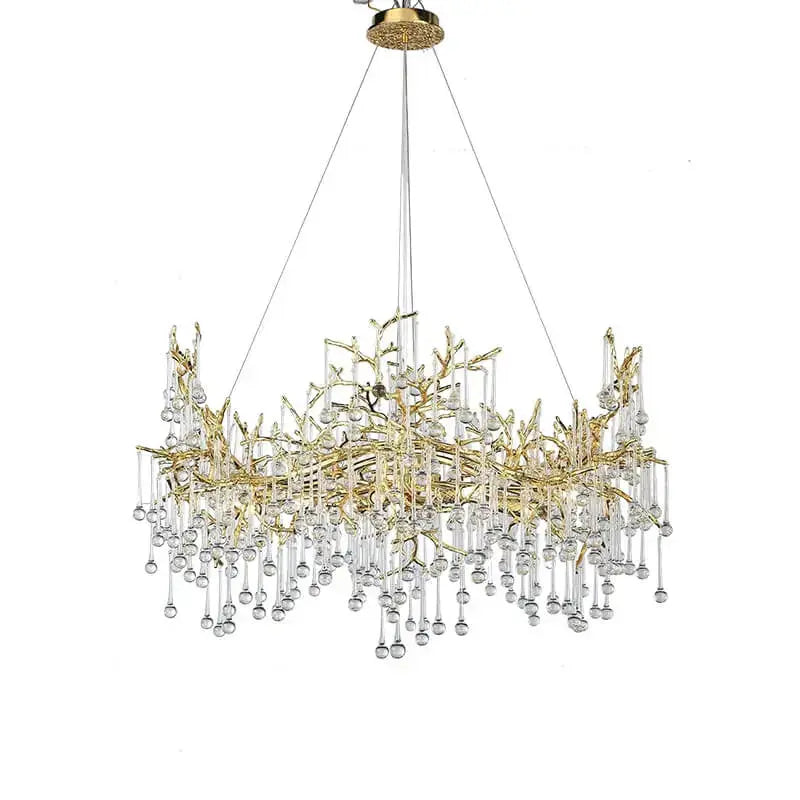
9. Sculptural chandeliers as conversation pieces
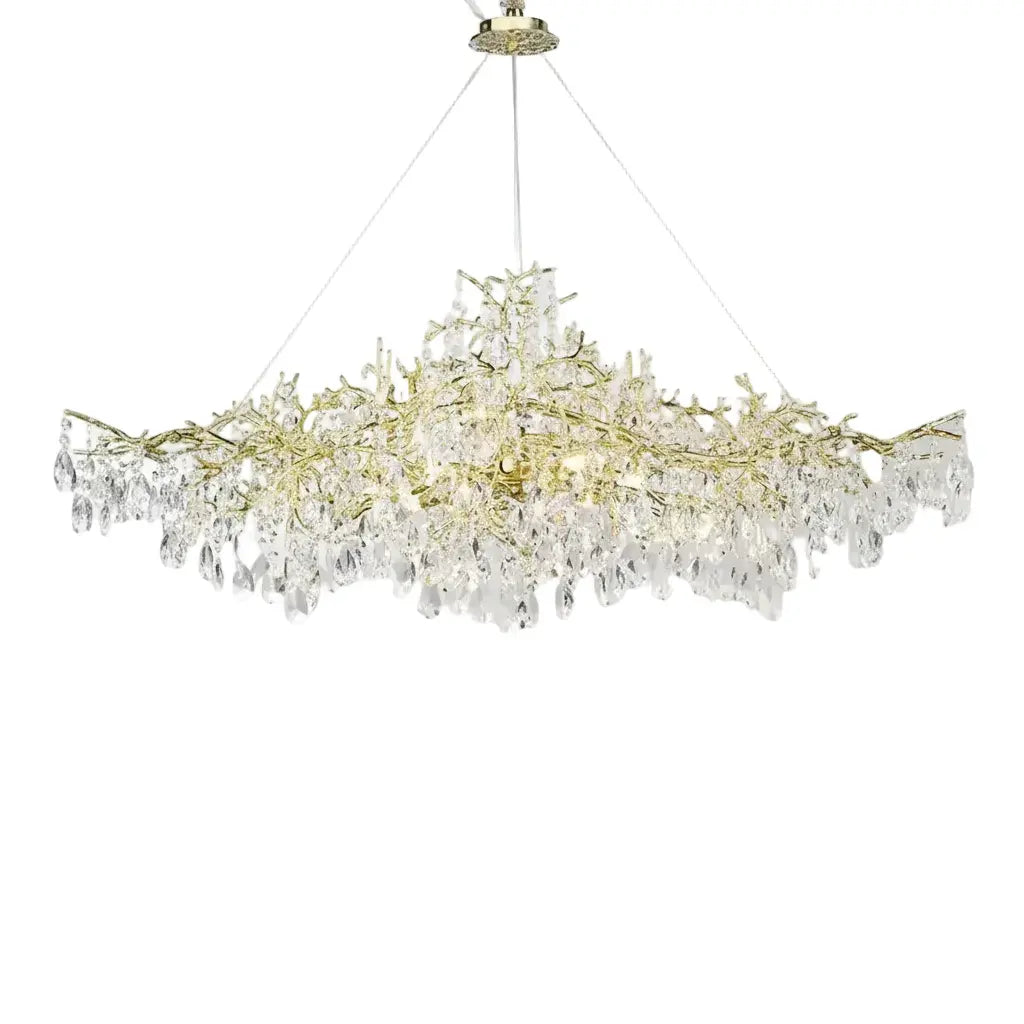
Some of the most memorable dining rooms use lighting almost as artwork. Asymmetrical forms, organic branches, clustered discs and abstract silhouettes can all create a design-led focal point that feels more personal than a standard fixture.
This approach suits homeowners who want the room to feel curated rather than conventional. The balance is making sure the chandelier still serves the table beneath it. A sculptural piece should look expressive, but not so visually chaotic that it distracts from the room every time you sit down.
10. Two chandeliers over one long table
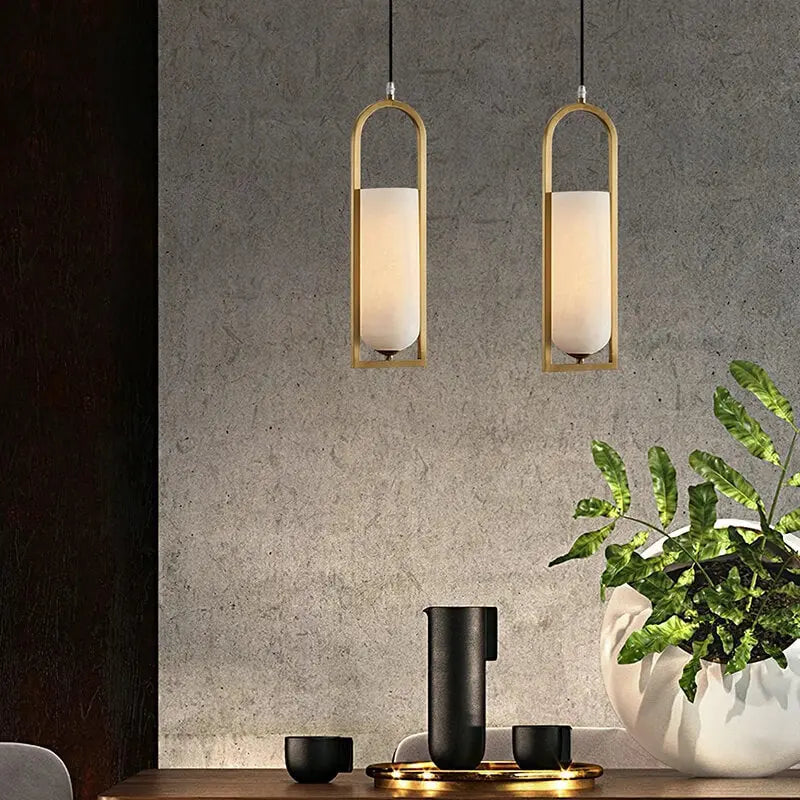
For especially long dining tables, two chandeliers can look more polished than one oversized fitting. This arrangement gives better light distribution and can help a large room feel more composed. It is often the better answer when one central fixture would either look too small or become disproportionately wide.
Consistency is important. Matching fixtures usually look cleanest, although in some eclectic interiors a coordinated pair with slight variation can work. Spacing should feel deliberate, with each chandelier visually supporting its section of the table.
11. Mixed-material designs for depth
Wood and metal, crystal and brass, marble-effect detailing with glass - mixed-material chandeliers have a layered quality that can make a dining room feel more finished. They are especially useful when your space blends styles, such as a traditional table with modern chairs, or classic architecture with contemporary art.
These designs often bridge aesthetic gaps that a single-material fixture cannot. They also tend to look considered from multiple angles, which is valuable in open-plan homes where the dining room is seen from adjoining spaces.
Size, finish and bulbs still matter
Even the most beautiful chandelier can disappoint if the practical details are off. Dimmable lighting is worth prioritising in the dining room because this space shifts constantly, from breakfast to dinner party. A fixture that can only produce one level of brightness limits the atmosphere you can create.
Finish should also connect with the rest of the room, but not necessarily match everything exactly. If your door handles, table base and wall lights all vary slightly, that can still look sophisticated. What matters more is that the undertones feel compatible. Warm with warm is usually easiest. Mixing warm and cool can work, but it requires a more confident eye.
And if you are shopping online, pay close attention to dimensions. A chandelier may look substantial in a product image and arrive feeling far more delicate than expected. Detailed measurements, clear finish descriptions and responsive customer support make the process far smoother, which is one reason design-conscious shoppers often prefer a specialist retailer such as ChandeliersLife.
The most successful chandelier is not simply fashionable or expensive. It is the one that makes your dining room feel complete when the lights come on and equally compelling when they are off. Choose the piece that gives the room its point of view, and the rest of the space tends to fall into place.