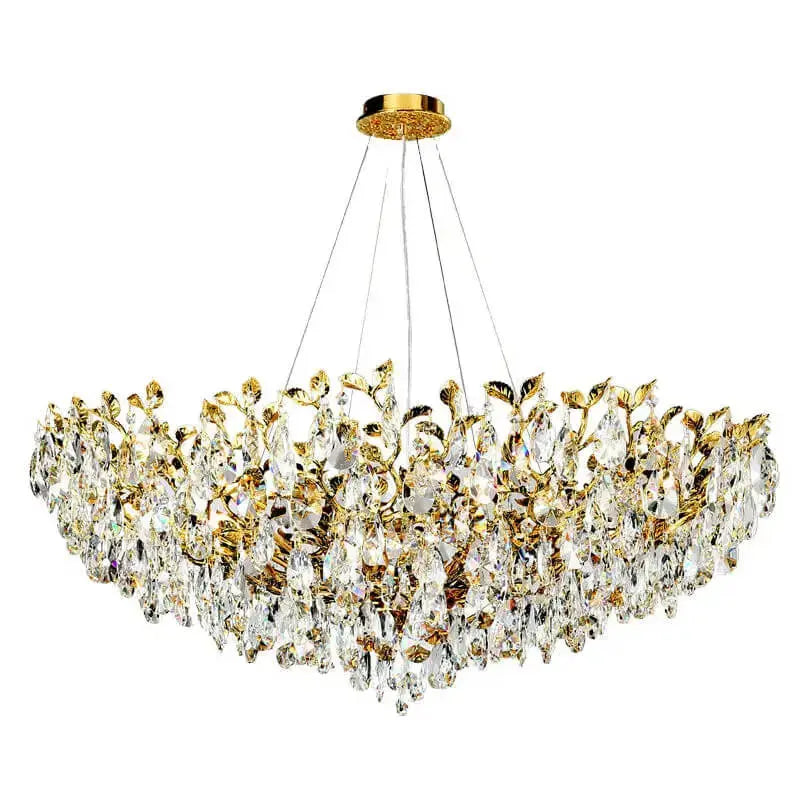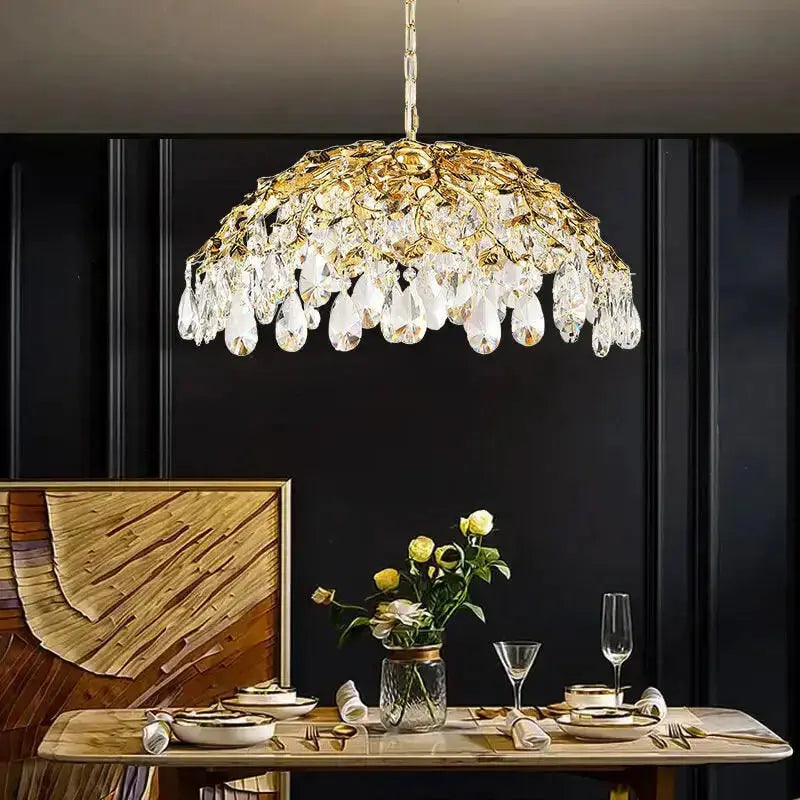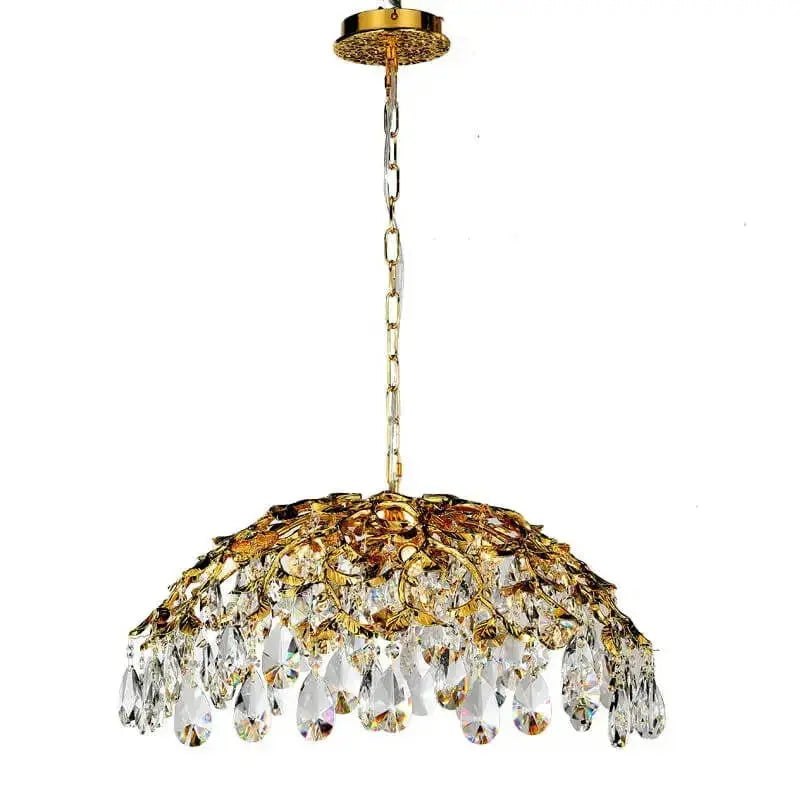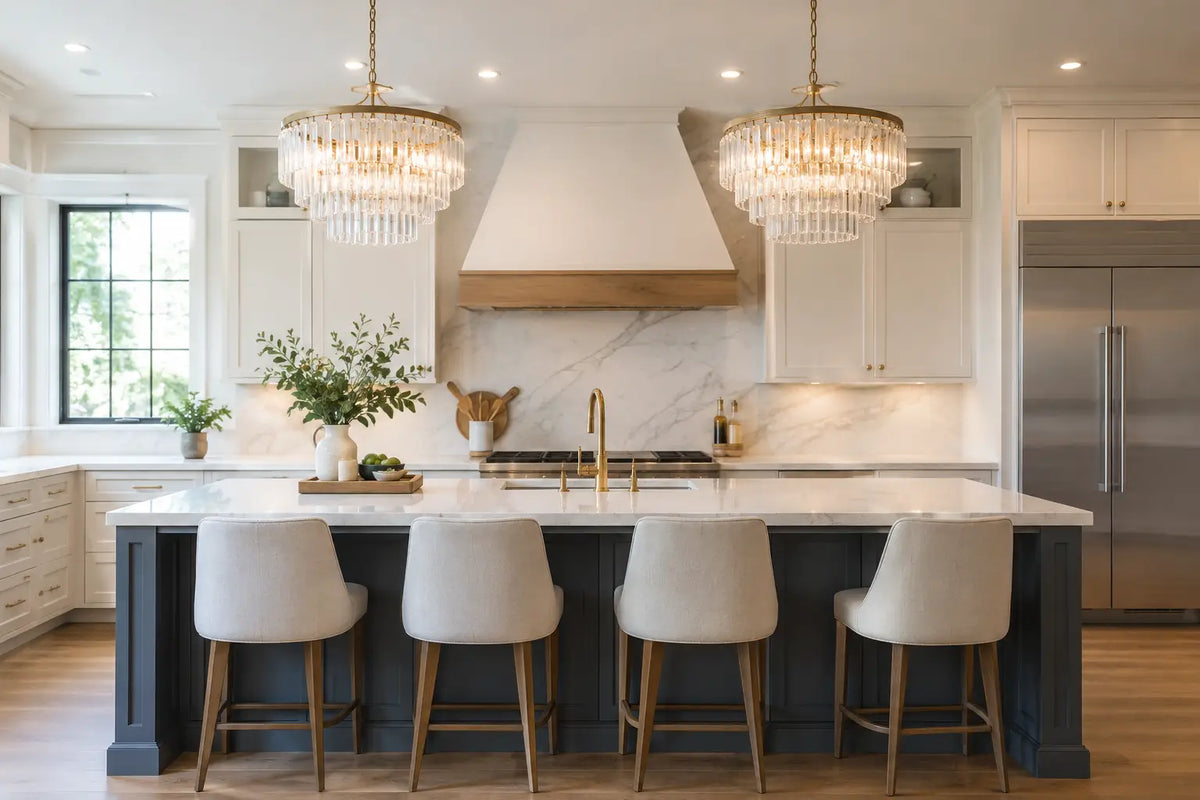
A kitchen can have flawless cabinetry, beautifully veined worktops and polished hardware, yet still feel unfinished when the ceiling is treated as an afterthought. Chandeliers in kitchens change that equation. They introduce a focal point at eye level, soften hard architectural lines and give the room the considered atmosphere usually reserved for a dining room or entrance hall.
The appeal is not simply decorative. Modern kitchens are where breakfasts happen at the island, guests gather before dinner and family life unfolds between cupboards and cookers. The right chandelier gives this hardworking room a more personal, luxurious character while supporting the practical lighting needed every day.
Why choose chandeliers in kitchens?
A chandelier is particularly effective in a kitchen with an island, breakfast table or open-plan dining area because it defines a zone without adding a wall. It directs attention downwards, making a generous island feel purposeful and a compact table feel more intimate. Where recessed spotlights provide even task lighting, a chandelier supplies the visual layer that makes the whole scheme feel complete.
It is also an opportunity to bring contrast into a room dominated by fitted finishes. A warm antique-brass frame can temper crisp white cabinetry. A black linear chandelier can give pale oak and stone a contemporary edge. Crystal introduces sparkle against matt finishes, while alabaster delivers a quieter, luminous luxury that suits refined modern interiors.
There is a trade-off, however. A chandelier should not be expected to illuminate every corner of a busy kitchen on its own. Its job is mood, presence and targeted light over a key surface. Combine it with well-positioned downlights, under-cabinet lighting and, where appropriate, wall lights for a layered result that looks exquisite and works properly after dark.
Start with the kitchen zone, not the fixture
Before falling for a design, decide exactly what the chandelier needs to serve. Above an island, it should relate to the island's length and width. Above a dining table within the kitchen, it should belong to the table rather than compete with the cabinetry. In a large kitchen, a sculptural central fixture may work beautifully over an open floor area, but only if it does not obstruct sightlines between the cooking and dining spaces.
For islands, linear chandeliers and elongated multi-light forms usually feel most natural. They echo the proportions below and spread light along the worktop. A pair of smaller chandeliers can also look striking over a long island, particularly when the room has high ceilings and a symmetrical layout.
Round chandeliers are often at their best over circular or square breakfast tables, or over a compact island where a long fitting would feel overextended. The aim is intentional proportion, not strict matching. A rounded fixture can add welcome softness to an angular kitchen, while a linear form can bring order to an otherwise relaxed, organic scheme.
Get the scale right
An undersized chandelier can disappear into a spacious kitchen. An oversized one can make even exceptional cabinetry feel crowded. As a useful starting point, measure the island or table, then select a fixture that is noticeably narrower than the surface beneath it. This leaves visual breathing room around the edges and protects against bumped heads when people move around the kitchen.
For a long island, a chandelier occupying roughly one-half to two-thirds of the island length often looks balanced. This is guidance rather than a rule. A delicate open-frame design can be larger because it carries less visual weight, whereas a dense crystal or globe fixture may need a more restrained diameter.
Ceiling height matters just as much. Kitchens with standard-height ceilings tend to suit flush, semi-flush or compact chandeliers with a shallow profile. In rooms with vaulted ceilings or a double-height open-plan space, a taller cascading piece can create the dramatic vertical moment the architecture calls for.
Choose a hanging height that feels elegant and safe
Over a kitchen island, the bottom of a chandelier is commonly positioned around 76 to 91 centimetres above the worktop. This range preserves a clear view across the room while allowing the fixture to feel connected to the island rather than stranded near the ceiling. Taller household members, unusually high ceilings and large-scale fittings may call for a little more clearance.
Above a dining table, a similar approach creates a warmer, more intimate pool of light. The key test is simple: sit down, stand up and look across the room. The chandelier should never sit in a direct line of sight or make the kitchen feel like an obstacle course.
Adjustable chains, stems and suspension cables are valuable because they allow the fitting to be tailored after installation. Do not assume the showroom image reflects the right drop for your own room. Ceiling height, furniture scale and even the view from an adjoining living area all affect the final decision.
Match the chandelier to the kitchen's character
The most convincing kitchen lighting feels integrated, not copied and pasted from another room. That does not mean every finish must match. In fact, a little contrast often makes a scheme more sophisticated.
A contemporary kitchen with handleless cabinetry, pale stone and clean lines suits geometric metalwork, smoked glass, globe clusters or sculptural LED forms. Choose black, brushed nickel, soft gold or warm brass according to the undertones already present in taps, handles and appliances. Matching every metal exactly can look flat; repeating one finish and introducing one complementary accent often feels more collected.
For a classic kitchen, consider candle-style arms, ribbed glass, aged brass or restrained crystal. These designs complement shaker cabinetry, painted islands and traditional joinery without making the room feel overly formal. The most successful traditional chandeliers have enough presence to feel special, but not so much ornament that they overpower the practical setting.
Natural materials make a particularly persuasive choice in kitchens designed around texture. Alabaster diffuses light into a soft, flattering glow and pairs beautifully with marble, timber and brushed brass. Woven details introduce warmth, though they are best placed away from intense cooking vapours. Glass and metal are generally easier to wipe clean in kitchens where the hob is close to the island.
Consider the finish in real kitchen conditions
Steam, airborne grease and frequent cleaning are part of kitchen life. Open designs, sealed glass shades and wipeable metal finishes are often the most practical choices. A heavily detailed crystal chandelier can be spectacular over a dining area or a distant island, but it will require more regular care than a simple glass-and-metal design.
If the chandelier will sit near the hob, check local electrical regulations and ask a qualified electrician for advice on placement. Decorative lighting deserves careful planning, especially around heat, moisture and extraction. A beautiful installation should also be a safe one.
Build a layered lighting scheme around it
A chandelier earns its place when it works with the rest of the room. Recessed ceiling lights give broad illumination for preparation and cleaning. Under-cabinet lights reduce shadows on worktops. A chandelier then provides the softer, more decorative dimension that makes the kitchen inviting when the practical jobs are done.
Dimmable lighting is especially worthwhile. Bright light is useful while chopping, reading recipes or tidying up, while a lower level transforms the island into a relaxed place for a glass of wine or a late supper. Select bulbs with a warm white temperature, usually around 2700K, for a flattering, residential feel. Cooler light can make stone and cabinetry appear harsher than they do in daylight.
Where possible, put the chandelier on its own circuit. This gives you freedom to create different scenes rather than switching every light on at the same intensity. It is a small planning detail with a noticeably more luxurious result.
Let the chandelier become part of the view
In open-plan homes, the kitchen chandelier is often visible from the sitting area, hallway or garden doors. Think of it as part of the wider interior composition. Its silhouette matters in daylight as much as its illumination matters at night.
That is why statement lighting is worth choosing with patience. A fixture may be decorative, but it should also respect the proportions of the room, the rhythm of the cabinetry and the way your home is actually used. ChandeliersLife collections make it easier to compare sculptural modern pieces, timeless crystal designs and softly glowing alabaster options according to the character of your kitchen.
Choose a chandelier that gives the room a reason to be looked at twice. When scale, height and light are considered together, the kitchen becomes more than a place to cook - it becomes one of the most welcoming and memorable rooms in the home.