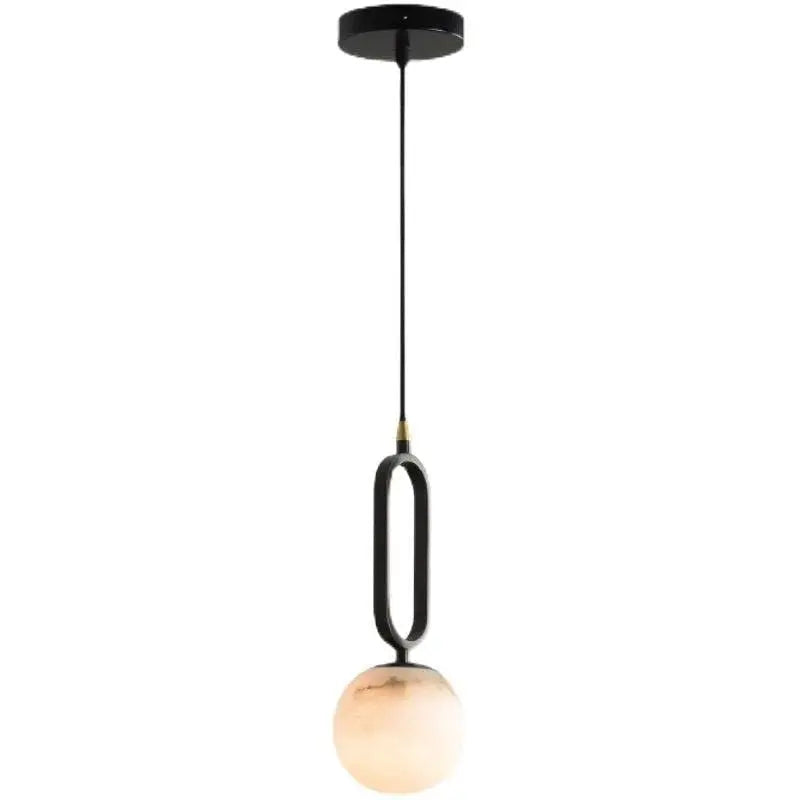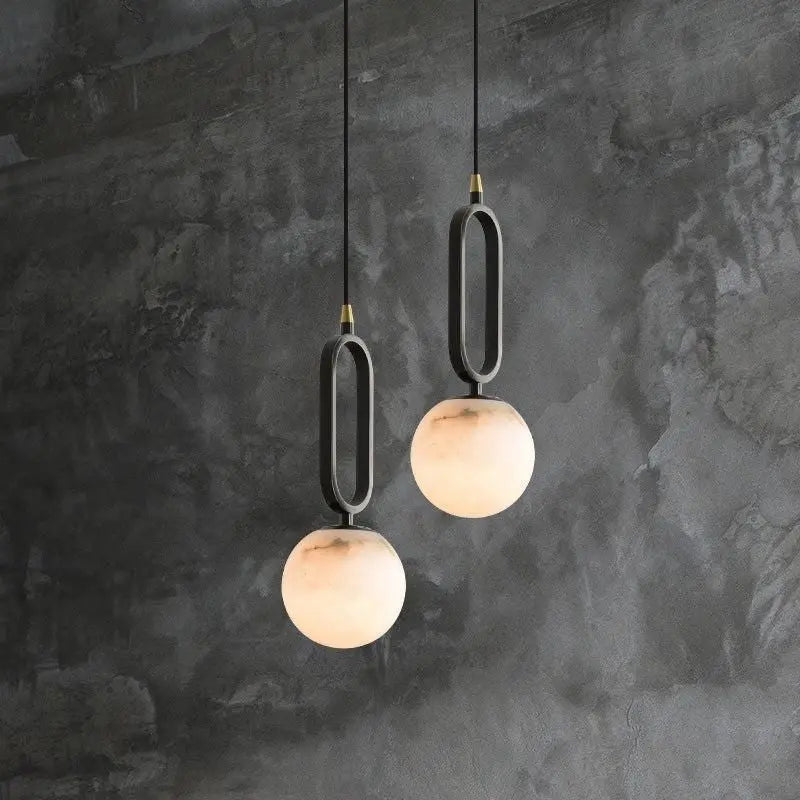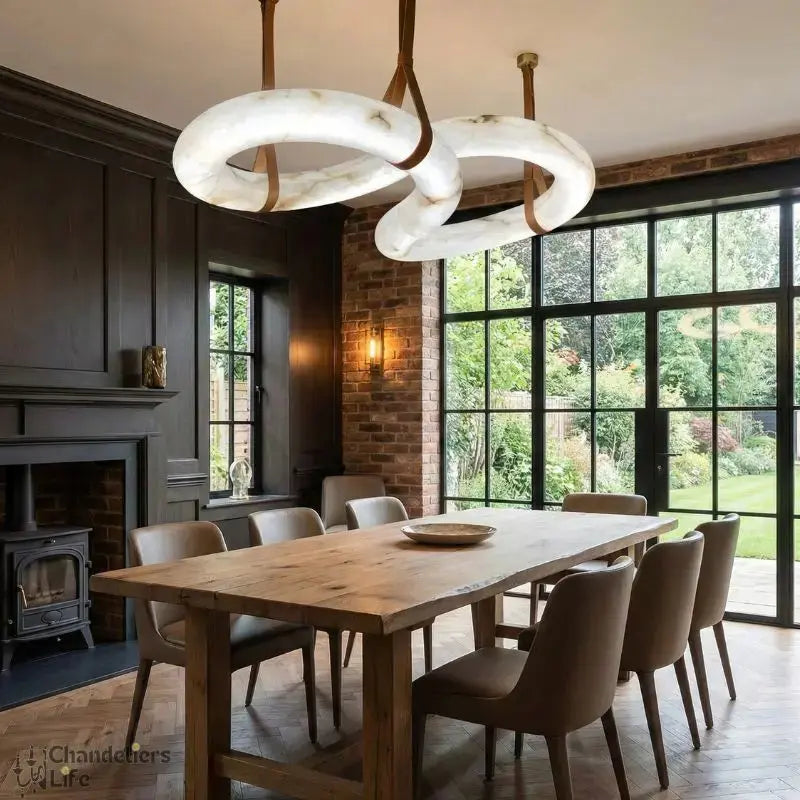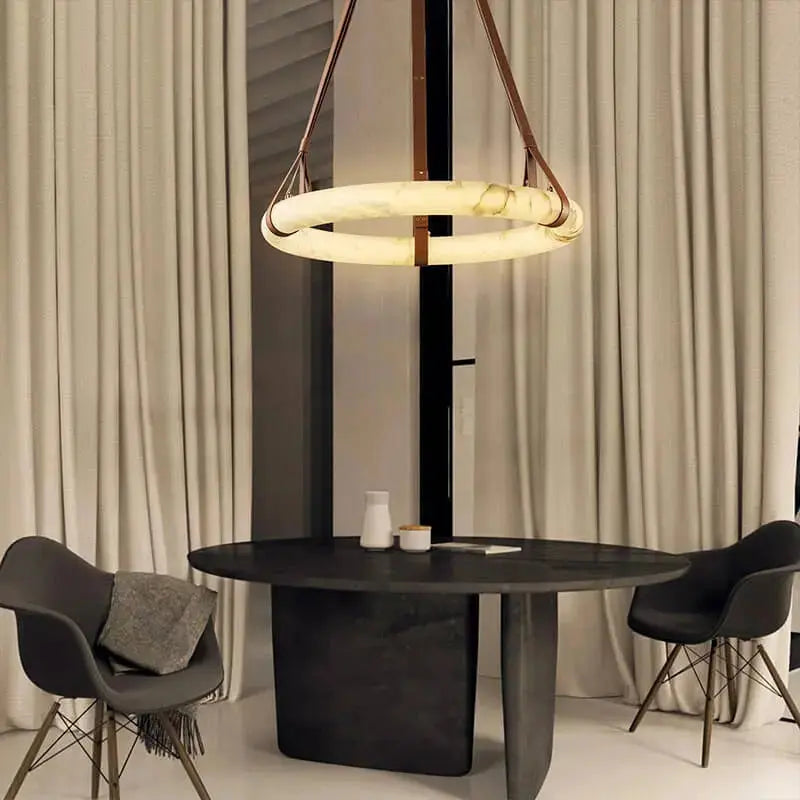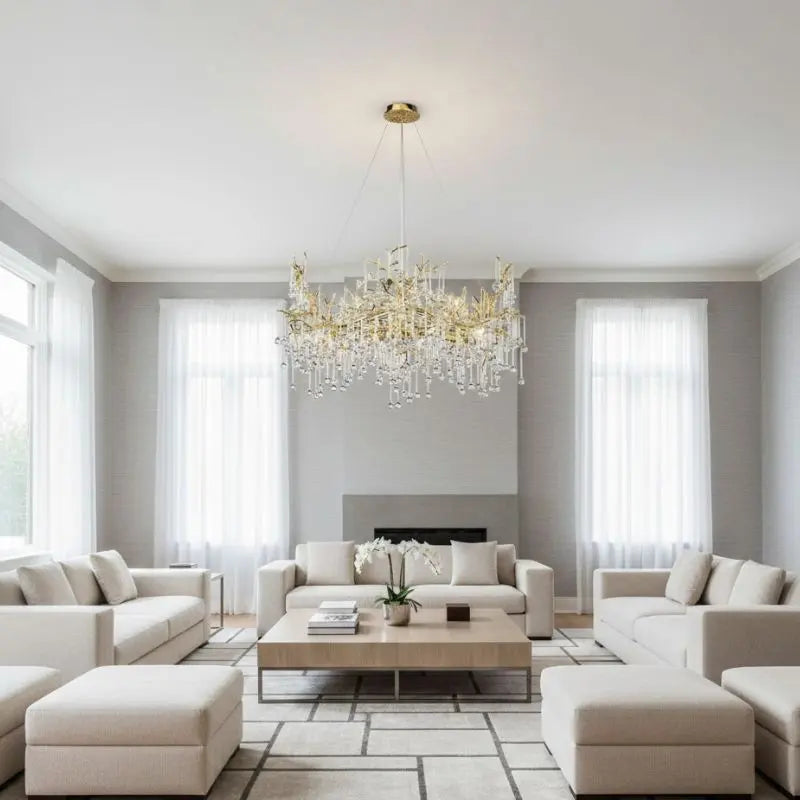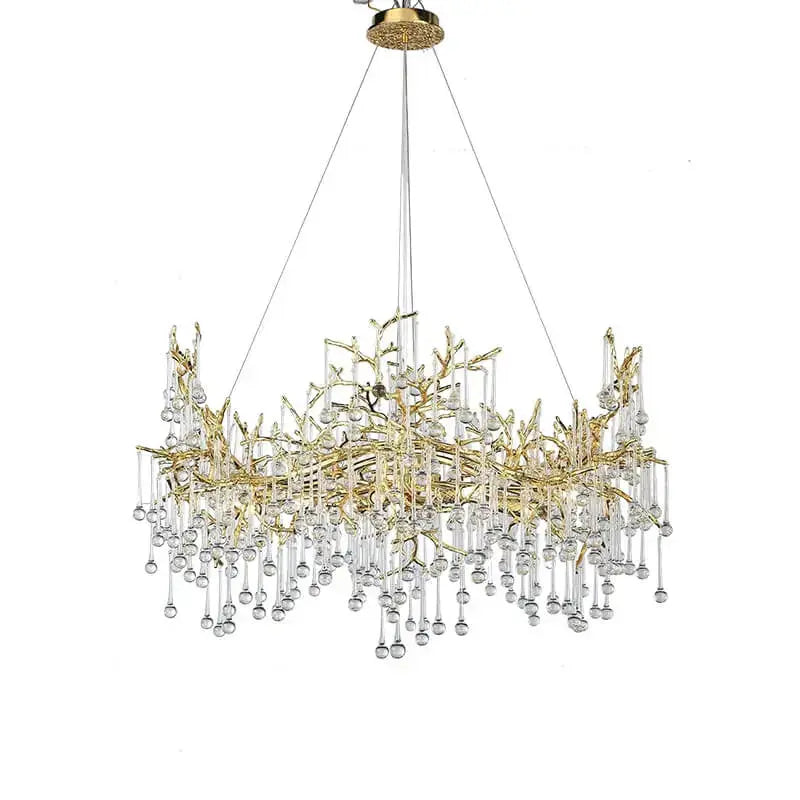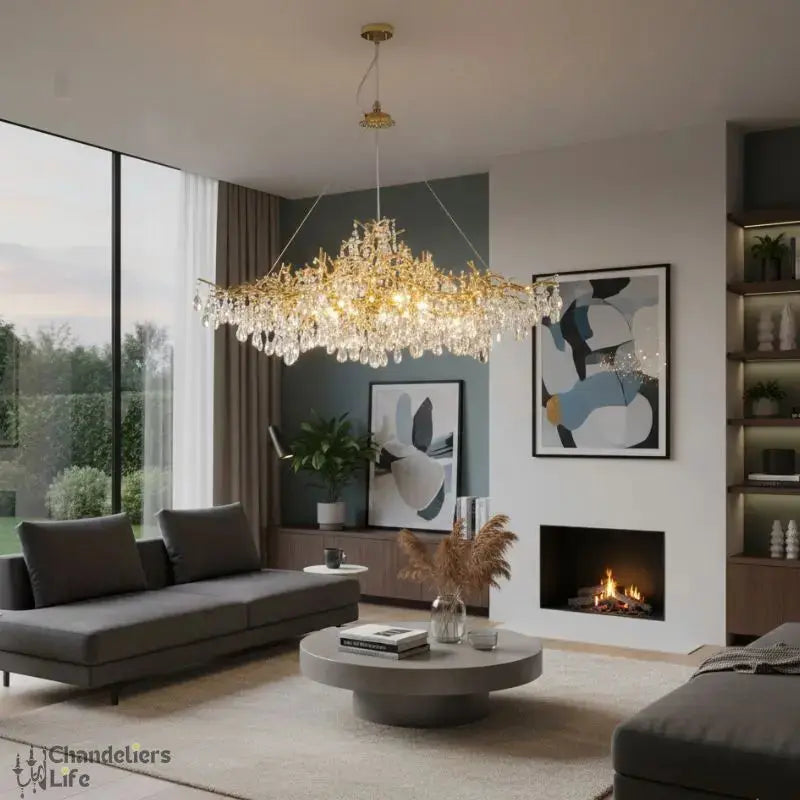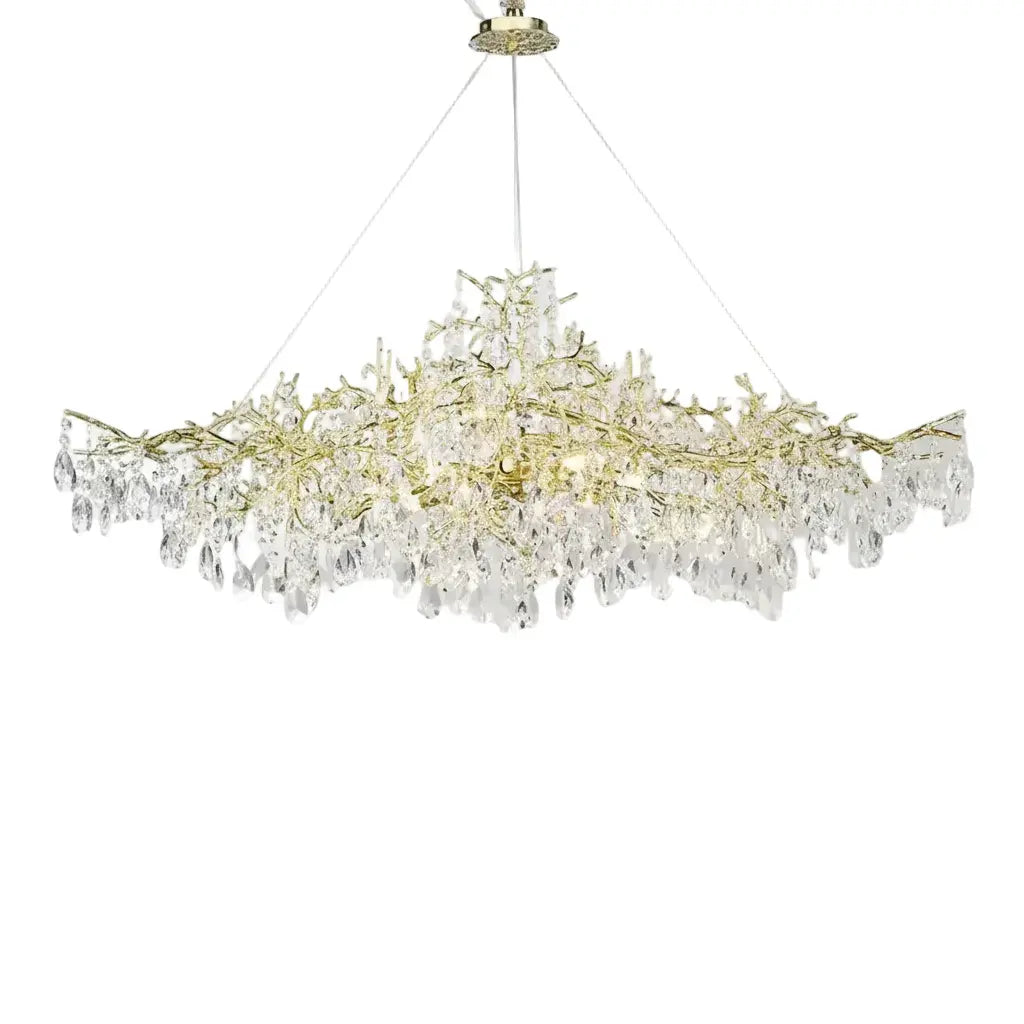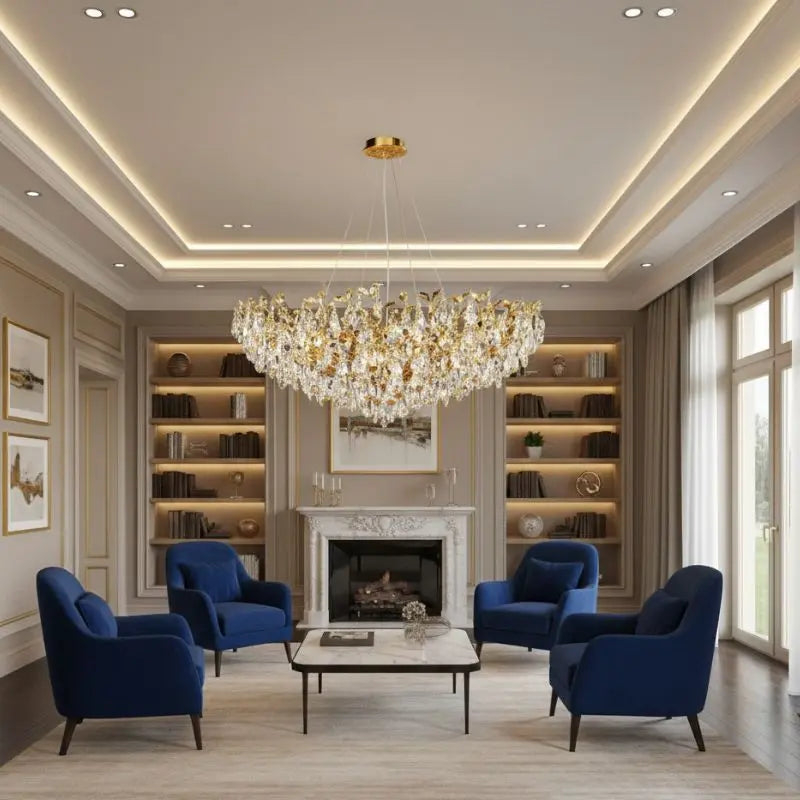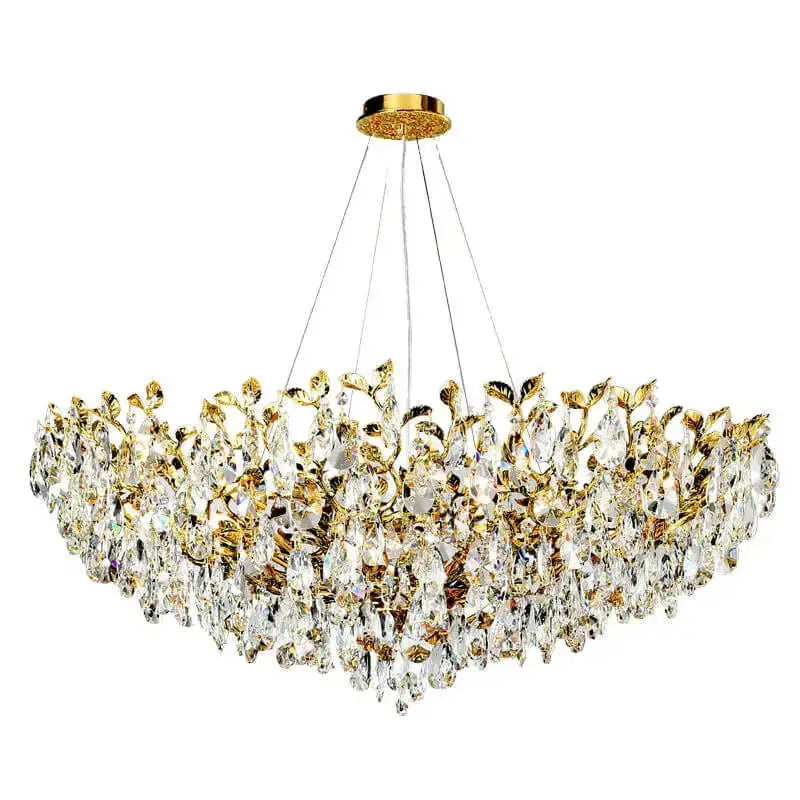
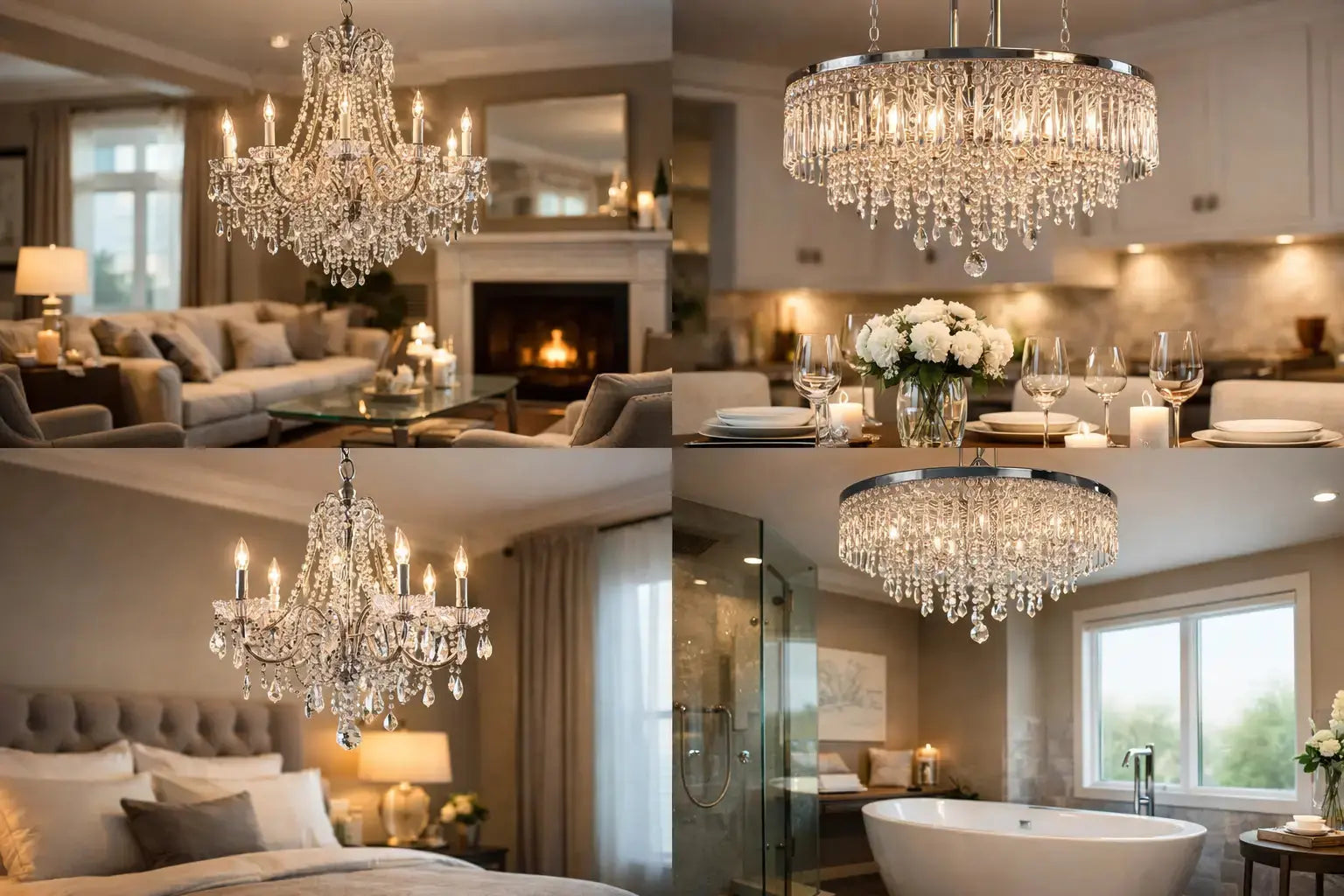
A crystal chandelier does more than brighten a room. It catches the changing light, gives a ceiling real presence and turns an everyday interior into a considered setting. This guide to crystal chandeliers is designed to help you choose a piece with the scale, finish and illumination to feel exquisite for years, rather than merely impressive on installation day.
Why crystal chandeliers still define luxury interiors
Crystal has a rare ability to feel both timeless and current. In a traditional interior, faceted drops and sculptural arms lend the romance of a grand dining room or period hallway. In a contemporary home, a clean-lined crystal ring, tiered prism design or sleek linear chandelier introduces sparkle without visual heaviness.
The appeal is not simply decorative. Crystal refracts light, creating a lively play of brightness across walls, ceilings and table surfaces. During the day, it can catch natural light from a nearby window; after dark, it adds depth and atmosphere to the room. The effect depends on the cut, clarity and density of the crystal, as well as the bulbs and the fixture’s placement.
A chandelier should therefore be chosen as both a lighting source and a focal point. The best designs balance those roles. A highly ornate fixture may be perfect above a formal dining table but overwhelm a compact bedroom. A minimal crystal pendant may suit a modern stairwell beautifully yet lack the breadth needed for a generous entrance hall.
A guide to crystal chandeliers by style
Before measuring, consider the character you want the fixture to bring to the room. Style is the quickest way to narrow an expansive choice.
Traditional crystal chandeliers
Classic chandeliers often feature curved arms, candle-style lamp holders, crystal beads and hanging droplets. They suit homes with cornicing, panelled walls, antique furniture or richly layered textiles, although they can also create striking contrast in a cleaner setting. Choose clear crystal with polished chrome, brass or antique gold details depending on the surrounding hardware and furniture finishes.
Traditional does not have to mean oversized. A smaller, finely detailed chandelier in a bedroom, dressing space or powder room can feel especially luxurious, provided there is sufficient clearance around it.
Modern crystal chandeliers
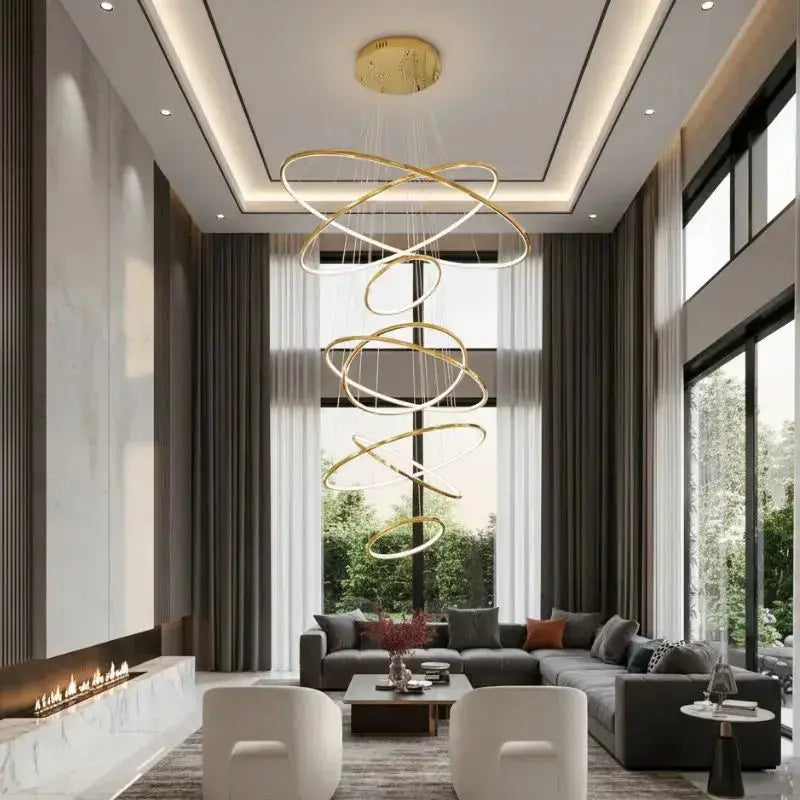
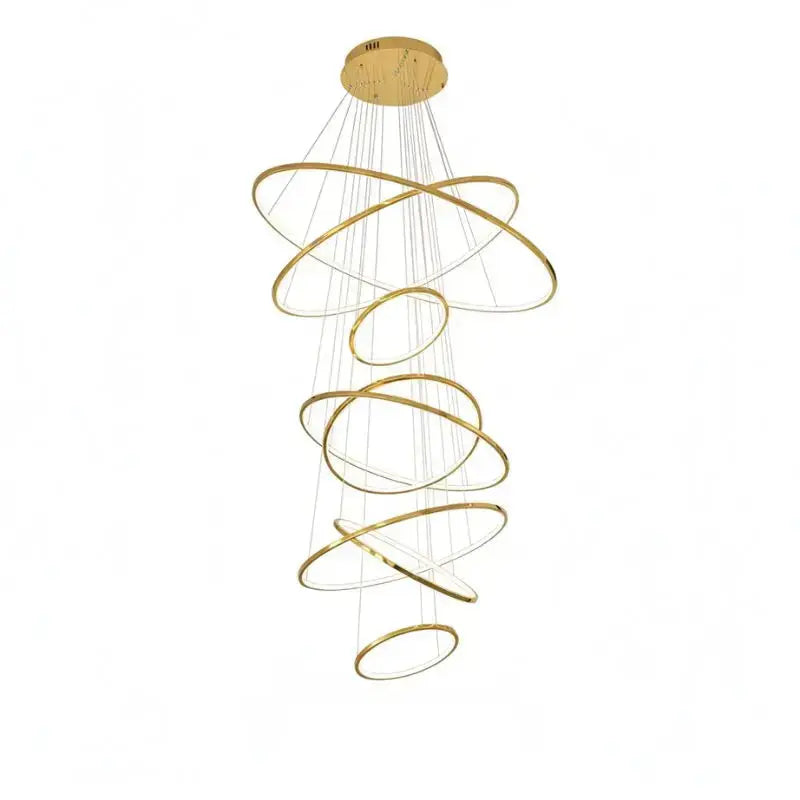
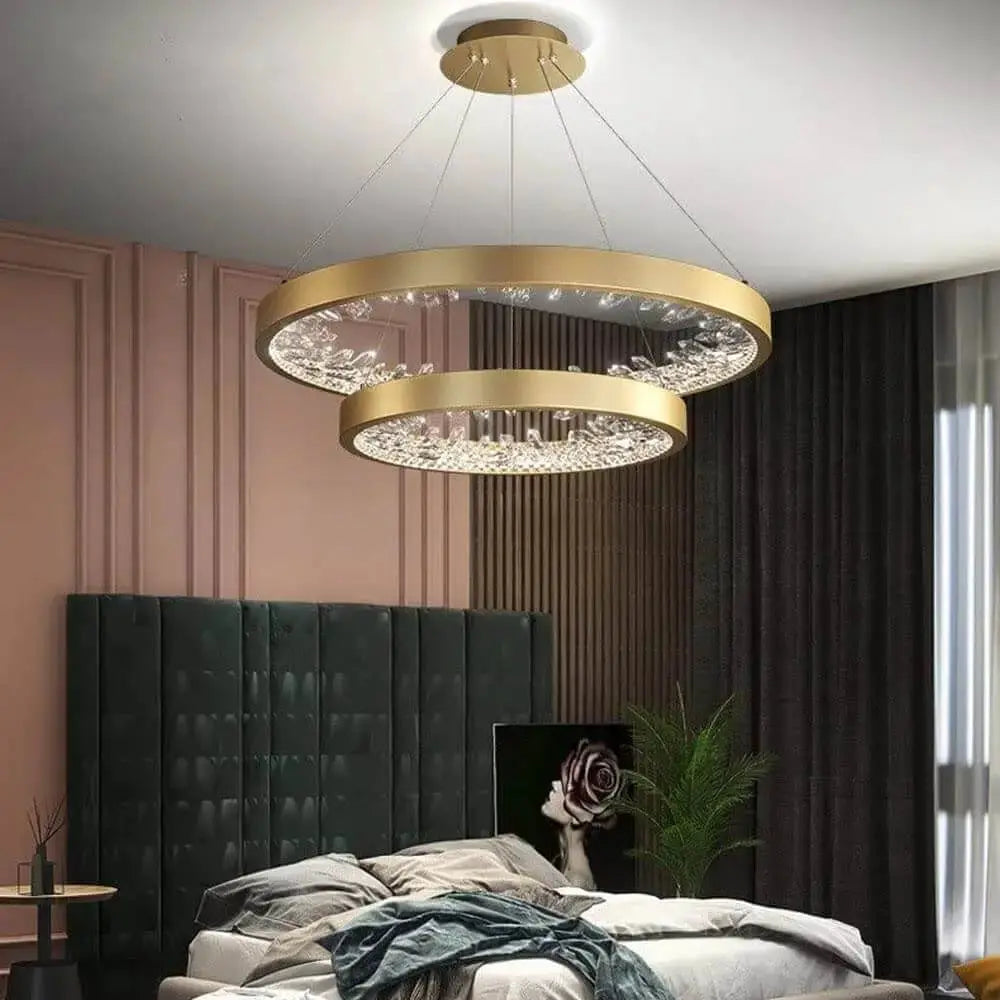
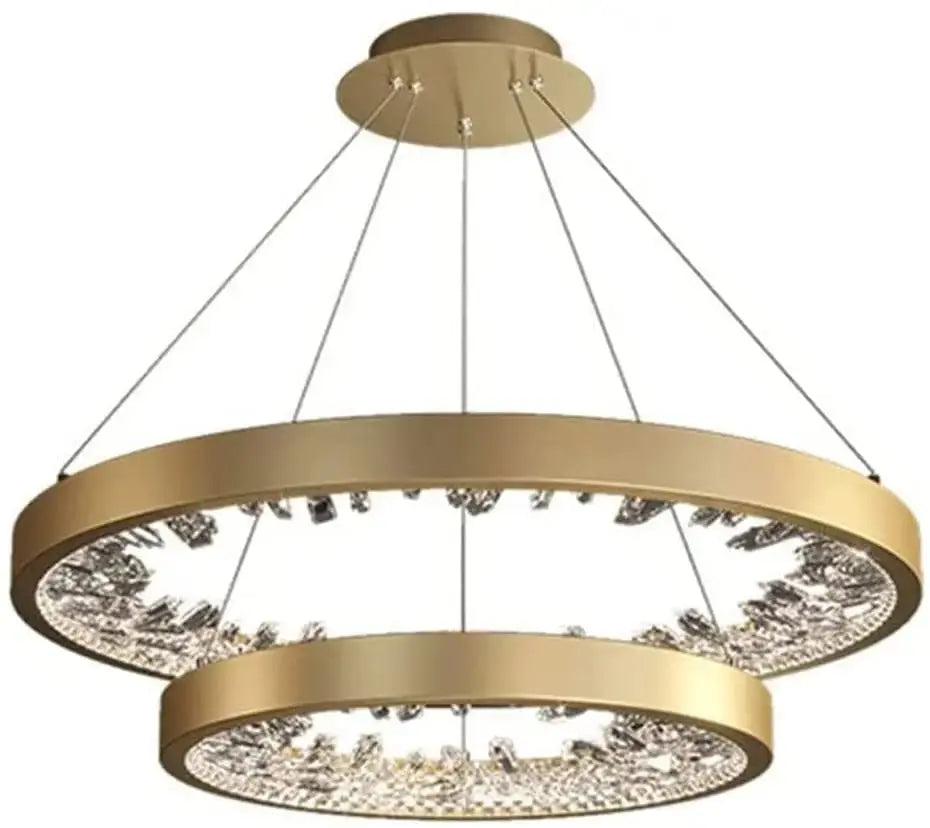
Modern designs tend to favour geometry: linear bars, cascading pendants, circular halos, rectangular frames and carefully arranged crystal rods. Their elegance comes from proportion and material rather than ornament. They are a natural fit for open-plan living spaces, contemporary dining rooms and kitchen islands where a tailored silhouette keeps the room feeling polished.
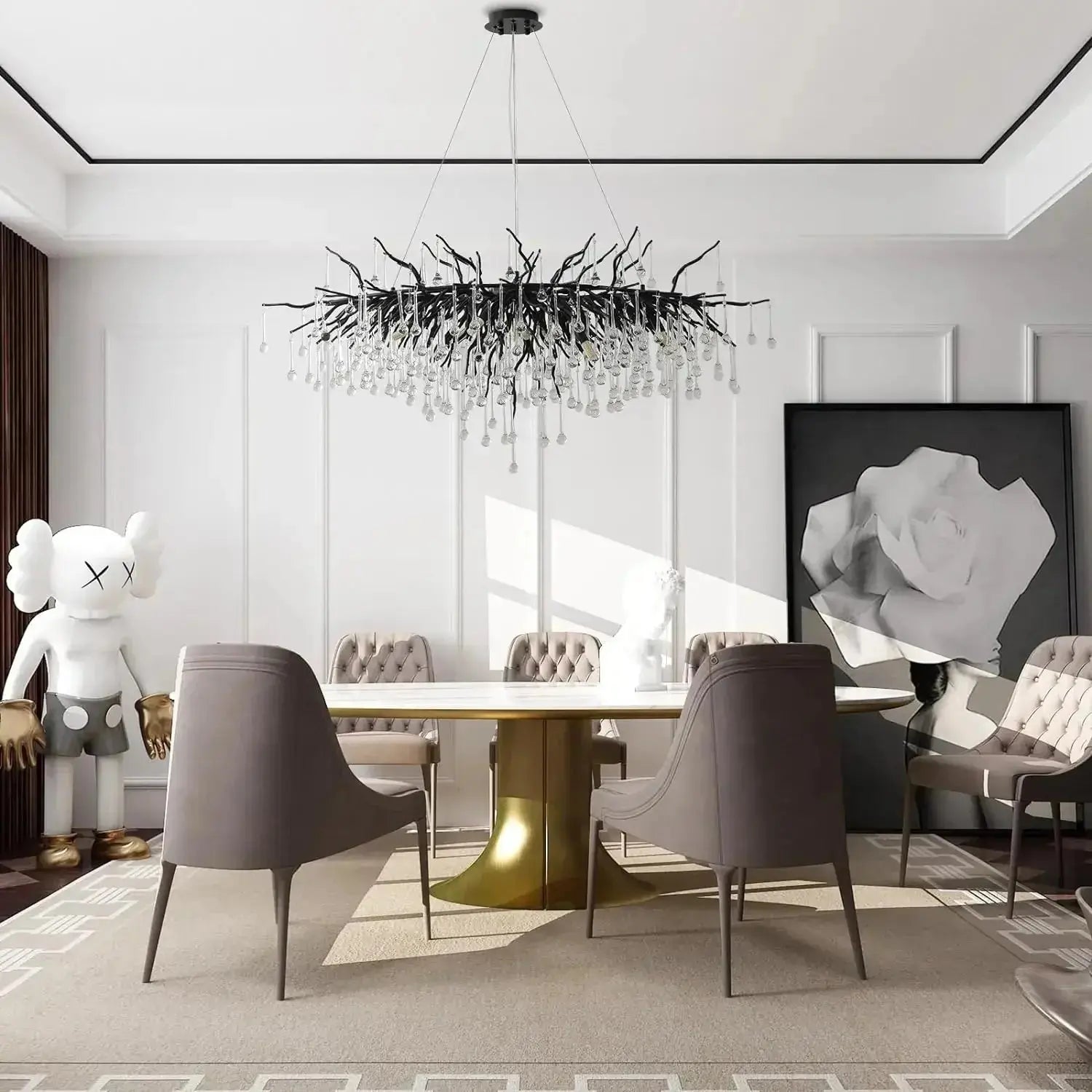
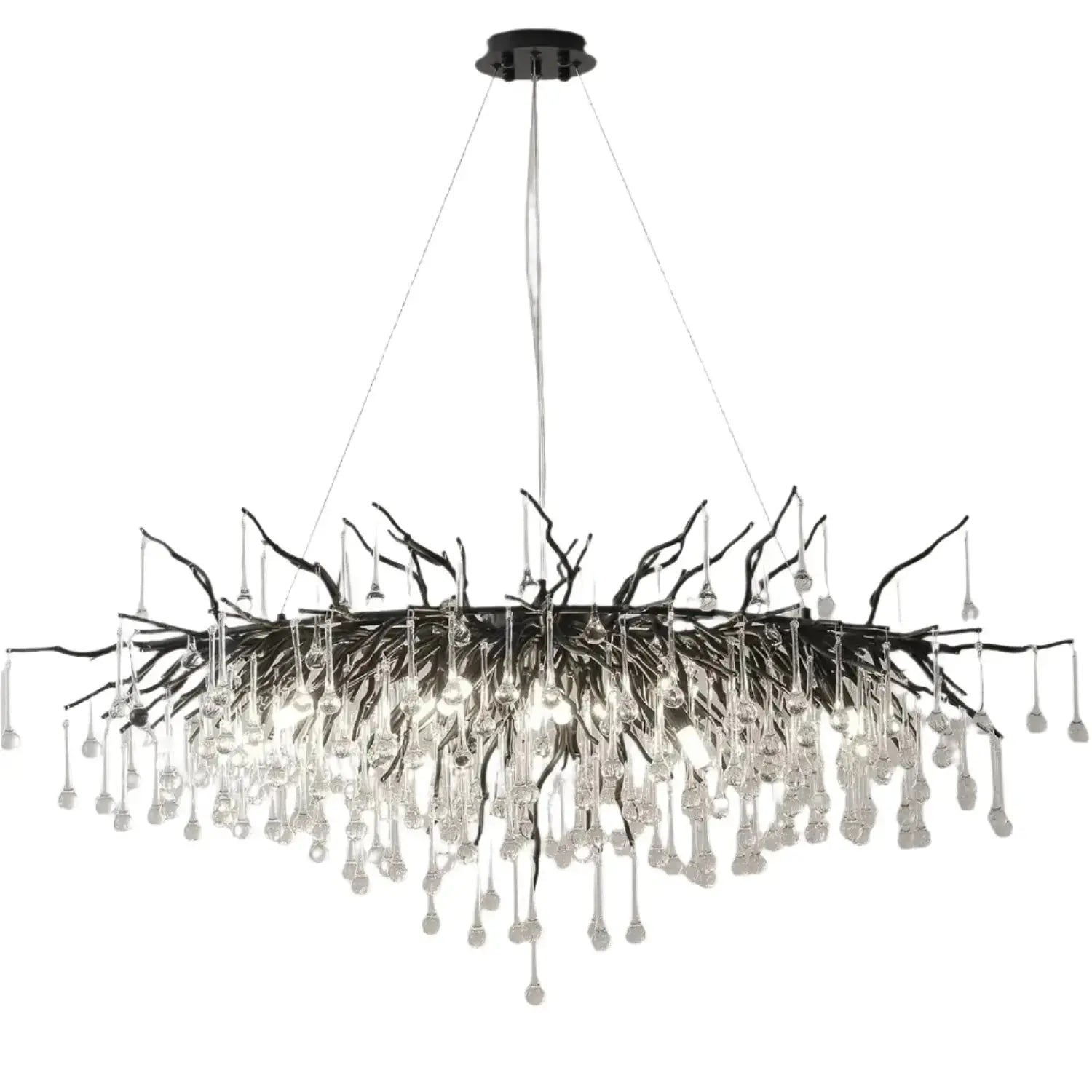
For a softer contemporary look, consider champagne-toned crystal, warm brass or a fixture with a gently curved form. Black metal and smoked crystal create more dramatic contrast, especially against pale walls or stone finishes.
Tiered and cascading chandeliers
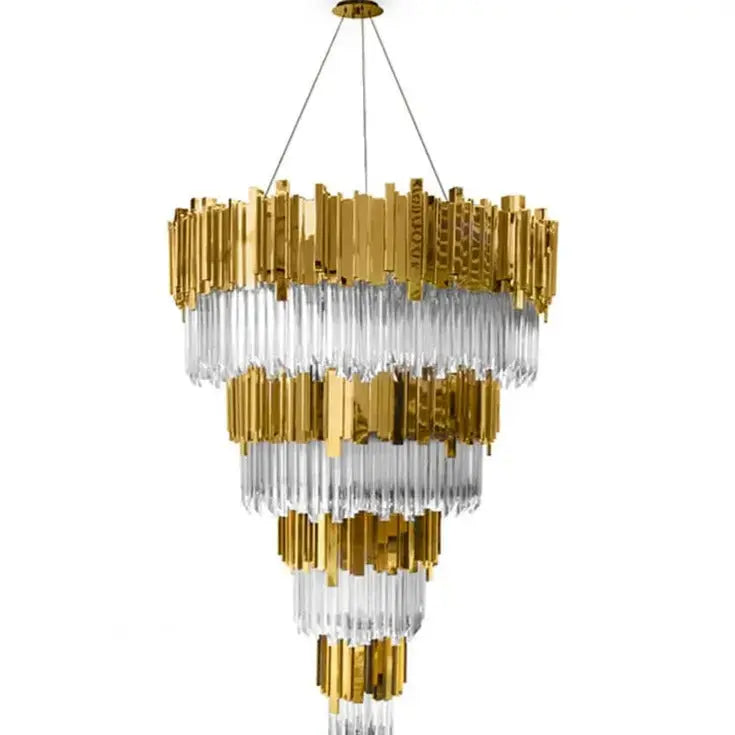
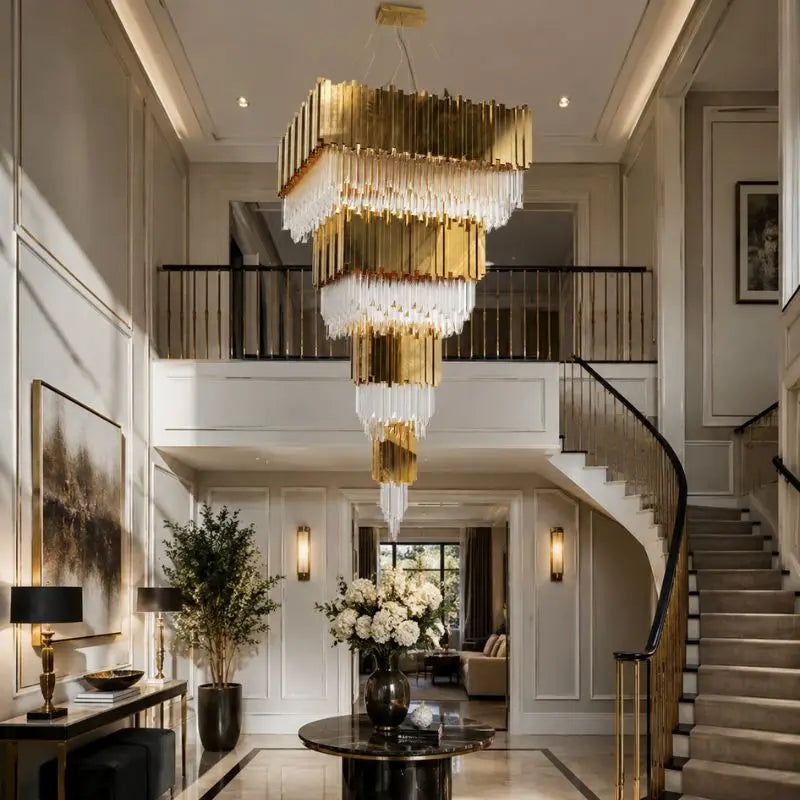
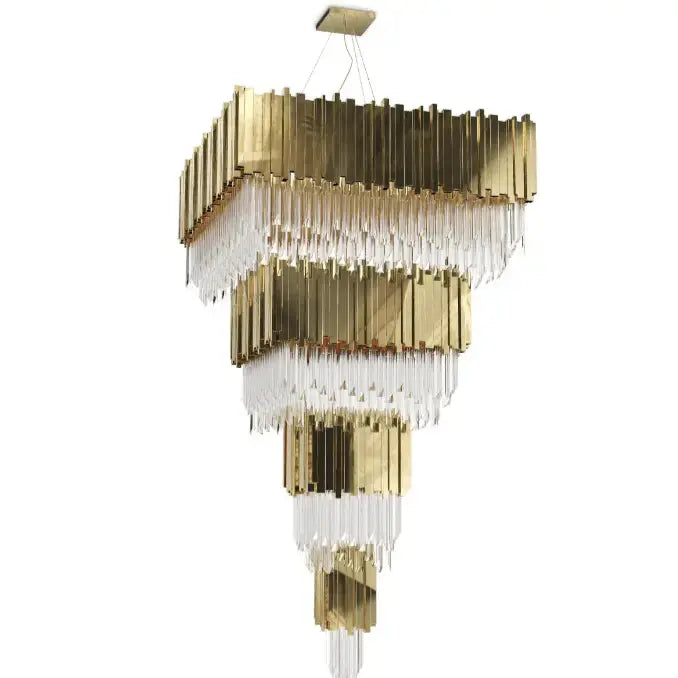
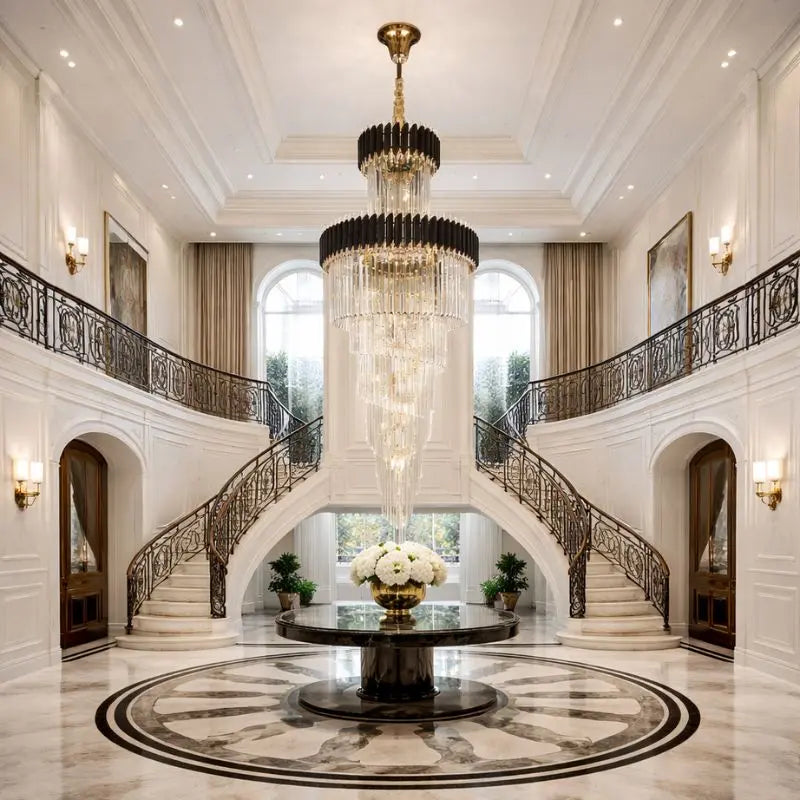
A cascading chandelier is made for vertical drama. Its descending layers draw the eye upwards and down through the space, making it particularly effective in double-height foyers, stairwells and rooms with vaulted ceilings. The key is to give it room to breathe. In a narrow hallway, a slim waterfall design may offer the same luxurious movement without crowding the architecture.
Tiered designs are also useful when a room needs visual weight. A large dining table, expansive staircase or lofty entrance can make a single-tier fixture look undersized, even if its diameter appears adequate on paper.
Get the proportions right before choosing sparkle
Scale is where many beautiful chandelier choices go wrong. A fixture that is too small can disappear into a large room, while one that is too wide or too low can make the space feel constrained. Begin with the room rather than the product photograph.
For a general starting point, add the room’s length and width in feet, then use that total in inches as an approximate chandelier diameter. A room measuring 14 by 16 feet, for example, can often take a fixture around 30 inches wide. This is a useful guide, not a fixed rule. A very sparse room may carry a larger statement chandelier, while a room with heavy beams, tall cabinetry or several competing features may benefit from restraint.
Ceiling height matters just as much. In a standard-height room, leave around 7 feet of clearance between the bottom of the chandelier and the floor in circulation areas. Over a dining table, it is usually more effective to hang the fixture 30 to 36 inches above the tabletop. This keeps sightlines open while allowing the crystal to feel intimate and intentional.
In a stairwell or foyer, assess the view from more than one level. The chandelier should look composed from the front door, from the landing and from below. For tall spaces, an adjustable chain, cable or downrod offers valuable flexibility during installation.
Match the chandelier to the room’s purpose
A foyer chandelier has an immediate responsibility: it sets the tone for the entire home. Prioritise scale, ceiling height and the perspective from the entrance. A crystal globe offers a refined welcome in a compact hall, while a multi-tiered design can give a double-height foyer the grandeur it deserves.
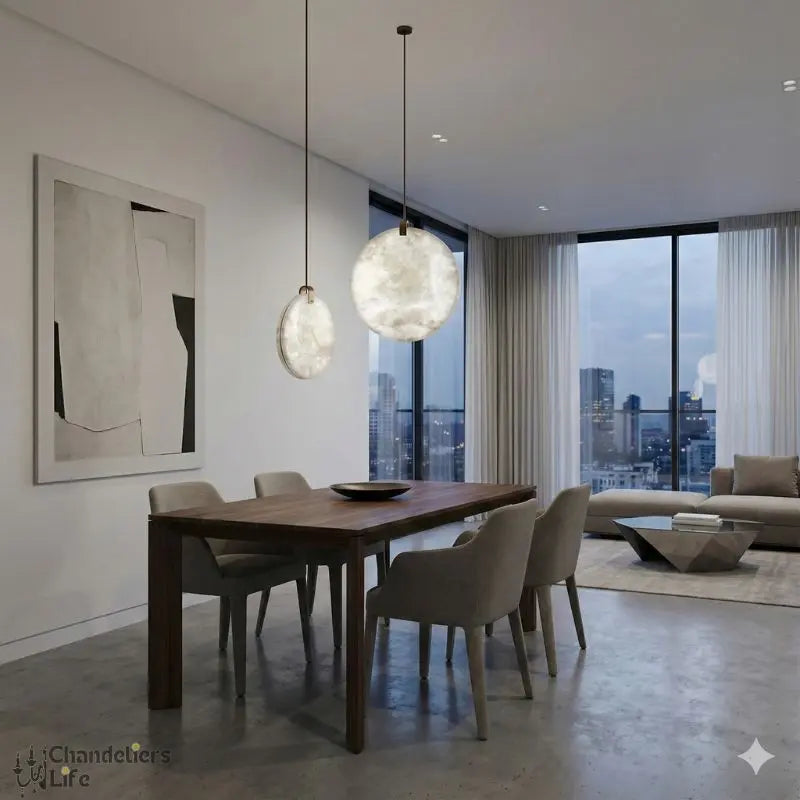
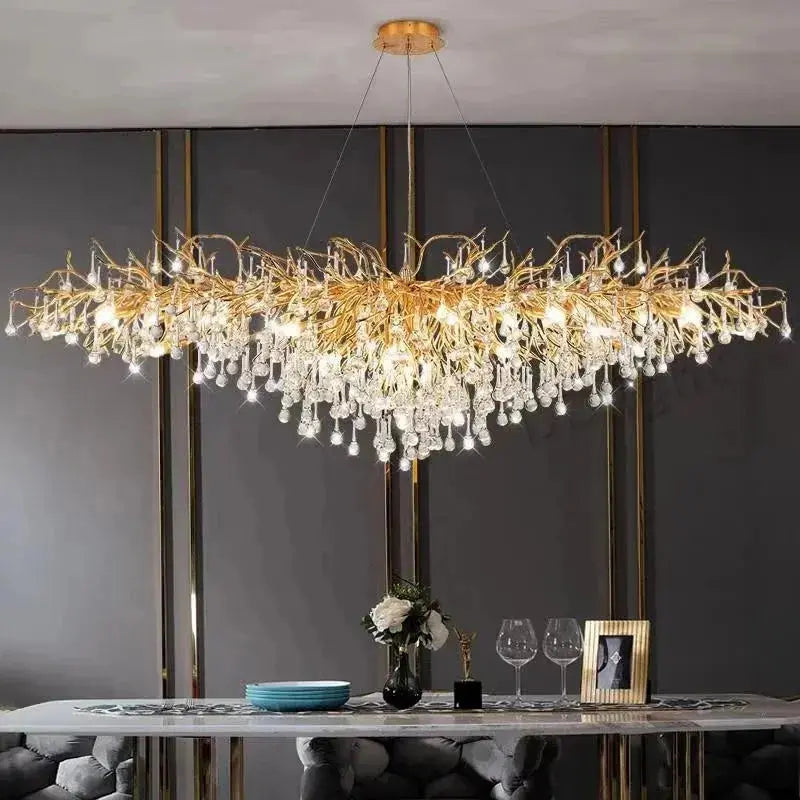
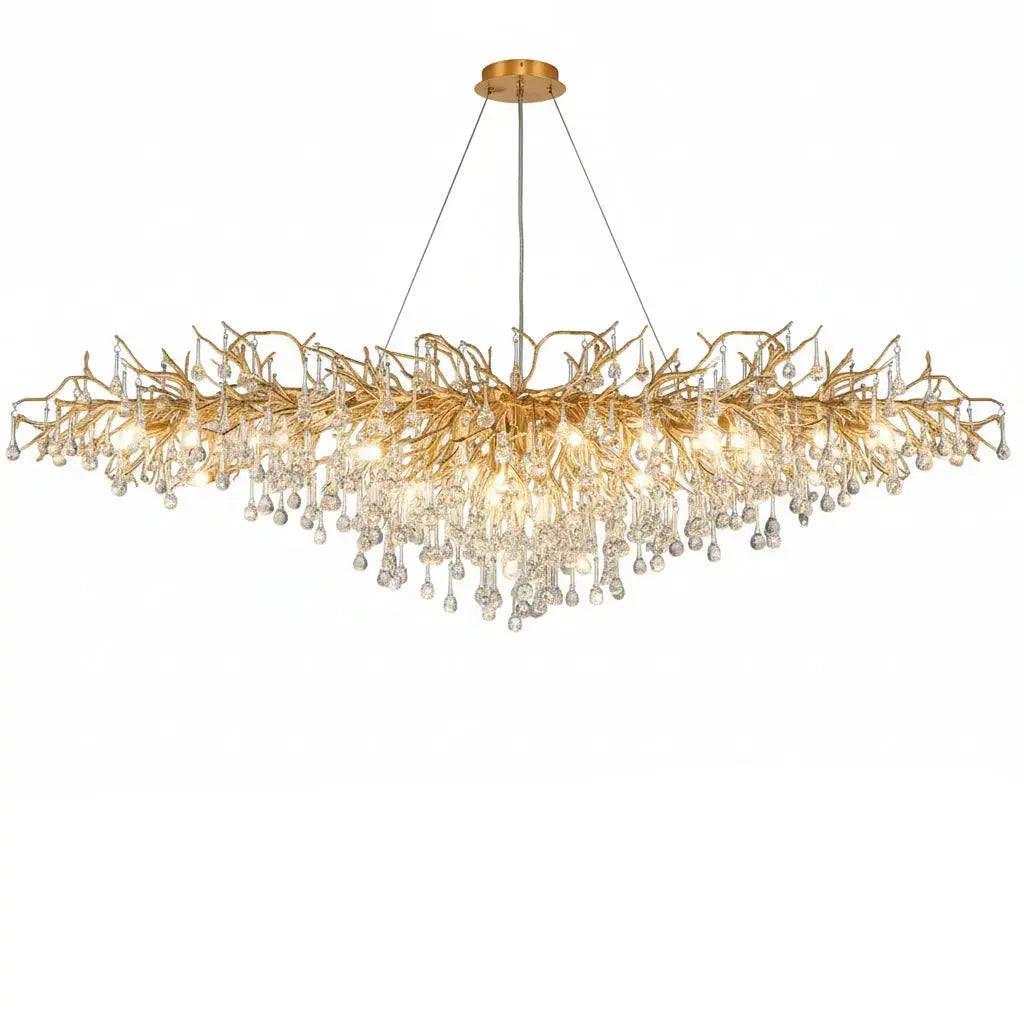
Above a dining table, shape is as important as size. Round tables pair naturally with round, globe or drum-shaped chandeliers. For rectangular tables, a linear crystal fixture or an elongated arrangement provides even visual coverage. Ideally, the chandelier should be narrower than the table, leaving comfortable space at either end.
Living rooms invite more flexibility. A chandelier can sit centrally, float above a seating area or define one zone within an open-plan layout. If the room already has strong daylight, crystal becomes an atmospheric layer rather than the only source of illumination. Add floor lamps, wall lights or table lamps to give the room softer options for evenings.
In bedrooms, favour a fixture that feels glamorous but not imposing. A compact flush or semi-flush crystal ceiling light is often ideal for lower ceilings. In larger bedrooms, a small chandelier centred over the bed or seating area creates a private hotel-like finish.
Choose light quality, not only the fixture
Crystal chandeliers can produce beautiful ambient light, but their open structure means they are not always sufficient as the sole source of task lighting. A dining room may still need wall lights or discreet secondary lighting; a kitchen island will benefit from lighting that clearly supports food preparation.
Dimmable bulbs and a compatible dimmer are among the most worthwhile choices you can make. Full brightness gives crystal its celebratory presence, while a lower level softens the room for dinner, entertaining or quiet evenings. Warm white light generally flatters crystal, timber, fabrics and skin tones more gracefully than a cool, blue-leaning bulb.
Check the fixture’s bulb type, maximum wattage and whether bulbs are included before purchasing. Integrated LED chandeliers can offer a clean appearance and low energy use, but replaceable bulbs give more freedom to alter colour temperature and brightness later. Neither option is universally better; the right choice depends on the control and maintenance you prefer.
Crystal, finishes and everyday care
Not every crystal chandelier has the same look or price point. High-quality crystal is prized for its clarity, precise faceting and strong light refraction. Glass alternatives can still be attractive and offer a more accessible route to the crystal aesthetic, particularly in larger fixtures where budget and weight are practical considerations.
Metal finishes shape the mood. Chrome and polished nickel feel bright, crisp and contemporary. Brass and gold finishes add warmth, particularly alongside cream, walnut, marble and soft neutral palettes. Black or bronze frames provide definition and can make clear crystal look more architectural.
A chandelier will retain its brilliance with gentle, regular care. Switch off the power before cleaning and allow bulbs to cool. Dust with a clean, soft microfibre cloth, taking care not to twist or pull hanging elements. For a deeper clean, follow the manufacturer’s instructions closely; overly wet cleaning can damage finishes, electrical parts or delicate fixings.
Consider access before committing to an elaborate design. A spectacular staircase chandelier is worth the maintenance planning, but it may require professional cleaning or safe access equipment. This is a sensible trade-off, not a reason to avoid drama.
Installation and shopping with confidence
Crystal chandeliers are often heavier than they appear. Confirm the fixture’s weight, ceiling compatibility and mounting requirements before ordering, particularly for substantial tiered designs. A qualified electrician can ensure the electrical box and support are appropriate, fit the chandelier securely and adjust the hanging height with precision.
When comparing designs, look beyond the main image. Study the dimensions, number of light sources, finish, crystal style and recommended room placement. A well-chosen chandelier should feel at home with your existing furnishings rather than asking the rest of the room to compete with it.
At ChandeliersLife, the most memorable choices tend to start with a clear vision of how a room should feel: serene and luminous, dramatic and formal, or modern with a touch of glamour. Choose the design that gives your space that feeling each time you switch it on.